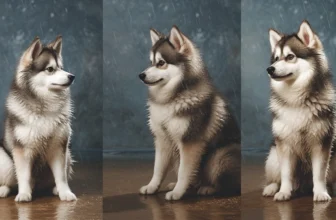
Pomskies are a unique breed of dog that is a cross between a Pomeranian and a Siberian Husky. They are intelligent and energetic, but can also be stubborn and difficult to train. Many people rely on treats to train their dogs, but it is possible to train a Pomsky without them.
Why Train without Treats?
While treats may be effective in training some dogs, they can also have drawbacks. Dogs can become overly reliant on treats and may refuse to perform commands unless they are rewarded with food. This can also lead to obesity or other health problems if the dog is given too many treats.
Training without treats can help build a stronger bond between the dog and owner, as the dog learns to respond to verbal cues and physical praise rather than just food. It can also help prevent negative behaviors such as begging for food or stealing from the table.
Basic Training Techniques
There are several basic training techniques that can be used to train a Pomsky without treats:
Positive Reinforcement
Positive reinforcement involves rewarding your dog with praise or affection when they perform a desired behavior. This could include verbal cues such as “good boy” or physical gestures like petting or scratching behind the ears.
When using positive reinforcement, it is important to be consistent and use the same cues each time. This will help your dog understand what behaviors are being rewarded and encourage them to repeat those actions in the future.
Clicker Training
Clicker training involves using a clicker device to signal when a desired behavior has been performed. The sound of the clicker becomes associated with positive reinforcement, such as praise or playtime.
To use clicker training, start by clicking the device when your dog performs a desired behavior, such as sitting or staying. Follow up with verbal praise or physical affection to reinforce the behavior.
Over time, your dog will learn to associate the sound of the clicker with positive reinforcement and will be more likely to perform desired behaviors in order to hear the click.
Verbal Cues
Verbal cues involve using specific words or phrases to signal a desired behavior. For example, “sit” or “stay” can be used to encourage your dog to perform those actions.
When using verbal cues, it is important to use a consistent tone of voice and emphasize certain words to help your dog understand what is expected of them. Repetition and consistency are key when using verbal cues, as it may take some time for your dog to learn and respond to these commands.
Advanced Training Techniques
Once your Pomsky has mastered basic training techniques, there are several advanced training techniques that can be used without treats:
Target Training
Target training involves teaching your dog to touch specific objects with their nose or paw. This could include a target stick, a ball, or even your hand.
To use target training, start by presenting the object and rewarding your dog with praise when they touch it with their nose or paw. Over time, gradually increase the distance between the object and your dog until they can touch it from across the room.
Target training can be useful in teaching more complex behaviors such as opening doors or turning on lights.
Shaping
Shaping involves breaking down a desired behavior into smaller steps and rewarding each step along the way. For example, if you want to teach your dog to roll over, you would first reward them for laying down, then for turning their head, then for moving onto their side, and so on.
Shaping requires patience and consistency, but can be useful in teaching complex behaviors that may not be achievable through other methods.
Chaining
Chaining involves stringing together a series of behaviors to create a more complex behavior. For example, if you want to teach your dog to fetch, you would first teach them to sit, then to stay, then to go after the ball, and finally to bring it back.
Chaining requires careful planning and sequencing of behaviors, but can be useful in teaching behaviors that require multiple steps.
Conclusion
Training a Pomsky without treats may require more patience and consistency than using food rewards, but it can also lead to a stronger bond between dog and owner and prevent negative behaviors such as begging or stealing. By using positive reinforcement, clicker training, verbal cues, and advanced techniques such as target training, shaping, and chaining, it is possible to train a Pomsky to perform complex behaviors without relying on treats.