Pomsky Generation Chart: Understanding the Genetics of Your Pomskies
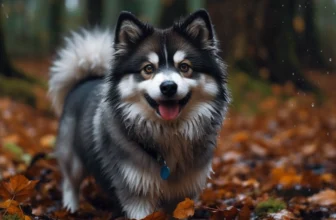
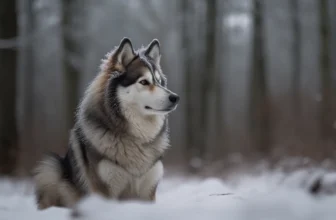
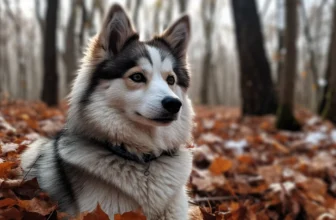
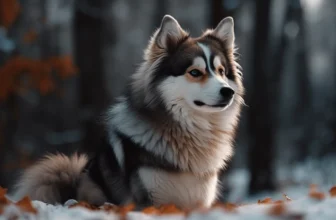
If you’re a dog lover, you’ve probably heard about the popular and adorable hybrid breed called Pomsky. A Pomsky is a mix between a Pomeranian and a Siberian Husky. This crossbreed has become increasingly popular over the years due to their cuteness, intelligence, and friendly nature.
As a professional breeder for Pomskies, it is essential to understand the genetics of your breeding pairs. In this article, we will discuss the Pomsky generation chart and how it plays an important role in understanding the genetics of your Pomskies.
What is a Generation Chart?
A generation chart is a tool used by breeders to track the lineage of their dogs. It shows how many generations back each dog’s ancestry goes and provides information on their genetic makeup. The generation chart helps breeders understand the potential traits that their puppies may inherit from their parents.
In a generation chart, each generation is represented by a Roman numeral (I, II, III, etc.). The top row represents the male parent while the left column represents the female parent. Each box in the chart represents one dog or puppy.
The Pomsky Generation Chart
The Pomsky generation chart is similar to other generation charts used by breeders. However, it has some unique characteristics that make it different from others.
Pomskies are created by breeding a purebred Pomeranian with a purebred Siberian Husky. Therefore, each parent contributes 50% of its genetic makeup to its offspring. This means that first-generation (F1) Pomskies have 50% Pomeranian genes and 50% Siberian Husky genes.
To create second-generation (F2) Pomskies, two F1 Pomskies are bred together. F2 Pomskies have a more complex genetic makeup as they can inherit genes from both Pomeranian and Siberian Husky ancestors.
The Pomsky generation chart helps breeders understand the genetic makeup of their Pomskies. It shows how many generations back each dog’s ancestry goes and provides information on its genetic makeup.
Here is an example of a Pomsky generation chart:
| I | II | |
|---|---|---|
| I | F1 Pomsky | F1 Pomsky |
| II | F1 Pomsky | F1 Pomsky |
In this example, two F1 Pomskies are bred together to produce four offspring. Each puppy has a genetic makeup of 50% Pomeranian genes and 50% Siberian Husky genes.
The Importance of Understanding the Genetics of Your Pomskies
As a breeder, it is essential to understand the genetics of your breeding pairs. By understanding the genetic makeup of your dogs, you can predict the traits that their puppies may inherit. This knowledge can help you make informed decisions when choosing which dogs to breed together.
For example, if you want to produce Pomskies with blue eyes, you need to understand which parent carries the gene for blue eyes. If neither parent carries the gene, it is unlikely that any of their puppies will have blue eyes.
Understanding the genetics of your breeding pairs also helps you avoid breeding dogs that carry harmful genetic mutations. These mutations can cause health problems in puppies, and it is important to avoid passing them on to future generations.
The Different Types of Pomsky Generations
As mentioned earlier, there are two types of Pomsky generations: F1 and F2. However, there are also other generations that breeders may encounter.
Here is a breakdown of the different types of Pomsky generations:
– F1 Pomskies: The first-generation Pomskies are produced by breeding a purebred Pomeranian with a purebred Siberian Husky. These puppies have 50% Pomeranian genes and 50% Siberian Husky genes.
– F1b Pomskies: These puppies are produced by breeding an F1 Pomsky with either a purebred Pomeranian or a purebred Siberian Husky. They have more Pomeranian or Siberian Husky genes than F1 Pomskies.
– F2 Pomskies: Second-generation Pomskies are produced by breeding two F1 Pomskies together. These puppies have a more complex genetic makeup as they can inherit genes from both Pomeranian and Siberian Husky ancestors.
– F2b Pomskies: These puppies are produced by breeding an F2 Pomsky with either a purebred Pomeranian or a purebred Siberian Husky. They have more Pomeranian or Siberian Husky genes than F2 Pomskies.
– Multi-generation (MG) Pomskies: These puppies are produced by breeding two or more generations of Pomskies together. They have a more complex genetic makeup than other types of Pomskies.
Conclusion
Understanding the genetics of your breeding pairs is essential for producing healthy and desirable puppies. The Pomsky generation chart is a useful tool for breeders to track the lineage of their dogs and understand their genetic makeup.
By using the generation chart, breeders can predict the traits that their puppies may inherit and make informed decisions when choosing which dogs to breed together. It also helps breeders avoid breeding dogs that carry harmful genetic mutations.
As a breeder, it is crucial to stay up-to-date with the latest information on Pomsky genetics and breeding practices. By doing so, you can produce healthy and happy Pomskies that will bring joy to their new families for years to come.