Pomsky Dogs 101: A Comprehensive Guide to Personality, Size, and Appearance
If you’re looking for a dog that’s cute, playful, and loyal, look no further than the Pomsky. This adorable hybrid breed is a mix between the Siberian Husky and the Pomeranian and has become increasingly popular in recent years. In this comprehensive guide, we’ll explore everything you need to know about Pomsky dogs, from their personality to their size and appearance.
Personality
One of the most appealing aspects of Pomsky dogs is their personality. These little pups are friendly, affectionate, and love to be around people. They’re great with kids and make excellent family pets. Pomskies are also very intelligent and eager to please, which makes them easy to train. They tend to be social dogs and enjoy being around other animals as well.
However, it’s important to note that every dog is unique, and individual Pomskies may have varying temperaments depending on their breeding and upbringing. Some Pomskies may inherit more of the Pomeranian’s traits, such as being more reserved or independent. Others may take after the Husky side of their lineage and be more energetic or mischievous. As with any dog breed, it’s important to do your research before adopting a Pomsky to ensure that their personality matches your lifestyle.
Size
Pomsky dogs come in a range of sizes depending on their breeding. Generally speaking, they fall into three categories: Toy Pomskies, Miniature Pomskies, and Standard Pomskies.
Toy Pomskies are the smallest variety of this breed and typically weigh between 5-10 pounds. They stand around 6-10 inches tall at the shoulder.
Miniature Pomskies are slightly larger than Toy Pomskies but still relatively small. They typically weigh between 10-20 pounds and stand around 10-15 inches tall at the shoulder.
Standard Pomskies are the largest variety of this breed and can weigh up to 30 pounds. They stand around 15-18 inches tall at the shoulder.
It’s important to note that these size ranges are only estimates, as every dog is unique and may fall outside of these general guidelines.
Appearance
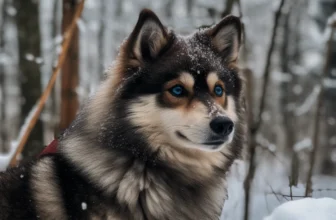
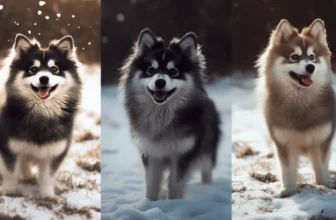
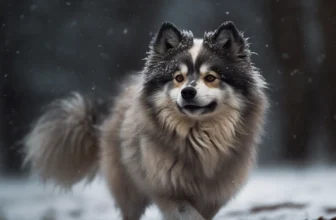
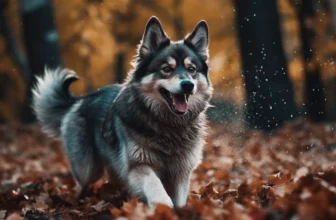
Pomsky dogs are known for their striking appearance, which is a mix of both their Husky and Pomeranian heritage. They have a thick, fluffy coat that can come in a range of colors, including black, gray, white, tan, and red. Their coats can be solid or patterned, with some Pomskies sporting the classic Husky markings on their face.
One of the most distinctive features of Pomsky dogs is their blue eyes, which they often inherit from their Husky parent. However, it’s worth noting that not all Pomskies have blue eyes; some may have brown or hazel eyes instead.
In terms of body shape, Pomsky dogs tend to be small but sturdy. They have a compact build with short legs and a round head. Their ears are usually pointed and erect like those of a Husky.
Training Needs
As mentioned earlier, Pomsky dogs are intelligent and eager to please, which makes them relatively easy to train. They respond well to positive reinforcement techniques such as treats and praise and thrive on consistency and routine.
However, it’s worth noting that Pomskies can also be stubborn at times (especially if they take after their Pomeranian parent) and may require patience and persistence during training. As with any dog breed, early socialization is key to ensure that your Pomsky grows up to be a well-adjusted adult dog.
Grooming Needs
Pomsky dogs have a thick, fluffy coat that requires regular grooming to keep it looking its best. They shed moderately throughout the year and may require more frequent brushing during shedding season.
It’s also important to keep your Pomsky’s ears clean and dry to prevent infections, as their floppy ears can trap moisture. Regular nail trims are also necessary, especially for smaller Pomskies whose nails may not wear down naturally through exercise.
Health Concerns
Like all dog breeds, Pomsky dogs may be prone to certain health issues. Some of the most common health concerns in Pomskies include:
– Hip dysplasia: This is a genetic condition where the hip joint doesn’t develop properly, leading to arthritis and pain.
– Eye problems: Pomskies may be prone to eye issues such as cataracts or progressive retinal atrophy.
– Dental problems: Small breed dogs like Pomskies are more prone to dental issues such as tooth decay and gum disease.
To minimize the risk of these health concerns, it’s important to choose a reputable breeder who conducts health screenings on their breeding stock. Regular veterinary check-ups are also key to catching any potential health issues early on.
Conclusion
In conclusion, Pomsky dogs are a wonderful addition to any family. They’re friendly, affectionate, and intelligent, with a striking appearance that turns heads wherever they go. As long as you do your research beforehand and provide them with the love and care they need, your Pomsky is sure to make a loyal companion for years to come.