Written and reviewed by A Pomsky Editorial Team. Published 2026-07-25; last reviewed July 25, 2026.
This guide is educational and is not veterinary advice. Use a veterinarian for diagnosis, medication, treatment, and individual health decisions. In an urgent situation, contact the appropriate veterinary or public-safety service. Read our health disclaimer and editorial policy.
Quick answer: A Pomsky coat may offer some cold protection, but it does not make every dog winter-proof. Temperature, wind, moisture, body size, age, health, coat condition, and acclimation all matter; supervise outdoors and shorten exposure when the dog shows discomfort.
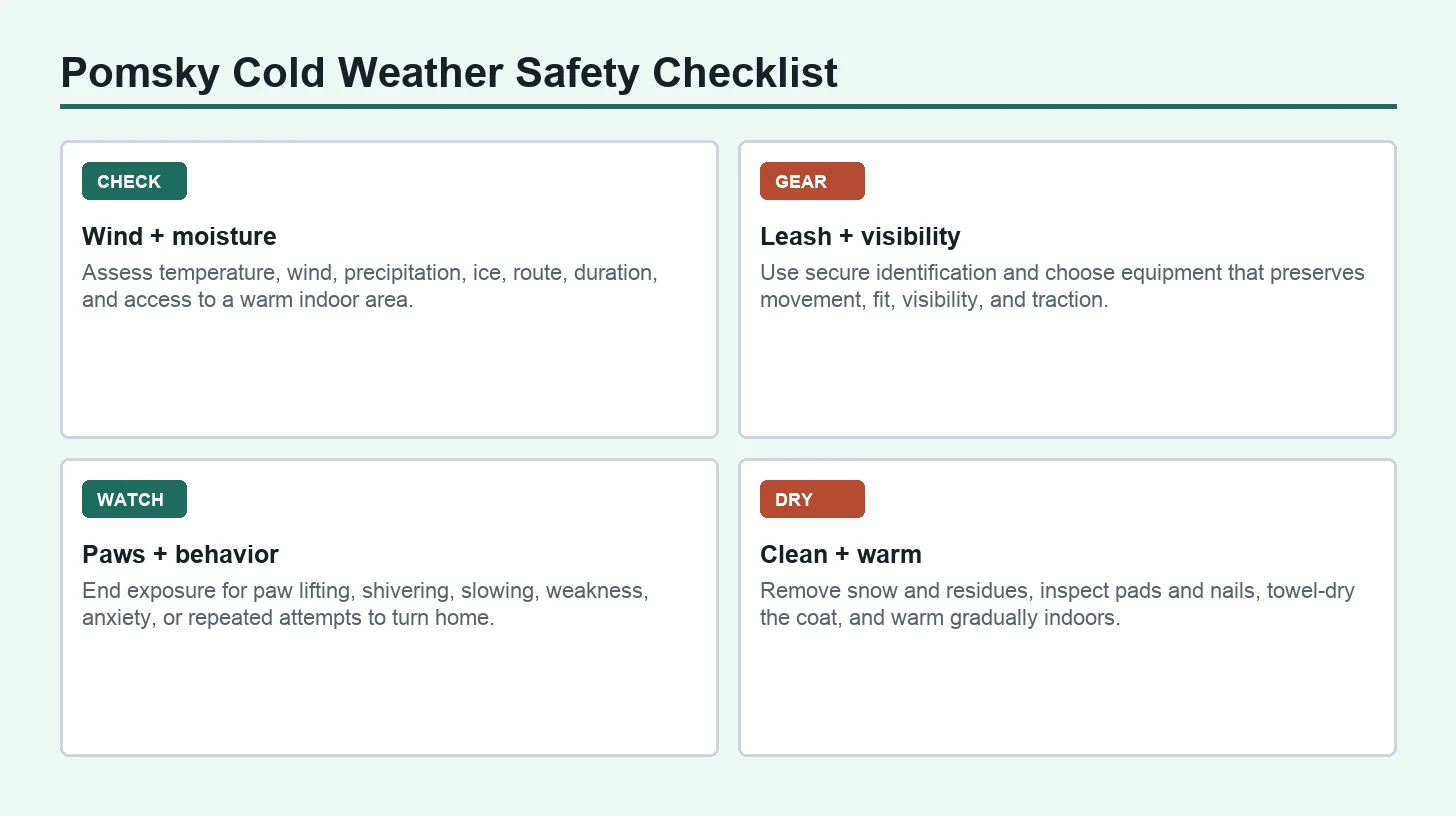
Quick checklist
| Before | Check temperature, wind, precipitation, surfaces, visibility, route, and the individual dog. |
|---|---|
| Equipment | Fitted leash or harness, visible ID, light if needed, towels, and paw protection if tolerated. |
| During | Keep moving safely, avoid ice and chemicals, supervise closely, and watch gait and behavior. |
| After | Dry coat and paws, inspect pads and nails, remove residues, warm gradually, and offer water. |
| Higher risk | Puppies, seniors, small or lean dogs, illness, poor coat condition, and dogs not acclimated to cold. |
| Escalate | Seek veterinary direction for collapse, breathing change, marked weakness, injury, or persistent abnormal behavior. |
Six-step action plan
- Assess the full conditions. Include wind, moisture, ice, sunlight, route, duration, and warming access rather than using temperature alone.
- Assess the dog. Consider age, health, body condition, coat condition, acclimation, recent grooming, and previous cold response.
- Prepare visibility and traction. Use secure equipment and choose a route with safer footing, lighting, and a quick return indoors.
- Watch continuously. Look for paw lifting, shivering, slowing, hunched posture, anxiety, weakness, or attempts to turn home.
- Clean and dry. Remove snow, moisture, salt, and ice-melt residue from paws, legs, belly, and coat after the outing.
- Record and adjust. Use the dog's response to shorten, relocate, or replace the next cold-weather session with indoor activity.
Do not use the coat as a guarantee
Pomskies often inherit a dense coat, but coat density, body size, age, health, grooming, and acclimation vary. USDA guidance notes that even breeds developed for cold climates can be susceptible to temperature extremes. A recently clipped coat, low body condition, illness, wet fur, inactivity, or prolonged exposure can reduce practical protection.
Avoid universal claims such as a single safe temperature or exact outdoor-time limit. Wind and moisture increase heat loss, while sun, shelter, movement, and access to a warm indoor area change the exposure. Watch the individual dog and choose a conservative plan when conditions are unfamiliar.
Run a before-walk check
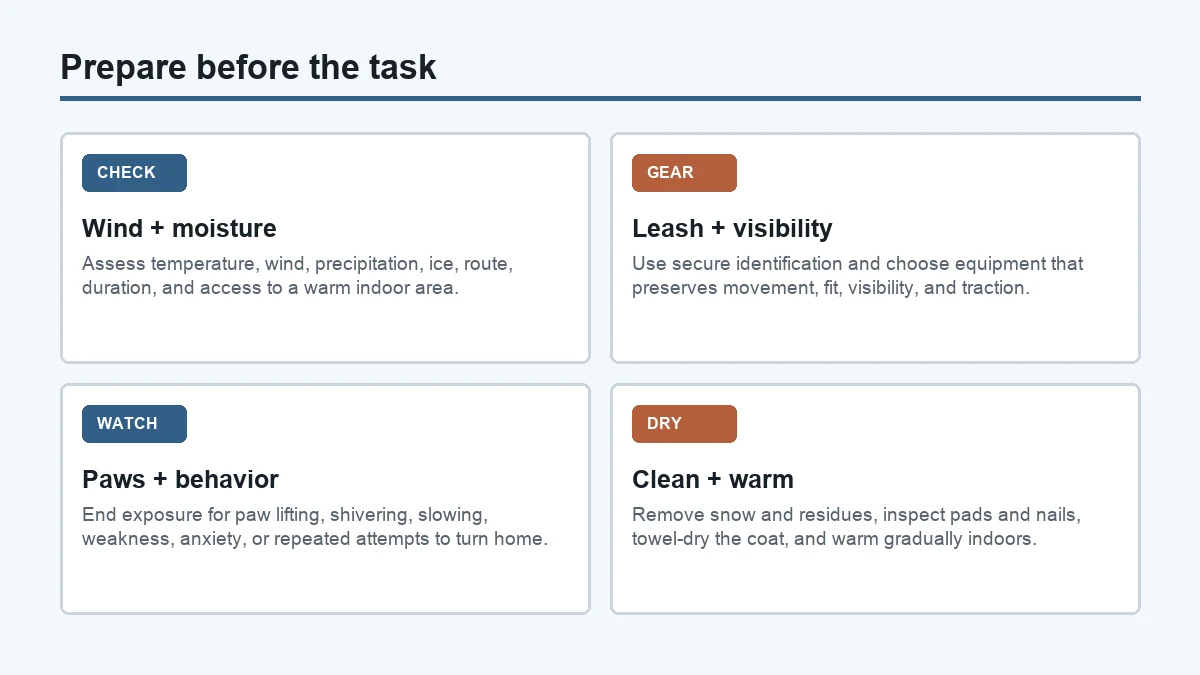
Check air temperature, wind, precipitation, ice, darkness, road treatment, and the route's distance from shelter. Use a secure leash or harness and current identification. Reflective or illuminated equipment can improve visibility, but it does not make an icy roadside safe. Choose a shorter route with reliable footing and a fast return indoors.
Inspect paws before leaving. Cracks, irritation, overgrown hair between pads, damaged nails, or an existing limp can worsen on snow and ice. Paw protection may help some dogs if it fits, stays dry, does not alter gait dangerously, and has been introduced gradually. Never force equipment that causes panic or repeated stumbling.
Read behavior during the outing
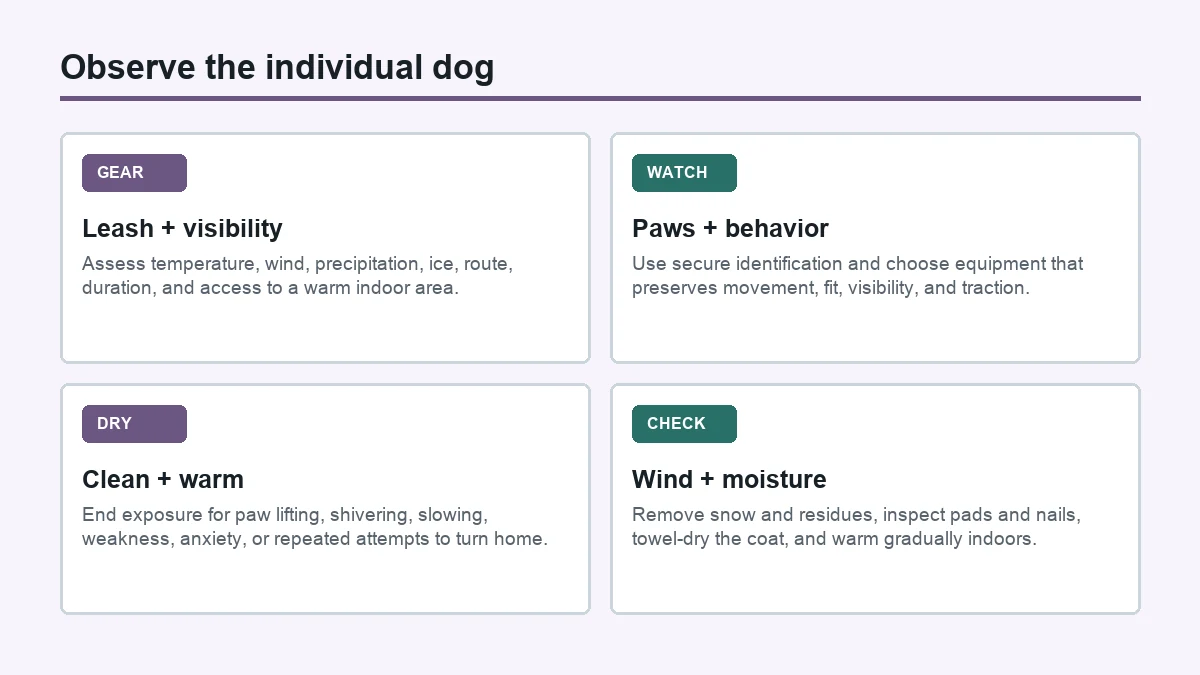
Paw lifting, repeated stopping, shivering, a hunched posture, seeking shelter, slowing, anxiety, whining, weakness, or trying to turn home are reasons to end exposure and assess the dog. Some dogs continue playing despite discomfort, so enthusiasm alone is not proof that conditions are safe.
Keep the dog away from frozen water, thin ice, snow-covered hazards, antifreeze, deicers, and unknown spills. Do not allow snow or roadside slush to become the main water source. Maintain leash control because snow and altered scents can make navigation and recall less reliable.
Clean paws and dry the coat
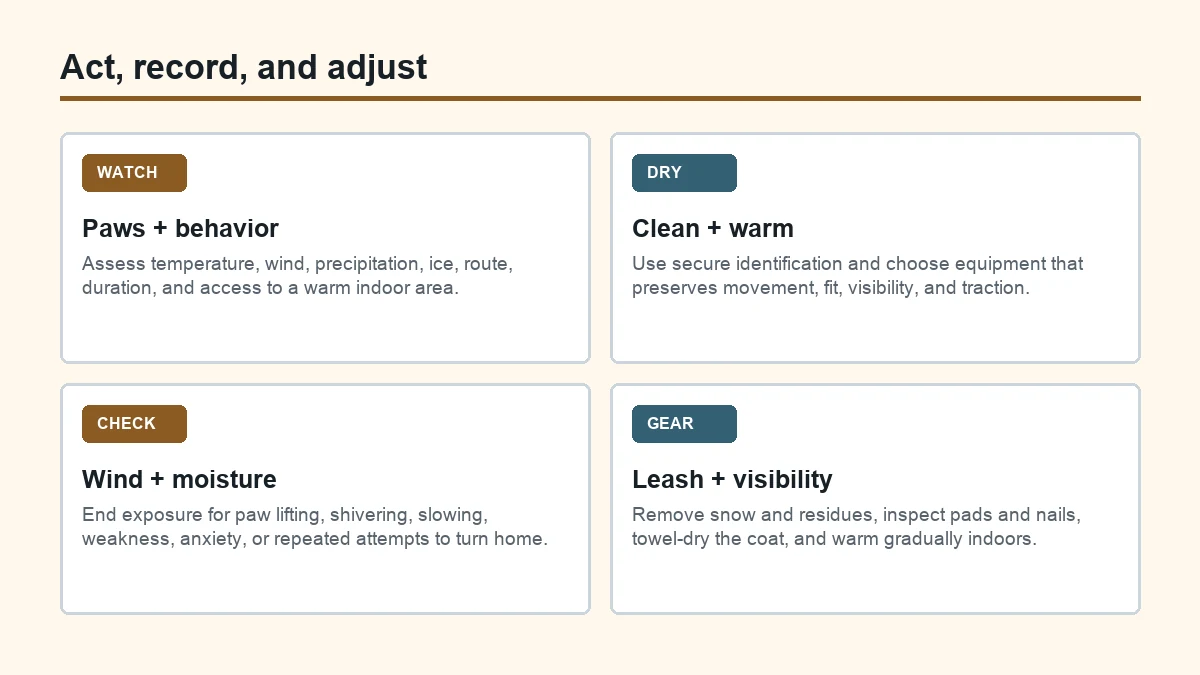
After every treated-road or snowy outing, wipe or rinse paws, lower legs, and the belly as appropriate, then dry thoroughly. Inspect between toes, pads, nails, and skin for packed ice, cuts, redness, chemical residue, or tenderness. Prevent licking until residues have been removed.
Towel-dry a wet coat and provide a warm, draft-free resting area. Warm gradually rather than applying intense direct heat to cold skin. Offer fresh water and observe gait, alertness, breathing, and comfort after returning indoors.
Replace outdoor intensity when needed
Cold-weather safety does not require abandoning exercise. On harsher days, use shorter toilet walks plus indoor sniffing, food puzzles, reward-based training, hide-and-seek, controlled tug, or low-impact movement suited to the dog. Divide activity into several brief sessions instead of forcing one long outing.
Adjust food only with attention to body condition and veterinary advice. Indoor companion dogs do not automatically need extra calories because it is winter, while working or outdoor-housed dogs have different energy demands. Fresh water remains necessary in cold weather.
Recognize higher-risk situations
Puppies, seniors, very small or lean dogs, dogs with chronic disease, mobility limits, endocrine conditions, respiratory problems, poor coat condition, or little cold acclimation may need a more conservative plan. USDA guidance also emphasizes that very young, old, or sick dogs require special protection and may not be suitable for outdoor housing.
Move indoors and contact a veterinarian for marked weakness, collapse, confusion, breathing changes, persistent shivering, pale or abnormal tissue, significant paw injury, suspected chemical exposure, or behavior that does not normalize after warming. Emergency severity cannot be judged from coat type alone.
Example: use the checklist as a control loop
Before the task, record the conditions and the dog's starting state. During the task, watch a small set of observable signs rather than relying on breed appearance or a fixed rule. Afterward, record recovery and any problem. Use that feedback to adjust the next attempt, and route medical, medication, or urgent safety decisions to a veterinarian. This process makes the checklist useful for a puppy, adult, senior, newly adopted dog, or Pomsky with a changing health history.
A checklist is not a promise of safety. Equipment can be fitted incorrectly, conditions can change, and an individual dog can respond differently from the previous outing. Stop when the situation leaves the planned safety boundary. In a possible emergency, contact the appropriate veterinary or public-safety service instead of continuing the activity to complete the list.
Common mistakes to avoid
- Using a Pomsky's coat, size, confidence, or previous tolerance as a guarantee.
- Waiting for severe signs before ending an avoidable exposure.
- Changing medication, diet, restraint, or protective equipment without appropriate instructions.
- Relying on one phone, one route, one caregiver, or one piece of equipment without a backup.
- Collecting photos or completing a checklist when urgent care or evacuation should come first.
- Failing to record what happened, which makes the next plan depend on memory and guesswork.
Frequently asked questions
Are Pomskies naturally safe in cold weather?
No coat type guarantees safety. Individual coat, size, age, health, body condition, acclimation, wind, moisture, duration, and access to shelter all matter.
What temperature is too cold for a Pomsky?
There is no single threshold that fits every Pomsky. Use conditions and the individual dog's response, and ask a veterinarian for guidance when health or age increases risk.
Should a Pomsky wear a winter coat?
Some dogs benefit from added protection, especially when small, lean, clipped, older, ill, or poorly acclimated. Fit, dryness, movement, and supervision matter.
How do I protect Pomsky paws from salt and ice melt?
Avoid treated areas when possible, use suitable paw protection if tolerated, and wipe or rinse and dry paws, legs, and belly after exposure.
Can a Pomsky live outdoors in winter?
A Pomsky should not be assumed suitable for outdoor housing because of appearance or ancestry. Weather, shelter standards, water, age, health, acclimation, supervision, and local rules require case-specific assessment.
Related Pomsky guides
- Pomsky health guides
- Pomsky training guides
- Pomsky supplies guide
- Pomsky crate size guide
- Health disclaimer
- Editorial policy
- Affiliate disclosure
- Pomsky emergency preparedness
- Pomsky car travel safety
- Pomsky hot weather considerations
Sources reviewed
These sources were reviewed for general pet-safety and veterinary-care principles. They do not create a diagnosis or an individual treatment plan.
- ASPCA: Cold weather safety tips
- USDA APHIS: Temperature requirements for dogs
- AKC: Winter safety tips for dogs
- VCA: Winter safety tips
Evidence and related Pomsky guides
These sources support only their stated claim scopes; they do not guarantee an individual Pomsky outcome.
Sources reviewed for this page
- American Animal Hospital Association: AAHA-AVMA Canine Preventive Healthcare Guidelines
- U.S. Centers for Disease Control and Prevention: Pet Emergency Preparedness