Introduction
Pomskies are a relatively new designer dog breed that has become increasingly popular in recent years. They are a crossbreed between a Pomeranian and a Siberian Husky, resulting in a cute and cuddly dog with a striking appearance. One of the most notable features of Pomskies is their size, which can vary significantly depending on several factors. In this article, we will explore the different factors that can influence the size and appearance of Pomskies.
The Parent Breeds: Pomeranians and Siberian Huskies
Before delving into the size and appearance of Pomskies, it is essential to understand the parent breeds’ characteristics. Pomeranians are small toy dogs that typically weigh between 3-7 pounds and stand around 6-7 inches tall. They have a thick double coat that comes in a variety of colors, including orange, cream, black, and brown. On the other hand, Siberian Huskies are medium to large working dogs that weigh between 35-60 pounds and stand around 20-23 inches tall. They have a thick double coat that comes in various colors, including white, black, gray, and red.
Size Variations in Pomskies
As with any hybrid breed, Pomskies can inherit traits from both parent breeds, resulting in significant variations in size and appearance. The size of a Pomsky primarily depends on its genetic makeup, which can be influenced by several factors.
Size Influencing Factors
The generation of a Pomsky is determined by its parent breeds. First-generation Pomskies are produced by breeding a purebred Pomeranian with a purebred Siberian Husky. These puppies tend to be more unpredictable in terms of size and appearance as they inherit an equal amount of traits from both parent breeds. Second-generation Pomskies are produced by breeding two first-generation Pomskies, which can result in more consistency in size and appearance.
The weight of the parent breeds also plays a significant role in determining the size of a Pomsky. If a Pomeranian is bred with a smaller Siberian Husky, the resulting puppies will be smaller than if a Pomeranian is bred with a larger Siberian Husky.
Gender can also play a role in determining the size of a Pomsky. Male Pomskies tend to be larger than females, although this is not always the case.
Pomsky Size Categories
Based on their size, Pomskies can be categorized into three categories:
Toy Pomskies are the smallest of the three categories and typically weigh between 5-10 pounds and stand around 10 inches tall.
Miniature Pomskies are slightly larger than toy Pomskies and usually weigh between 11-25 pounds and stand around 12-16 inches tall.
Standard Pomskies are the largest of the three categories and can weigh anywhere between 26-50 pounds and stand around 17-21 inches tall.
Appearance
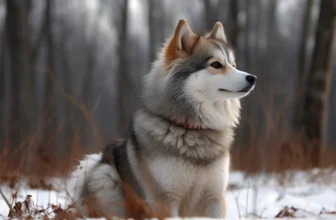
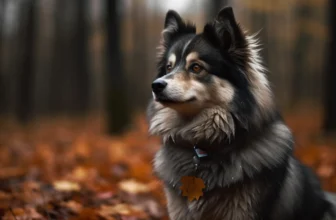
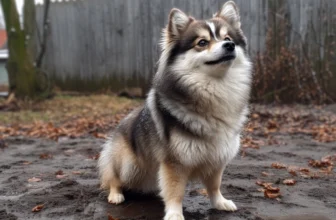
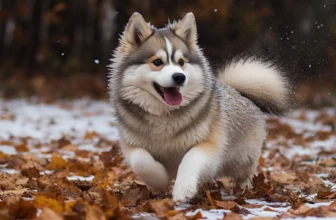
In addition to their size, another notable feature of Pomskies is their striking appearance. As with any hybrid breed, the appearance of a Pomsky can vary significantly depending on its genetic makeup. However, there are some general characteristics that most Pomskies share.
Coat
Pomskies have a thick double coat that can come in various colors, including black, white, gray, brown, and cream. The texture of the coat can also vary depending on the genetic makeup of the dog. Some Pomskies may have a more Pomeranian-like coat with soft and fluffy fur, while others may have a more Husky-like coat with coarse and dense fur.
Eye Color
The eye color of a Pomsky can also vary significantly. Some Pomskies may have blue eyes like their Husky parent, while others may have brown or hazel eyes like their Pomeranian parent. It is also possible for a Pomsky to have heterochromia, where each eye is a different color.
Facial Features
Pomskies typically have a round face like their Pomeranian parent with erect ears and almond-shaped eyes like their Husky parent. Their muzzle can vary in length depending on their genetic makeup.
Caring for Your Pomsky
Regardless of their size and appearance, all Pomskies require proper care to ensure they lead healthy and happy lives.
Diet
Pomskies require a balanced diet that provides them with all the necessary nutrients they need to thrive. It is essential to choose high-quality dog food that meets your Pomsky’s nutritional needs based on its age, weight, and activity level.
Exercise
Pomskies are an active breed that requires daily exercise to keep them healthy and happy. They enjoy going for walks, playing fetch, and engaging in other physical activities that stimulate their minds and bodies.
Grooming
Pomskies require regular grooming to maintain their thick double coat. Brushing them at least once or twice a week helps prevent matting and keeps their coat shiny and healthy. It is also essential to trim their nails regularly, clean their ears, and brush their teeth to prevent dental problems.
Conclusion
Pomskies are a unique designer dog breed that has become increasingly popular in recent years. Their size and appearance can vary significantly depending on several factors, including their genetic makeup, the weight of the parent breeds, and gender. Regardless of their size and appearance, all Pomskies require proper care to ensure they lead healthy and happy lives. By understanding the size and appearance of Pomskies, you can make an informed decision about whether this breed is right for you.