Written and reviewed by A Pomsky Editorial Team. Originally published 2026-07-26; substantively reviewed July 26, 2026.
Training boundary: Use humane, reward-based methods and protect safety with management. Pain, panic, aggression, a bite history, or serious handling risk requires a veterinarian or qualified behavior professional. Read the editorial policy.
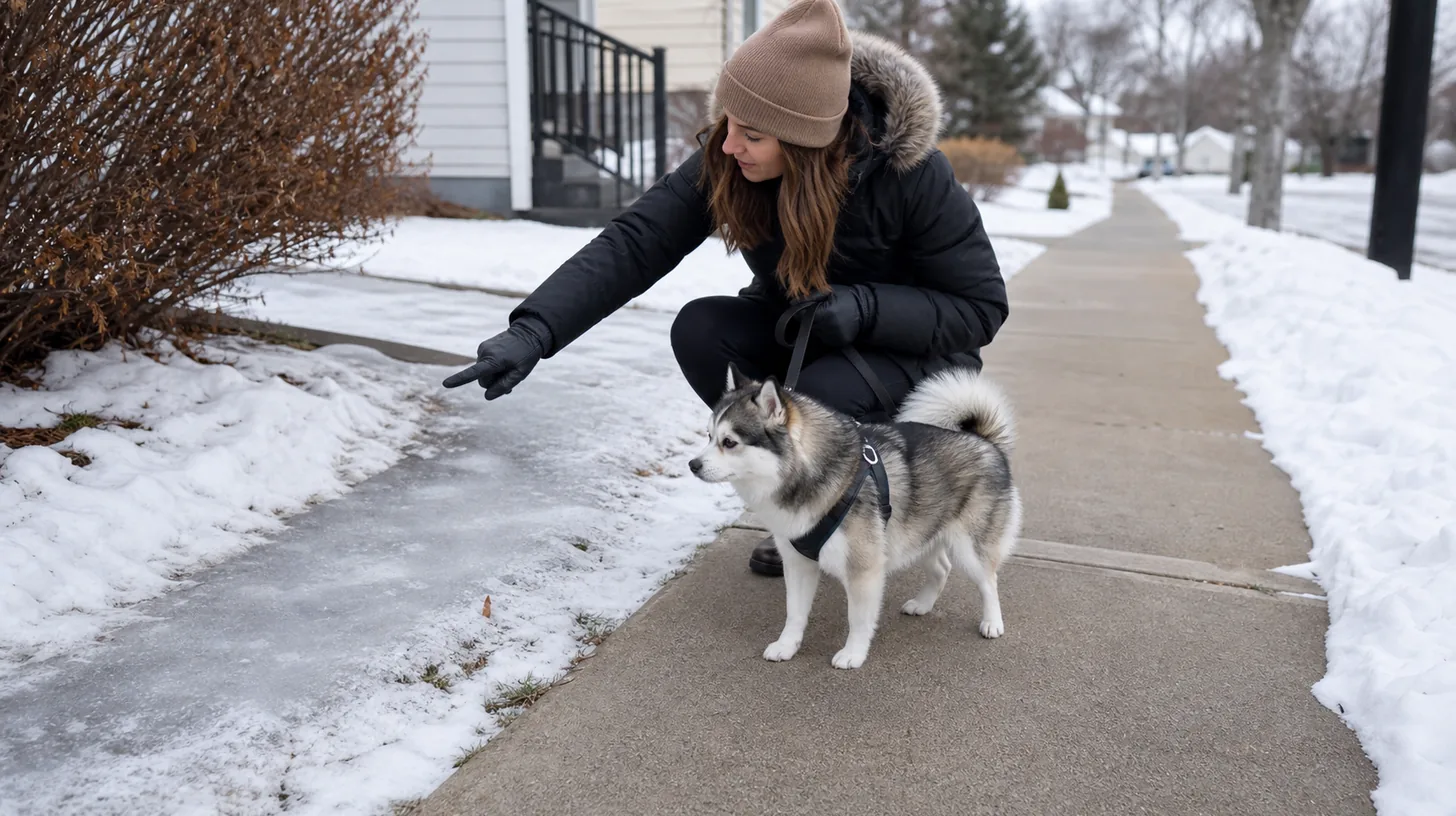
Direct answer: Inspect the route before leaving: look for glare ice, packed snow, deicer residue, poor visibility, wind exposure, and safe turnaround points. Check the Pomsky's paws, gait, equipment, and current condition, then shorten, reroute, or cancel when footing or exposure cannot be controlled. Reassess during the walk and rinse and dry paws when residue or moisture warrants it.
Snow does not create one predictable walking condition. Fresh powder, packed snow, refrozen meltwater, hidden ice, deicing residue, wind, darkness, and traffic can change within one block. A winter walk should begin with a go, modify, or cancel decision based on the route and the individual Pomsky, not on the assumption that a thick coat makes every outing suitable.
Check Conditions at the Door
Look at the actual surface, precipitation, wind, visibility, and light before fitting equipment. Weather summaries do not show an icy building entrance, shaded hill, plow ridge, or untreated crossing. Check whether a safer short route and a quick return are available.
If the first steps cannot be managed without slipping or crossing an unknown treatment, choose indoor activity and a controlled toileting option instead.
Inspect the Pomsky
Observe normal standing and walking indoors. Check paws for existing cracks, irritation, wounds, broken nails, trapped debris, or sensitivity. Consider current age, coat condition, mobility, health, recent activity, and recovery.
A dog eager at the door can still have poor traction or limited tolerance. Excitement is not a winter fitness assessment.
Inspect Walking Equipment
Confirm the harness or collar fits over the current coat without restricting movement or slipping. Inspect leash clips and reflective or visibility equipment. Clothing or paw protection should be introduced and fitted before a hazardous outing, not tested for the first time on ice.
No product can make an unsafe route safe. Equipment supports a conservative plan; it does not replace surface inspection.
Identify Ice Before Stepping Onto It
Look for shine, dark transparent patches, refrozen puddles, compressed snow, sloped driveways, bridge surfaces, steps, metal covers, and shaded corners. Test your own footing from a stable position without pulling the dog forward.
Assume snow may conceal ice. Keep the Pomsky on the cleared surface and turn back before a narrow section removes the safe option.
Account for Deicing Material
Notice granules, wet residue, treated entrances, parking areas, and roadside slush. Avoid unknown products when possible. Do not let the Pomsky lick piles, paws, or contaminated meltwater. Select a cleaner route rather than relying on a post-walk wash to erase exposure.
Carry the contact information needed for veterinary or poison guidance. Do not induce vomiting or improvise chemical treatment after suspected ingestion.
Choose a Short Route With Exits
Prefer level, familiar, well-lit paths with multiple turnaround points. Avoid routes that commit the household to a long icy return. Cross roads only where both people and dog can stop and move without rushing.
Tell another household member the route when conditions are changing. Carry a phone, but keep the leash hand available and avoid distraction.
Start Below the Planned Duration
Use the first minute as an assessment. Watch gait, paw placement, body tension, attention, and willingness to continue. Keep the pace controlled and the leash free of sudden tension that could destabilize either participant.
The objective is not to complete a standard distance. A brief safe outing can be the correct winter walk.
Reassess Continuously
Conditions may worsen as snow packs underfoot or temperature changes. Check for repeated paw lifting, altered stride, reluctance, shivering, ice accumulation, wet coat, scanning, or difficulty recovering after a slip.
Pause on stable footing. If the next section is worse or the Pomsky's movement changes, use the nearest safe return rather than waiting for a dramatic sign.
Handle Slopes and Steps Conservatively
Avoid steep icy slopes and untreated stairs. Do not ask the Pomsky to pull a person uphill or use leash tension as a balance aid. Choose a ramp or cleared alternate path only when it has reliable traction and safe edges.
Senior dogs, puppies, and dogs with mobility concerns may need a different route or no outdoor walk under the same conditions.
Protect Visibility and Space
Snowbanks can hide approaching dogs, people, and vehicles. Slow before corners and driveways. Create distance from snow-removal equipment, salt spreaders, sleds, and people moving unpredictably.
Do not force greetings on a narrow cleared path. Step into a safe wide area or turn around rather than moving onto ice to make room.
Return Before Recovery Worsens
Turn back while the Pomsky is still moving normally. The return route requires energy and may be colder or more slippery. Do not treat reaching a destination as a reason to continue.
At the door, pause on a nonslip mat so wet paws do not create an indoor fall risk.
Inspect and Clean Paws
Check each paw under good light. Remove loose snow gently. Rinse with plain comfortable-temperature water when environmental residue warrants it, then blot pads and spaces between toes dry. Avoid force, hot water, aggressive rubbing, and unverified products.
Observe the Pomsky walking after cleanup. Persistent sensitivity, wounds, chemical concern, or lameness needs veterinary guidance.
Dry the Coat and Equipment
Blot wet areas and allow the coat to dry in a warm, ventilated space appropriate to the dog. Inspect harness straps, leash hardware, and visibility gear for moisture, salt, and damage. Store equipment only after it is clean and dry.
Do not leave a damp harness against the coat. Check friction areas during the next grooming routine.
Record Useful Patterns
Note the surface, route, weather context, walk length, paw response, gait, cleanup, and recovery. Patterns can reveal that one shaded block, entrance treatment, or time of day creates recurring difficulty.
The log is for household planning, not for defining a universal temperature or exposure limit.
Know When to Stop and Seek Help
End the outing for repeated paw lifting, slipping, reluctance, weakness, disorientation, marked shivering, abnormal breathing, injury, ingestion concern, or poor recovery. Move to shelter without adding exposure and contact appropriate professionals.
A successful winter decision may be a shorter route, a different surface, or cancellation. The standard is controlled footing and normal recovery, not distance completed.
Prepare an Indoor Alternative
Have a low-risk indoor plan ready before checking the weather. A short reward-based skill session, supervised search activity, or calm food-free enrichment can replace part of a canceled walk when appropriate to the individual. Keep the activity within the Pomsky's normal routine and current health limits. An indoor alternative removes pressure to continue outside simply because equipment is already fitted or the household expected a particular distance.
Sources reviewed
Each source is used only for the claim scopes listed below. None establishes a guaranteed Pomsky outcome or replaces individual professional assessment.
- ASPCA: Walking Your Dog in a Winter Wonderland? Protect Your Pet's Paws With These Tips - Supports: post-walk paw rinsing and drying; ice and salt removal; paw-pad inspection. Limit: Persistent irritation, cracking, bleeding, ingestion, or illness requires veterinary or poison-control advice.
- American Animal Hospital Association: Lifestyle and Safety Assessment - Supports: appropriate confinement; leash, collar and harness planning; lifestyle-specific safety review. Limit: Equipment selection must account for the individual dog's anatomy, behavior, health, and environment.
- American Animal Hospital Association: AAHA-AVMA Canine Preventive Healthcare Guidelines - Supports: preventive exams; individual risk assessment; parasite and vaccination planning. Limit: The veterinarian sets the schedule for the individual dog and location.