Written and reviewed by A Pomsky Editorial Team. Originally published 2026-07-26; substantively reviewed July 26, 2026.
Training boundary: Use humane, reward-based methods and protect safety with management. Pain, panic, aggression, a bite history, or serious handling risk requires a veterinarian or qualified behavior professional. Read the editorial policy.
Direct answer: Assess current local conditions, sun, humidity, surface exposure, shade, route length, water, exit options, and the individual Pomsky before leaving. Choose go, modify, or cancel rather than relying on one universal temperature. Stop at early behavior changes and obtain emergency veterinary guidance for marked breathing difficulty, weakness, vomiting, disorientation, or collapse.
There is no single outdoor temperature that makes every Pomsky walk safe or unsafe. Before leaving, assess current heat, humidity, sun, shade, surface exposure, route length, water access, the dog's acclimation and health, and a rapid exit option. When conditions or the individual dog raise concern, shorten, relocate, reschedule, or replace the walk rather than testing tolerance.
Check Conditions at the Actual Time and Place
Use a current local weather source, not yesterday's forecast. Note temperature, humidity, direct sun, wind, air-quality alerts, and how long conditions are expected to persist. A shaded route can differ substantially from an exposed parking lot, and pavement retains heat.
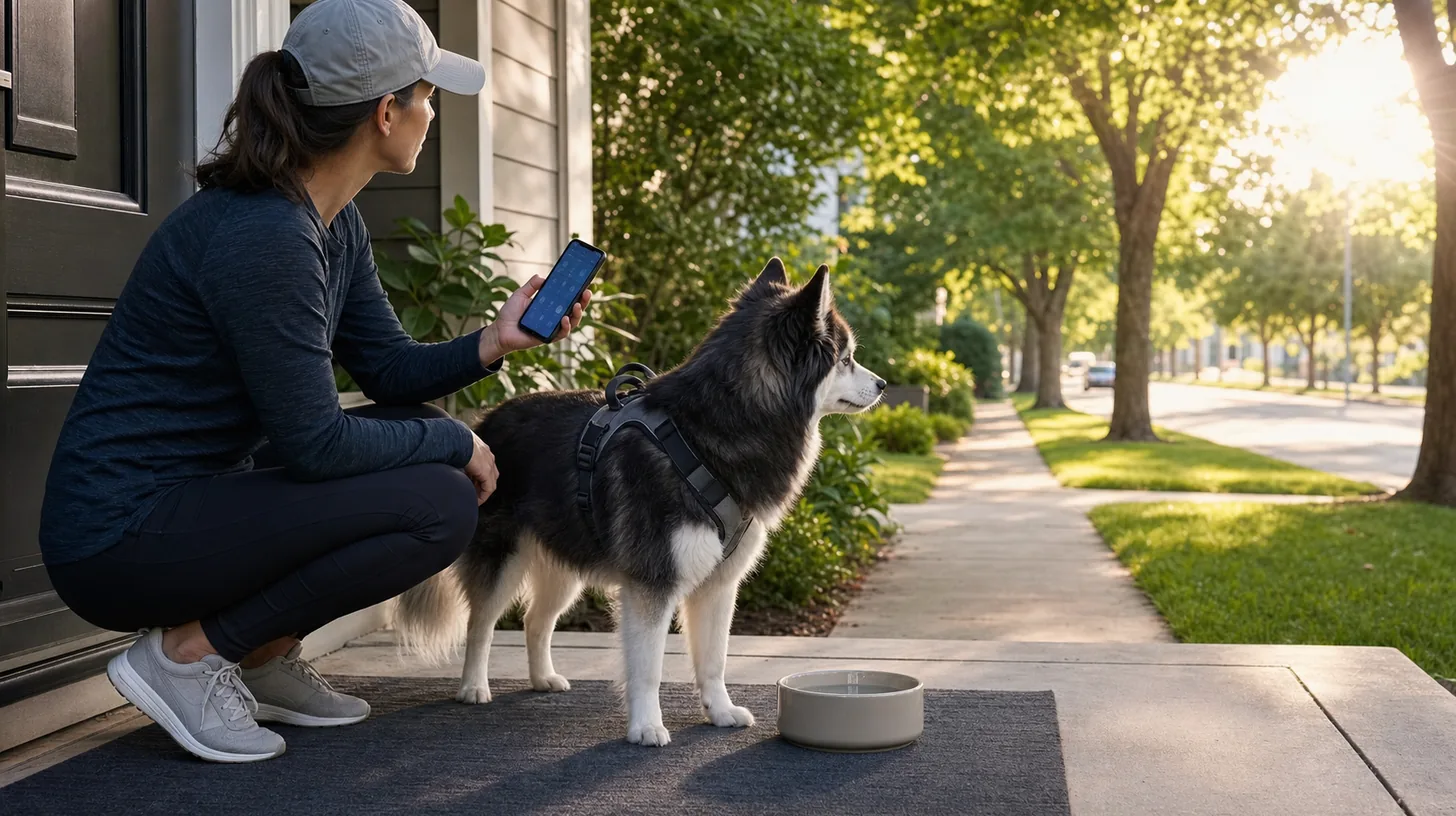
Walk outside without the dog and inspect the route. Identify shade gaps, reflective surfaces, construction, traffic delays, and places where returning quickly would be difficult. Do not treat a phone number as a complete risk assessment; it is one input in a location-specific decision.
Consider the Individual Pomsky
Age, body condition, coat, fitness, acclimation, hydration, medication, respiratory or heart disease, pain, and recent illness can change heat tolerance. A dog that managed a route previously may not be safe today. Puppies, seniors, and dogs with health limitations need more conservative planning.
Ask the veterinarian about individual activity limits when health concerns exist. Do not shave a double coat as an improvised cooling strategy. Grooming should maintain a clean, unmatted coat without assuming that removing protective coat layers makes exercise safe.
Inspect Walking Surfaces
Check pavement, asphalt, metal, sand, artificial turf, and unshaded decking before committing to the route. Surface heat can injure paws even when the air feels tolerable. Choose grass, soil, or shaded paths where safe, and avoid requiring the dog to stand on exposed surfaces.
A brief hand test is not a veterinary guarantee and may not reflect the entire route. Look for paw lifting, shortened steps, sudden stopping, or attempts to reach shade. Turn back promptly rather than asking the Pomsky to continue to a planned distance.
Make a Go, Modify, or Cancel Decision
Use three options. “Go” means the short route, conditions, dog, water, and exit plan are appropriate. “Modify” means moving to shade, reducing duration, slowing the pace, or choosing an indoor alternative. “Cancel” means the risk cannot be reduced enough.
Write the decision before the walk if several caregivers are involved. A fixed exercise target should not override current conditions. Missing one outdoor walk is safer than continuing because a schedule, device, or daily goal says more activity is due.
Choose Cooler Timing and a Short Route
Early morning may be cooler than late afternoon, but local humidity, overnight heat, and surface conditions still matter. Start with a route shorter than the Pomsky's ordinary walk and keep close to home or climate-controlled shelter. Avoid remote loops with no exit.
Plan shade stops and water access without forcing large amounts of water. Carry a phone, identification, waste bags, and well-fitted equipment. Never leave the Pomsky in a parked vehicle before or after the walk, even for a brief errand.
Monitor the Dog From the First Minutes
Watch pace, posture, responsiveness, panting pattern, tongue and gum appearance, coordination, shade-seeking, and willingness to continue. Compare with the dog's ordinary behavior rather than waiting for collapse. Heat illness can progress and requires prompt professional action.
Do not use obedience cues to override repeated stopping or attempts to retreat. A Pomsky that lags, becomes disoriented, vomits, weakens, collapses, or shows marked breathing difficulty needs immediate movement to a safer environment and emergency veterinary guidance.
Respond to Heat-Distress Signs
Stop activity, move to shade or air conditioning, and contact an emergency veterinarian. Follow professional cooling and transport instructions. Do not use ice water, force drinking, wrap the dog in wet material that traps heat, or delay transport while trying multiple home remedies.
Call ahead so the clinic can prepare and explain how to transport safely. Record the timeline, activity, conditions, observed signs, and actions taken. Improvement after initial cooling does not prove that veterinary assessment is unnecessary.
Replace Outdoor Exercise Constructively
On a canceled day, use short indoor training, scent searches, food puzzles suited to the dog, calm play, or several brief toilet outings. Adjust food rewards within the normal diet rather than adding a large unmeasured calorie load.
Indoor activity should match space, footing, health, and arousal. Avoid repetitive high-impact chasing on slippery floors. The goal is safe mental and physical engagement, not reproducing the exact exertion of an outdoor walk.
Plan for Travel and Shared Care
Give walkers and sitters the same go, modify, or cancel framework. Specify approved routes, cooler alternatives, emergency contacts, water and equipment locations, and signs that require stopping. Do not pressure a paid walker to complete a contracted duration in unsafe conditions.
When traveling, reassess acclimation and local weather. A Pomsky arriving from a cool climate may need a more conservative plan. Airline, hotel, event, and park rules do not establish medical safety.
Keep a Brief Heat-Walk Record
Record date, time, conditions, route, duration, surface, water access, dog response, and why the walk was modified or canceled. The record can reveal safer time windows and help a veterinarian evaluate exercise tolerance, but it cannot define a universal cutoff.
Review the plan after illness, medication changes, weight change, grooming problems, or a heat-related event. Hot-weather walking decisions should remain conservative and reversible: check the actual environment, observe the individual Pomsky, and exit before signs become severe.
Do not treat panting as the only warning sign or assume that a dog continuing to walk is safe. Excitement, leash pressure, and environmental attraction can keep a Pomsky moving despite rising risk. Caregivers should make the conservative decision rather than waiting for the dog to refuse.
Seasonal acclimation also changes. The first unexpectedly warm days can require shorter activity than temperatures later in a carefully managed season. Reassess after travel, air-conditioning changes, boarding, or a long period of indoor rest, and discuss recurring exercise intolerance with a veterinarian.
Keep cooling equipment and water clean and functional, but do not use a vest, fan, shade cloth, or portable bowl as proof that an otherwise unsafe outing has become safe. These are supporting measures within a sound plan, not permission to extend exposure.
Sources reviewed
Each source is used only for the claim scopes listed below. None establishes a guaranteed Pomsky outcome or replaces individual professional assessment.
- ASPCA: The Dangers of Leaving an Animal in a Hot Car and Other Heat-Related Hazards - Supports: parked-car heat risk; heat-distress warning signs; need for prompt emergency response; jurisdictional law variation. Limit: Local law and emergency-dispatch instructions control whether and how a private person may enter a vehicle.
- ASPCA: Emergency Care for Your Pet - Supports: heatstroke as a veterinary emergency; emergency clinic planning; professional escalation. Limit: A general article cannot assess stability or replace emergency veterinary examination and treatment.
- American Veterinary Medical Association: Pets in Vehicles: Heat Safety - Supports: rapid vehicle temperature rise; parked-car prevention; heat-risk awareness. Limit: Vehicle heating varies with conditions; the resource does not replace emergency dispatch, animal control, law enforcement, or veterinary care.