Written and reviewed by A Pomsky Editorial Team. Originally published 2026-07-26; substantively reviewed July 26, 2026.
Training boundary: Use humane, reward-based methods and protect safety with management. Pain, panic, aggression, a bite history, or serious handling risk requires a veterinarian or qualified behavior professional. Read the editorial policy.
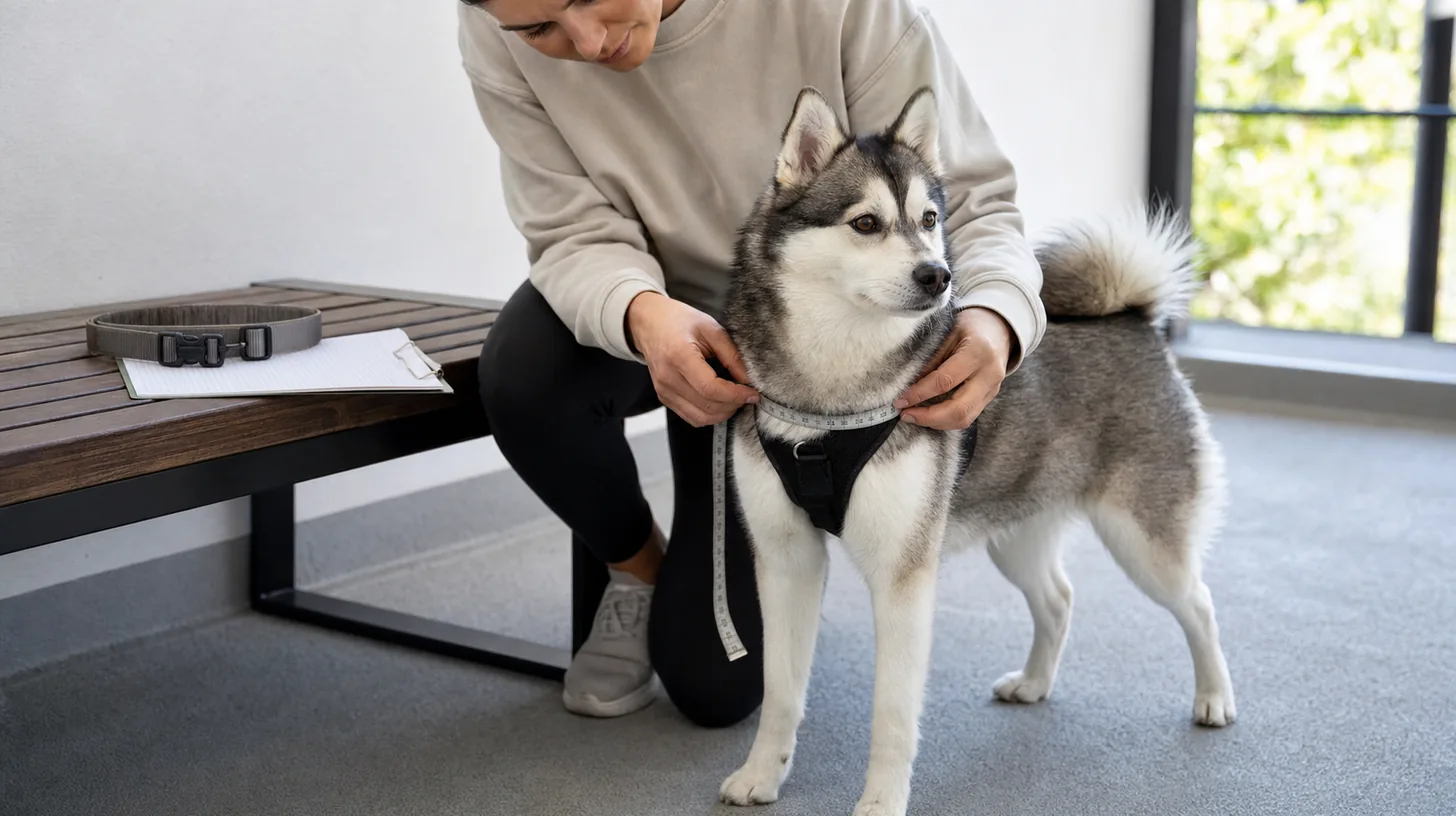
Direct answer: Recheck collar and harness fit after growth, weight change, coat shedding or regrowth, grooming, washing, illness, or equipment wear. Measure using the item's instructions, inspect body landmarks and skin, observe normal movement, test escape resistance only inside a secure barrier, and replace damaged or unsuitable gear.
A collar or harness that fit a Pomsky at purchase can become loose, restrictive, chafing, or difficult to escape-proof after growth, weight change, grooming, coat cycling, washing, or hardware wear. Recheck measurements and movement regularly and whenever the dog's body, coat, or equipment changes. Fit is a maintenance task, not a one-time setting.
Establish a Fit Baseline
Record the equipment brand, model, size, attachment points, neck and chest measurements, strap positions, and the date. Photograph the fit from the front, side, and above while the Pomsky stands naturally. Keep the manufacturer's instructions because different designs use different adjustment locations.
The baseline should describe the individual item, not assume all collars or harnesses fit alike. Do not copy a setting from another dog. If the equipment twists, crosses the throat improperly, or cannot be adjusted away from a joint, it may be the wrong design rather than merely the wrong size.
Choose Recheck Triggers
Recheck puppies frequently during growth. For adults, inspect after noticeable weight gain or loss, coat shedding or regrowth, a close grooming session, bathing, equipment washing, illness, reduced activity, or a change in walking behavior. Also recheck before travel or handing the dog to a sitter.
Set a recurring calendar reminder even when no trigger is obvious. Hardware and webbing can change gradually. A quick visual glance while the equipment is covered by thick coat may miss pressure, looseness, or skin irritation underneath.
Measure the Collar Position
Place the collar where the design is intended to sit and measure the neck according to the manufacturer's method. Check that identification is readable and that tags, buckles, and rings do not create sharp pressure. Confirm that the collar cannot slide over the head during backward movement.
Informal finger rules vary with hand size, coat, collar width, and dog anatomy. Use measurement plus direct inspection rather than a single universal number. A collar should not impair breathing or swallowing, press continuously on the throat, or mat the coat into painful tangles.
Check Harness Landmarks
Identify the neck opening, chest or sternum position, girth strap, shoulder blades, armpits, and attachment points. Straps should follow the intended landmarks without crossing soft throat tissue or restricting normal shoulder extension. The girth strap should not rub directly in the armpit.
Thick fur can hide strap placement. Part the coat and feel the full path. Compare both sides because a twisted or uneven adjustment can pull the harness off center. If the manufacturer provides a fitting diagram, compare the actual landmarks rather than relying only on the labeled size.
Observe Movement Under Low Load
Watch the Pomsky walk, turn, sit, lie down, step over a low safe obstacle, and lower the head to sniff. Look for shortened stride, elbow contact, strap migration, coughing, scratching, freezing, or repeated attempts to bite the equipment.
Begin indoors or in a secure area with a loose leash. Do not create heavy pulling to “test” strength. Movement problems can reflect fit, design, pain, fear, or lack of conditioning. Sudden gait change or touch sensitivity requires veterinary assessment rather than repeated equipment adjustment.
Perform a Controlled Escape Check
In a fully enclosed space, apply gentle backward leash direction while another barrier remains closed. Observe whether the Pomsky can back out, rotate the harness, or draw an elbow through an opening. Stop before the dog struggles or becomes frightened.
Do not test escape resistance beside traffic, an open gate, or another animal. Some dogs require a safety connector between correctly fitted pieces of equipment during transitions. A connector is a backup layer, not permission to use poorly fitted primary gear.
Inspect Skin and Coat Contact
Remove the equipment and part the coat along every contact area. Look for redness, moisture, odor, broken hair, mats, swelling, tenderness, or debris. Check under buckles and behind the front legs. Clean and dry the coat according to grooming needs.
Persistent irritation, sores, pain, hair loss, or odor should be evaluated by a veterinarian. Do not place padding over an unidentified skin problem and continue normal use. Mats under straps can tighten the effective fit and make removal painful.
Audit Hardware and Materials
Flex webbing and inspect stitching, buckles, adjustment sliders, rings, clips, reflective material, and safety connectors. Look for cracks, corrosion, tooth marks, fraying, deformation, and slipping adjustments. Confirm that attachments close fully and cannot be opened by ordinary movement.
Follow cleaning directions and allow equipment to dry completely. Heat, chemicals, and machine washing may damage some materials. Retire an item when critical hardware or stitching is compromised; a cosmetic repair is not a verified load-bearing repair.
Refit After Grooming or Washing
Bathing, brushing, undercoat shedding, clipping mats under professional guidance, or equipment washing can change how straps settle. Put the clean dry equipment back on and repeat the measurement and movement checks. Do not assume the previous marks remain correct.
For a Pomsky with a dense coat, avoid tightening solely to compress fur. Find the body landmarks beneath the coat while preserving comfortable movement. Recheck again as the coat returns because the apparent space can change.
Document and Communicate the Setting
Photograph the adjusted straps and mark the correct positions only if the method does not damage the item. Record the date and reason for adjustment. Show walkers, sitters, and family members which equipment to use and how to confirm the buckles and attachment points.
Do not let a caregiver switch to an unreviewed collar or harness for convenience. Travel bags should contain the current item, backup identification, and fitting notes. If several Pomskies live together, label equipment clearly.
Know When to Replace or Seek Help
Replace equipment that cannot maintain adjustment, is damaged, no longer matches the dog's body, or restricts movement despite correct sizing. A qualified positive-reinforcement trainer may help with gradual equipment conditioning, while a veterinarian should assess pain, respiratory signs, skin injury, or sudden avoidance.
Repeat the Pomsky collar and harness fit recheck after every trigger and at routine intervals. The goal is comfortable movement, reliable control, readable identification, and layered escape prevention. No collar or harness makes an open environment safe by itself.
Sources reviewed
Each source is used only for the claim scopes listed below. None establishes a guaranteed Pomsky outcome or replaces individual professional assessment.
- American Kennel Club: Finding and Choosing the Right Dog Collar for Your Dog - Supports: neck measurement; flat-collar fit; routine cleaning and rechecking. Limit: A two-finger check is a starting fit check, not a guarantee against escape, injury, or coat compression.
- American Kennel Club: The Importance of a Well-Fitting Harness - Supports: harness measurement; strap clearance; shoulder movement; escape and chafing checks. Limit: No harness corrects pulling by itself or fits every body shape; pain, rubbing, or gait change needs reassessment.