Written and reviewed by A Pomsky Editorial Team. Originally published 2026-07-26; substantively reviewed July 26, 2026.
Safety boundary: This guide is educational and cannot diagnose, treat, or replace veterinary, medical, public-health, emergency-dispatch, animal-control, or jurisdiction-specific legal guidance. Use the health disclaimer and contact the appropriate professional for the actual situation.
Direct answer: Avoid heavily treated routes, use a well-fitted barrier when appropriate, prevent licking, and rinse and dry every paw after walking through salt or slush. Inspect pads, toes, and nails, identify the product after exposure, and contact a veterinarian or animal poison service for ingestion, injury, or concerning signs.
Identify where road salt exposure occurs
Map the treated surfaces on the normal walking route: sidewalks, parking lots, building entrances, stairs, and curb edges. Ice melt may be spread unevenly or hidden in slush. Choose a shorter or less-treated route when possible, and do not let the Pomsky eat snow, lick piles of granules, or drink runoff.
Inspect paws before the walk so new redness, cracks, cuts, or tenderness can be distinguished from an existing problem. Dogs with current paw injury, skin disease, mobility limits, or repeated irritation need individualized veterinary advice. “Pet friendly” ice melt is not a promise that ingestion or prolonged skin contact is harmless.
Choose a practical barrier
Well-fitted dog boots can reduce direct contact when a Pomsky is comfortable wearing them. Each boot should stay secure without restricting circulation, rubbing dewclaws, altering gait, or trapping moisture. Condition the dog to boots indoors with brief reward-based sessions before relying on them outdoors. Recheck fit after coat changes and during every walk.
A paw barrier product may be an option only when its ingredients and directions are appropriate for dogs and the individual has no known sensitivity. Do not substitute petroleum, human skin medication, essential oils, or an unknown home mixture without veterinary guidance. Barriers reduce exposure; they do not replace route choice, rinsing, inspection, or prevention of licking.
Keep the winter walk controlled
Use a secure harness and leash and keep the walk short enough that the dog remains comfortable. Avoid sharp ice, deep crusted snow, visible chemical piles, and areas where vehicles splash slush. Watch for lifting a paw, sudden limping, stopping, chewing at the feet, or reluctance to continue. Those signs call for a route change and prompt inspection.
Cold tolerance varies with health, body size, coat condition, wind, moisture, activity, and acclimation. A dense-looking coat does not protect paw pads from salt or sharp ice. Do not use a fixed outdoor time from a generic article as a guarantee. Return indoors when conditions or the individual dog indicate the plan is no longer comfortable.
Rinse and dry after every treated route
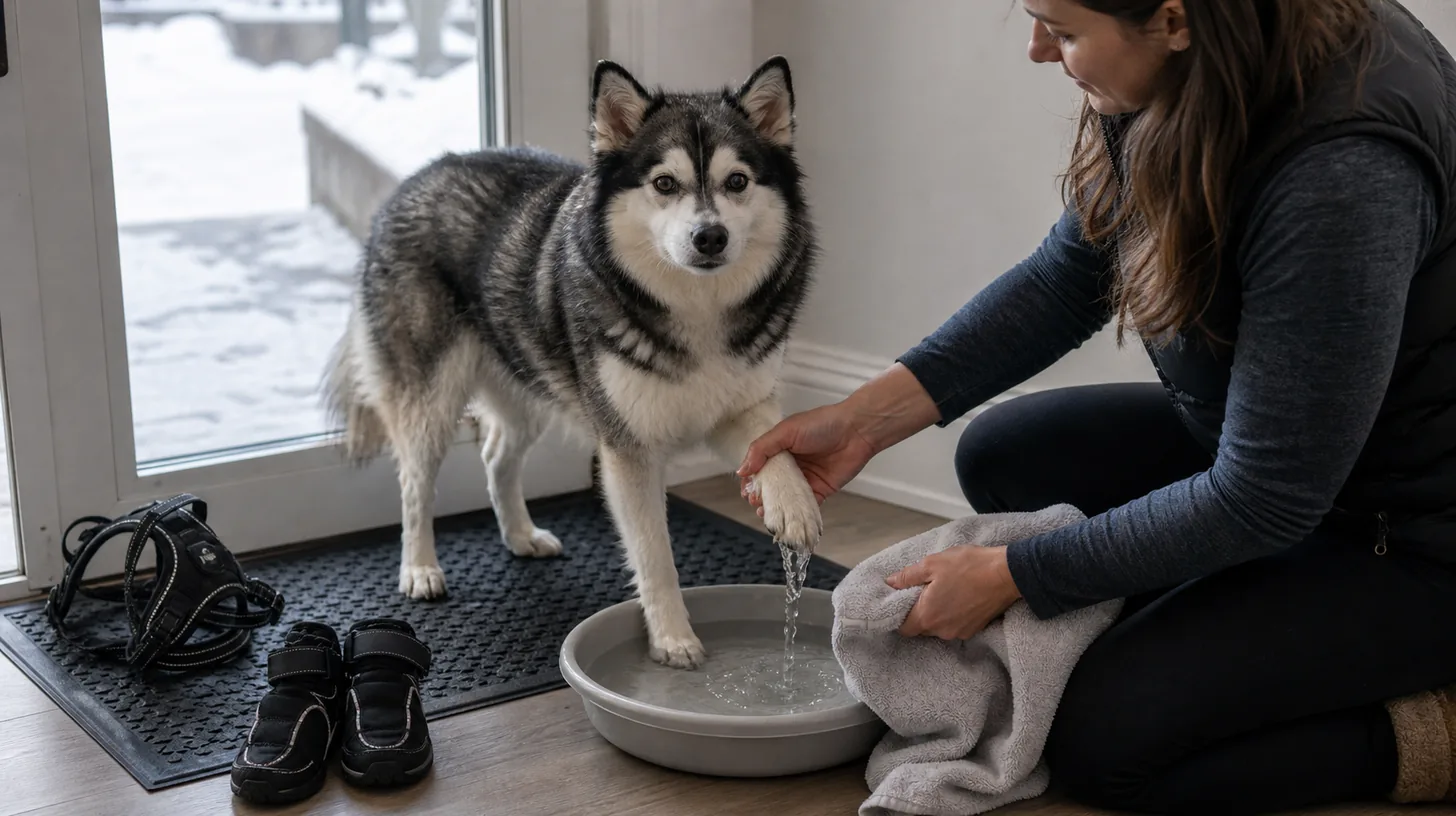
At the door, prevent licking until the paws are cleaned. Use lukewarm water to rinse pads, between the toes, around the nails, and lower-leg feathering that contacted slush. A shallow basin, damp cloth followed by a rinse, or a gentle paw-washing device can work if the dog is conditioned to handling. Avoid hot water and harsh detergent.
Dry thoroughly with a clean towel, including between toes, because retained moisture can add irritation. Wash or wipe boots according to their instructions and dry them before reuse. Clean the entry area so salt tracked indoors is not licked later. Reward calm handling and release the dog between paws if a continuous procedure becomes stressful.
Inspect pads toes and nails
Look for redness, swelling, cracking, bleeding, blisters, foreign material, broken nails, discharge, odor, or persistent licking. Compare both front paws and both rear paws. Small crystals can lodge in hair between the pads, so use good lighting and avoid pulling at material that is embedded or painful.
Do not cut deeply into matted hair, apply human antiseptics, or bandage tightly without veterinary direction. Contact the veterinarian for persistent limping, bleeding, marked swelling, open sores, worsening redness, or pain. Sudden inability to bear weight or a deeply embedded object may require urgent assessment.
Respond to licking or ingestion
If the Pomsky licks a small amount from its paws, stop further access, rinse the feet, and contact a veterinarian or animal poison service for advice based on the product and amount. Keep the package or photograph the ingredient label. Report the dog’s weight, timing, estimated exposure, and current signs accurately.
Do not induce vomiting or give milk, oil, salt, activated charcoal, or other home remedies unless a professional specifically instructs you. Repeated vomiting, diarrhea, weakness, tremors, abnormal thirst, seizures, collapse, or other acute signs require prompt professional care. Different ice-melt products have different risks, so product identification matters.
Train cooperative paw handling
Practice paw touch when no cleaning is needed. Briefly touch a shoulder, slide toward the paw, mark calm behavior, reward, and release. Build toward lifting one paw, separating toes gently, and wiping with a dry cloth. Keep sessions short and stop when the dog withdraws. This preparation makes post-walk cleaning more predictable.
Do not pin the dog, squeeze a painful paw, or have children conduct the procedure. A basket muzzle may be a separately conditioned safety layer for some veterinary plans, but it does not make forced handling appropriate. Sudden resistance may reflect pain rather than a training problem.
Build a complete winter paw routine
Place leash, boots or approved barrier, towels, rinse water, waste bags, and emergency contacts near the exit. Check route treatment before leaving, inspect gear during the walk, clean paws immediately after, and log any irritation. Rotate and dry equipment so damp boots do not become another skin problem.
Road salt safety is a chain of prevention, limited exposure, decontamination, inspection, and escalation. Skipping one step weakens the rest. The goal is not to make every winter surface safe; it is to reduce contact, prevent ingestion, identify injury early, and involve a veterinarian or poison professional when signs or exposure exceed routine home care.
Keep an exposure note when irritation occurs. Record the route, weather, visible product, protection used, walk duration, cleaning method, paw findings, licking, and time to improvement. Photograph the product label and the paw only when doing so does not delay care or stress the dog. This information helps a veterinarian or poison professional assess the specific event and helps the household avoid the same surface.
Review apartment and workplace entrances as well as outdoor walks. Granules can collect on lobby mats and be carried into elevators, vehicles, and the home. Store ice-melt bags in a closed area that the dog cannot access, and clean spills immediately. Ask property staff what product is used when that information is available, but continue standard rinsing and inspection because product names and application levels may change.
Sources reviewed
Each source is used only for the claim scopes listed below. None establishes a guaranteed Pomsky outcome or replaces individual professional assessment.
- ASPCA: Walking Your Dog in a Winter Wonderland? Protect Your Pet's Paws With These Tips - Supports: post-walk paw rinsing and drying; ice and salt removal; paw-pad inspection. Limit: Persistent irritation, cracking, bleeding, ingestion, or illness requires veterinary or poison-control advice.
- ASPCA: Animal Poison Control - Supports: poison emergency routing; information to collect after exposure. Limit: Never replace urgent veterinary or poison-control instructions with article advice.