Written and reviewed by A Pomsky Editorial Team. Originally published 2026-07-26; substantively reviewed July 26, 2026.
Training boundary: Use humane, reward-based methods and protect safety with management. Pain, panic, aggression, a bite history, or serious handling risk requires a veterinarian or qualified behavior professional. Read the editorial policy.
Direct answer: Set up a nonslip entry mat, inspect each paw under good light, and rinse with plain comfortable-temperature water only when residue warrants it. Blot the pads and spaces between toes completely dry, observe normal walking, and clean the station. Pain, wounds, broken nails, chemical exposure, ingestion, or persistent skin change requires veterinary guidance.
A post-walk paw routine should remove ordinary dirt or environmental residue without turning every return home into a forced grooming event. The safest setup uses a nonslip entry area, calm cooperative handling, plain water when rinsing is actually needed, thorough gentle drying, and a clear route to veterinary care for pain, injury, or persistent skin change.
Prepare the Entry Station
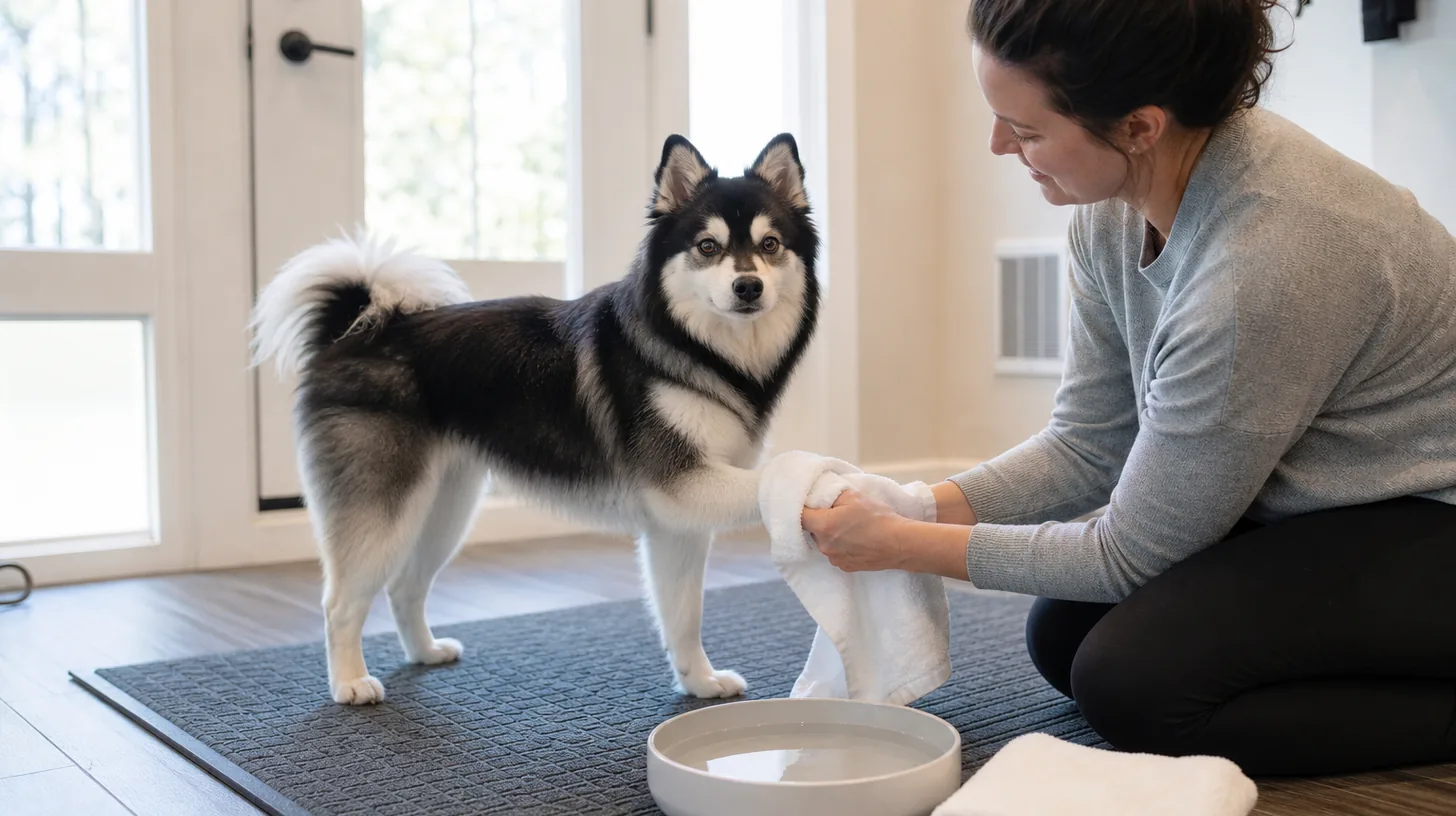
Place a nonslip mat near the door but outside the swing path. Keep a clean towel, shallow basin or suitable rinse method, waste bag, and the Pomsky's ordinary walking equipment within reach. Prevent wet floors and household traffic from crowding the dog.
Use plain, comfortable-temperature water unless a veterinarian has directed another product. Do not improvise disinfectants, essential oils, human wipes, or concentrated cleaners. Read any product label and keep containers inaccessible.
Decide Whether Rinsing Is Needed
Dry dust may need only a visual check and towel wipe. Mud, road residue, deicer, lawn treatment, unknown liquid, or material caught around the pads may justify a rinse. Avoid repeated unnecessary washing that leaves the coat damp or irritates skin.
When exposure is unknown or potentially toxic, do not assume a quick rinse resolves the risk. Prevent licking, preserve available product information, and contact a veterinarian or recognized animal poison service for case-specific instructions.
Ask for Voluntary Positioning
Invite the Pomsky onto the mat and reward calm standing or a practiced cooperative position. Begin with the easiest paw and touch briefly before lifting. Return the paw to the floor before the dog struggles.
Do not pin the dog, pull a leg sideways, or hold the body over a slippery surface. If handling is difficult, divide the routine into smaller steps and use management to keep the house clean. A qualified reward-based trainer can help build cooperative paw handling.
Inspect Before Cleaning
Look at the top of the paw, between the toes, around each pad, and around the nails under good light. Note debris, cracking, swelling, bleeding, broken nail material, unusual odor, discharge, heat, or a change in how the Pomsky bears weight.
Do not probe deeply, cut attached material, or dig at a painful area. An embedded object, significant wound, broken nail, burn, or lameness requires veterinary guidance rather than a more forceful home cleaning attempt.
Rinse Conservatively
Use a gentle stream or shallow plain-water rinse directed away from the face. Support the paw in a natural position and keep the session brief. Replace dirty water rather than moving residue from one paw to another.
Avoid hot water, high pressure, prolonged soaking, and unverified home mixtures. If the Pomsky becomes distressed, stop, prevent licking as safely as possible, and seek guidance appropriate to the exposure.
Dry Between Toes and Pads
Blot rather than rub aggressively. Use a clean absorbent towel to dry the top, sides, pads, and spaces between toes. Damp dense coat can hide residue and prolong moisture against the skin, so inspect again as you dry.
Do not use a hot dryer or aim forceful air between toes. If a pet dryer is used under an established grooming plan, follow its directions, maintain safe distance and temperature, and stop when the dog is uncomfortable.
Handle Seasonal Road Residue
During winter, avoid visibly treated surfaces when practical and inspect paws promptly after walks. Road salt and ice-melting products differ, so prevention, label information, and local conditions matter. Paw protection equipment must fit and should be introduced gradually.
The seasonal road-salt safety plan governs route choice and exposure prevention. This routine addresses what happens at the doorway; it does not make a hazardous route safe or identify a product by appearance.
Manage Mud and Wet Weather
Use washable runners between the entrance and drying station. Shorten long paw furnishings only under an appropriate grooming plan rather than cutting blindly near skin. Keep towels clean and dry between uses.
If the entire lower coat is saturated, expand the drying plan beyond the paws and monitor comfort. Shivering, marked fatigue, breathing changes, or inability to warm normally requires prompt attention rather than continued grooming.
Record Persistent Changes
Note which paw is affected, when the change began, the route and surface, products used, licking, gait, and photographs when safe. Repeated redness, odor, discharge, chewing, hair loss, or sensitivity is not solved by more frequent washing.
Bring the record to a veterinarian. Avoid diagnosing allergy, infection, burn, or a foreign body from appearance alone. Do not apply leftover medication or another pet's product.
Coordinate Every Caregiver
Write down when to inspect, when plain water is used, where clean towels are stored, and which findings require a call. Make sure walkers report unusual surfaces and do not apply unapproved products before returning the dog.
Children should not lift or restrain paws. Visitors and dog walkers can hand off observations to an adult caregiver who knows the established routine.
Clean and Reset the Station
Empty and wash the basin, launder towels, dry the floor, and store supplies securely. Check that wet equipment does not remain on the Pomsky and that no residue was tracked into a resting or feeding area.
Replace worn mats that slide or hold contamination. A clean station prevents the routine itself from becoming a source of slipping or repeated exposure.
Keep the Goal Narrow
The goal is comfortable inspection, necessary removal of ordinary residue, complete gentle drying, and early recognition of a problem. It is not daily medical treatment, cosmetic whitening, or a guarantee against irritation.
A reliable routine ends with the Pomsky walking normally away from a dry, safe entry area. When pain, injury, ingestion, chemical exposure, or persistent change is possible, professional advice takes priority over finishing every home step.
Use a Consistent Completion Check
Before releasing the Pomsky into the home, confirm all four paws were observed, needed residue was removed, toes and pads are dry, gait is unchanged, and no product or dirty water remains accessible. Record any paw that could not be examined rather than assuming it is normal. Let the dog move away and observe several ordinary steps on safe footing. Clean the station immediately so another pet or child cannot contact residue. This final check keeps the routine focused on observable safety rather than cosmetic cleanliness.
Sources reviewed
Each source is used only for the claim scopes listed below. None establishes a guaranteed Pomsky outcome or replaces individual professional assessment.
- ASPCA: Walking Your Dog in a Winter Wonderland? Protect Your Pet's Paws With These Tips - Supports: post-walk paw rinsing and drying; ice and salt removal; paw-pad inspection. Limit: Persistent irritation, cracking, bleeding, ingestion, or illness requires veterinary or poison-control advice.
- American Animal Hospital Association: AAHA-AVMA Canine Preventive Healthcare Guidelines - Supports: preventive exams; individual risk assessment; parasite and vaccination planning. Limit: The veterinarian sets the schedule for the individual dog and location.
- American Veterinary Society of Animal Behavior: Humane Dog Training Position Statement - Supports: reward-based training; aversive-method risk; behavior change principles. Limit: Does not guarantee outcomes for an individual dog.