Written and reviewed by A Pomsky Editorial Team. Originally published 2026-07-26; substantively reviewed July 26, 2026.
Training boundary: Use humane, reward-based methods and protect safety with management. Pain, panic, aggression, a bite history, or serious handling risk requires a veterinarian or qualified behavior professional. Read the editorial policy.
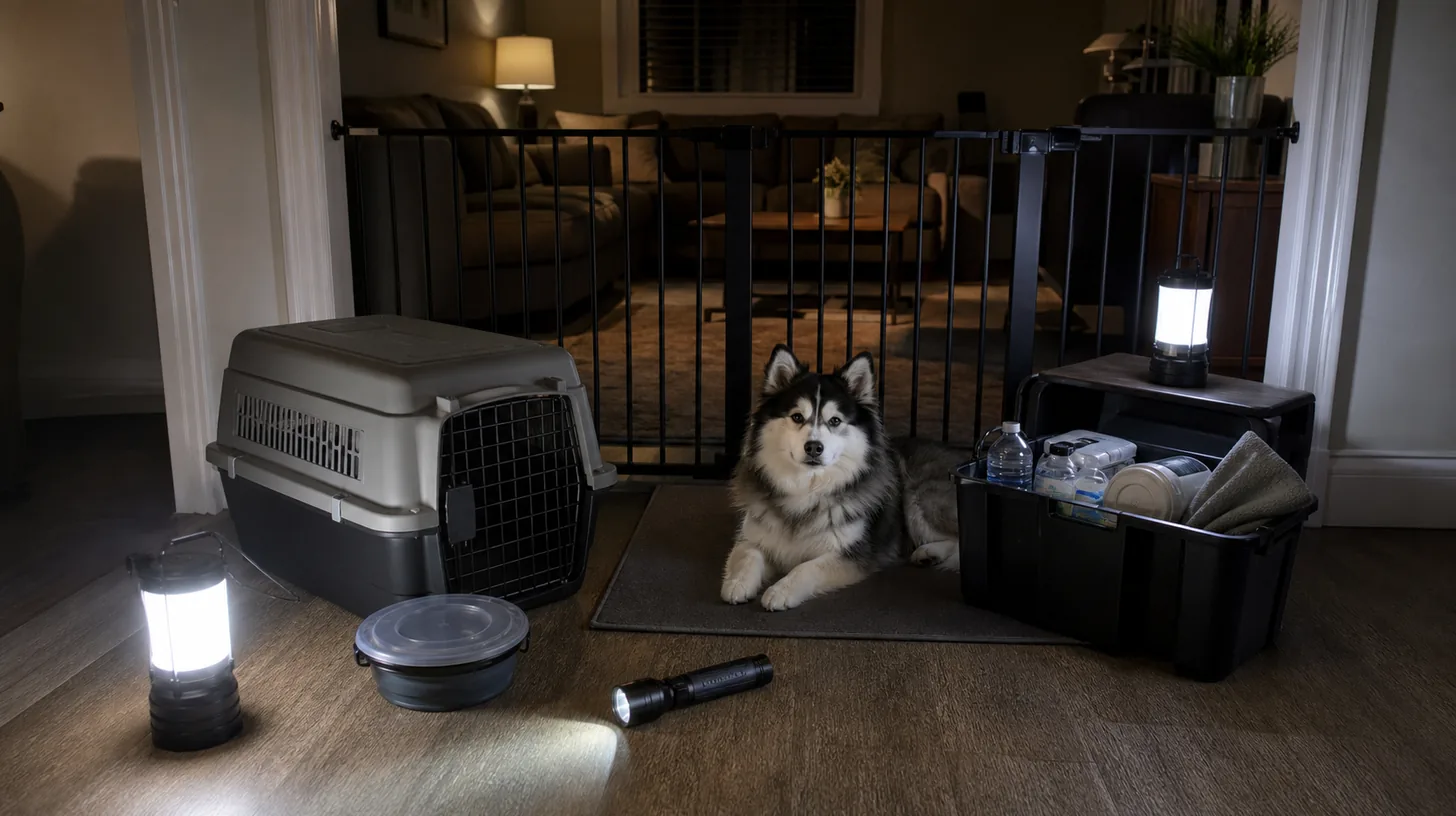
Direct answer: Move the Pomsky into a familiar controlled area before people begin opening doors or searching in the dark. Use battery lighting, keep gates and exterior doors under one person's control, maintain safe water and temperature, and protect medication or powered-care needs according to professional instructions. Never use candles or a generator indoors, and evacuate when the home cannot remain safely habitable.
A power outage changes more than the lights. Doors open while people search for equipment, indoor temperature can drift, water systems may fail, refrigerated products may become unreliable, and powered medical needs may lose support. A Pomsky plan assigns containment first, then checks the environment, supplies, communication, and the point at which remaining home is no longer safe.
Assign One Door Controller
Before searching for equipment, place the Pomsky in the selected zone and designate one adult to manage every exterior door, gate, and transfer.
Perform this check before adding the next variable. The target remains continuous dog containment and a timely stay-or-evacuate decision during loss of power. Work in one familiar indoor zone with battery lighting, a clear path, closed exterior access, water, identification, and a ready carrier. If the setup cannot preserve that condition, simplify it or stop rather than relying on speed or physical control. For this page, step 1 is specifically the assign one door controller check.
Do not convert this step into a stress test. The principal avoidable risks are open flames, indoor generator use, loose doors in darkness, unsafe temperature, spoiled supplies, inaccessible medication, or delayed evacuation. Write down outage start, utility notices, indoor conditions, water and medication checks, dog observations, contacts, and decisions; a short factual note is more useful than a reassuring guess. Record the outcome of assign one door controller separately before moving on.
Switch to Battery Lighting
Illuminate the dog zone, route to supplies, and exit path with lanterns or flashlights positioned where the Pomsky cannot knock them over or chew them.
Use an observable pass condition: the relevant item is checked, the boundary is closed, and the Pomsky can remain safe without being used as a test. This protects the main objective, continuous dog containment and a timely stay-or-evacuate decision during loss of power, while leaving a clear point at which the caregiver can step back. For this page, step 2 is specifically the switch to battery lighting check.
If the Pomsky cannot remain comfortable or the equipment and environment cannot remain controlled, end the attempt. Do not proceed through open flames, indoor generator use, loose doors in darkness, unsafe temperature, spoiled supplies, inaccessible medication, or delayed evacuation. Capture outage start, utility notices, indoor conditions, water and medication checks, dog observations, contacts, and decisions before deciding what changes next. Record the outcome of switch to battery lighting separately before moving on.
Remove Fire and Fume Hazards
Do not use candles near the dog, and operate generators, heaters, grills, or fuel-burning devices only in locations and ways permitted by current safety instructions.
Keep the sequence repeatable across caregivers. Say what is being checked, complete it, and return equipment and people to neutral before continuing. In this page's context, success means continuous dog containment and a timely stay-or-evacuate decision during loss of power; it does not mean proving that a known risk can be tolerated. For this page, step 3 is specifically the remove fire and fume hazards check.
The absence of an incident is not proof that the arrangement is sound. Recheck for open flames, indoor generator use, loose doors in darkness, unsafe temperature, spoiled supplies, inaccessible medication, or delayed evacuation. Document outage start, utility notices, indoor conditions, water and medication checks, dog observations, contacts, and decisions so a later caregiver can distinguish a passed step from one that was skipped. Record the outcome of remove fire and fume hazards separately before moving on.
Monitor the Indoor Environment
Check actual room conditions and the Pomsky's behavior rather than assuming a double coat makes heat, cold, humidity, or poor air quality acceptable.
Treat this as one part of the complete routine, not an isolated trick. The surrounding setup is one familiar indoor zone with battery lighting, a clear path, closed exterior access, water, identification, and a ready carrier. A clean transition reduces ambiguity and makes it easier to notice when the dog, equipment, environment, or records differ from the previous attempt. For this page, step 4 is specifically the monitor the indoor environment check.
Stop when the expected condition is absent or the situation begins to depend on force, luck, or an open boundary. Specifically avoid open flames, indoor generator use, loose doors in darkness, unsafe temperature, spoiled supplies, inaccessible medication, or delayed evacuation. The follow-up record should cover outage start, utility notices, indoor conditions, water and medication checks, dog observations, contacts, and decisions. Record the outcome of monitor the indoor environment separately before moving on.
Protect Water Access
Keep a clean supply available, prevent spills in dark walkways, and follow official local guidance when water service or water safety is affected.
Pause long enough to inspect the result rather than assuming the action worked. Look at the dog, the physical boundary, and the next movement available to the caregiver. Continue only when the arrangement still supports continuous dog containment and a timely stay-or-evacuate decision during loss of power. For this page, step 5 is specifically the protect water access check.
Do not convert this step into a stress test. The principal avoidable risks are open flames, indoor generator use, loose doors in darkness, unsafe temperature, spoiled supplies, inaccessible medication, or delayed evacuation. Write down outage start, utility notices, indoor conditions, water and medication checks, dog observations, contacts, and decisions; a short factual note is more useful than a reassuring guess. Record the outcome of protect water access separately before moving on.
Review Food and Refrigeration
Keep refrigerator and freezer doors closed, follow current food-safety directions, and do not feed questionable food merely to avoid waste.
A second capable adult can verify the boundary during early practice or higher-risk situations. That person should follow the same sequence and avoid adding prompts, handling, or access that changes the task. The shared standard remains continuous dog containment and a timely stay-or-evacuate decision during loss of power. For this page, step 6 is specifically the review food and refrigeration check.
If the Pomsky cannot remain comfortable or the equipment and environment cannot remain controlled, end the attempt. Do not proceed through open flames, indoor generator use, loose doors in darkness, unsafe temperature, spoiled supplies, inaccessible medication, or delayed evacuation. Capture outage start, utility notices, indoor conditions, water and medication checks, dog observations, contacts, and decisions before deciding what changes next. Record the outcome of review food and refrigeration separately before moving on.
Secure Medication and Powered Care
Locate current medication instructions, cold-storage requirements, backup power information, and veterinary contacts before an interruption occurs.
Perform this check before adding the next variable. The target remains continuous dog containment and a timely stay-or-evacuate decision during loss of power. Work in one familiar indoor zone with battery lighting, a clear path, closed exterior access, water, identification, and a ready carrier. If the setup cannot preserve that condition, simplify it or stop rather than relying on speed or physical control. For this page, step 7 is specifically the secure medication and powered care check.
The absence of an incident is not proof that the arrangement is sound. Recheck for open flames, indoor generator use, loose doors in darkness, unsafe temperature, spoiled supplies, inaccessible medication, or delayed evacuation. Document outage start, utility notices, indoor conditions, water and medication checks, dog observations, contacts, and decisions so a later caregiver can distinguish a passed step from one that was skipped. Record the outcome of secure medication and powered care separately before moving on.
Plan Controlled Toileting
Use the safest available enclosed or leashed route with lighting and two-door discipline; postpone routine outdoor time when falling hazards or unsecured access cannot be controlled.
Use an observable pass condition: the relevant item is checked, the boundary is closed, and the Pomsky can remain safe without being used as a test. This protects the main objective, continuous dog containment and a timely stay-or-evacuate decision during loss of power, while leaving a clear point at which the caregiver can step back. For this page, step 8 is specifically the plan controlled toileting check.
Stop when the expected condition is absent or the situation begins to depend on force, luck, or an open boundary. Specifically avoid open flames, indoor generator use, loose doors in darkness, unsafe temperature, spoiled supplies, inaccessible medication, or delayed evacuation. The follow-up record should cover outage start, utility notices, indoor conditions, water and medication checks, dog observations, contacts, and decisions. Record the outcome of plan controlled toileting separately before moving on.
Maintain Identification and Communication
Keep the Pomsky's tag, microchip contacts, recent photograph, carrier, leash, and emergency card together while conserving phone power.
Keep the sequence repeatable across caregivers. Say what is being checked, complete it, and return equipment and people to neutral before continuing. In this page's context, success means continuous dog containment and a timely stay-or-evacuate decision during loss of power; it does not mean proving that a known risk can be tolerated. For this page, step 9 is specifically the maintain identification and communication check.
Do not convert this step into a stress test. The principal avoidable risks are open flames, indoor generator use, loose doors in darkness, unsafe temperature, spoiled supplies, inaccessible medication, or delayed evacuation. Write down outage start, utility notices, indoor conditions, water and medication checks, dog observations, contacts, and decisions; a short factual note is more useful than a reassuring guess. Record the outcome of maintain identification and communication separately before moving on.
Define Evacuation Triggers
Leave when emergency officials direct it or when temperature, air, water, structural conditions, medical needs, or access cannot remain safe.
Treat this as one part of the complete routine, not an isolated trick. The surrounding setup is one familiar indoor zone with battery lighting, a clear path, closed exterior access, water, identification, and a ready carrier. A clean transition reduces ambiguity and makes it easier to notice when the dog, equipment, environment, or records differ from the previous attempt. For this page, step 10 is specifically the define evacuation triggers check.
If the Pomsky cannot remain comfortable or the equipment and environment cannot remain controlled, end the attempt. Do not proceed through open flames, indoor generator use, loose doors in darkness, unsafe temperature, spoiled supplies, inaccessible medication, or delayed evacuation. Capture outage start, utility notices, indoor conditions, water and medication checks, dog observations, contacts, and decisions before deciding what changes next. Record the outcome of define evacuation triggers separately before moving on.
Load Without Opening Multiple Exits
Connect the Pomsky behind a closed interior barrier, bring the carrier or restraint into position, and open only the controlled route needed for departure.
Pause long enough to inspect the result rather than assuming the action worked. Look at the dog, the physical boundary, and the next movement available to the caregiver. Continue only when the arrangement still supports continuous dog containment and a timely stay-or-evacuate decision during loss of power. For this page, step 11 is specifically the load without opening multiple exits check.
The absence of an incident is not proof that the arrangement is sound. Recheck for open flames, indoor generator use, loose doors in darkness, unsafe temperature, spoiled supplies, inaccessible medication, or delayed evacuation. Document outage start, utility notices, indoor conditions, water and medication checks, dog observations, contacts, and decisions so a later caregiver can distinguish a passed step from one that was skipped. Record the outcome of load without opening multiple exits separately before moving on.
Reset Carefully After Power Returns
Inspect doors, alarms, cords, appliances, food, water equipment, climate controls, and the dog's resting area before returning to the ordinary routine.
A second capable adult can verify the boundary during early practice or higher-risk situations. That person should follow the same sequence and avoid adding prompts, handling, or access that changes the task. The shared standard remains continuous dog containment and a timely stay-or-evacuate decision during loss of power. For this page, step 12 is specifically the reset carefully after power returns check.
Stop when the expected condition is absent or the situation begins to depend on force, luck, or an open boundary. Specifically avoid open flames, indoor generator use, loose doors in darkness, unsafe temperature, spoiled supplies, inaccessible medication, or delayed evacuation. The follow-up record should cover outage start, utility notices, indoor conditions, water and medication checks, dog observations, contacts, and decisions. Record the outcome of reset carefully after power returns separately before moving on.
When to Escalate
This routine has a defined boundary. Stop when the Pomsky, caregiver, equipment, records, or environment no longer supports continuous dog containment and a timely stay-or-evacuate decision during loss of power. Do not improvise through open flames, indoor generator use, loose doors in darkness, unsafe temperature, spoiled supplies, inaccessible medication, or delayed evacuation. Seek utility and emergency services for infrastructure hazards and veterinary help for illness, powered-care interruption, or medication concerns. Bring the concise observations already recorded rather than recreating the event.
Before the next attempt, review outage start, utility notices, indoor conditions, water and medication checks, dog observations, contacts, and decisions. Reopen the task only after the physical setup, instructions, and responsible person are clear. A conservative stop is useful information: it prevents a manageable problem from becoming an emergency and gives the appropriate professional a factual starting point.
Sources reviewed
Each source is used only for the claim scopes listed below. None establishes a guaranteed Pomsky outcome or replaces individual professional assessment.
- U.S. Centers for Disease Control and Prevention: Pet Emergency Preparedness - Supports: evacuation planning; pet records; emergency supplies; disaster readiness. Limit: Local emergency authority instructions take priority.
- U.S. Centers for Disease Control and Prevention: Pet Emergency Checklist - Supports: emergency kit contents; records; identification; transport supplies. Limit: Adapt the checklist to local hazards and the dog's medical needs.
- American Animal Hospital Association: Lifestyle and Safety Assessment - Supports: appropriate confinement; leash, collar and harness planning; lifestyle-specific safety review. Limit: Equipment selection must account for the individual dog's anatomy, behavior, health, and environment.