Written and reviewed by A Pomsky Editorial Team. Originally published 2026-07-26; substantively reviewed July 26, 2026.
Training boundary: Use humane, reward-based methods and protect safety with management. Pain, panic, aggression, a bite history, or serious handling risk requires a veterinarian or qualified behavior professional. Read the editorial policy.
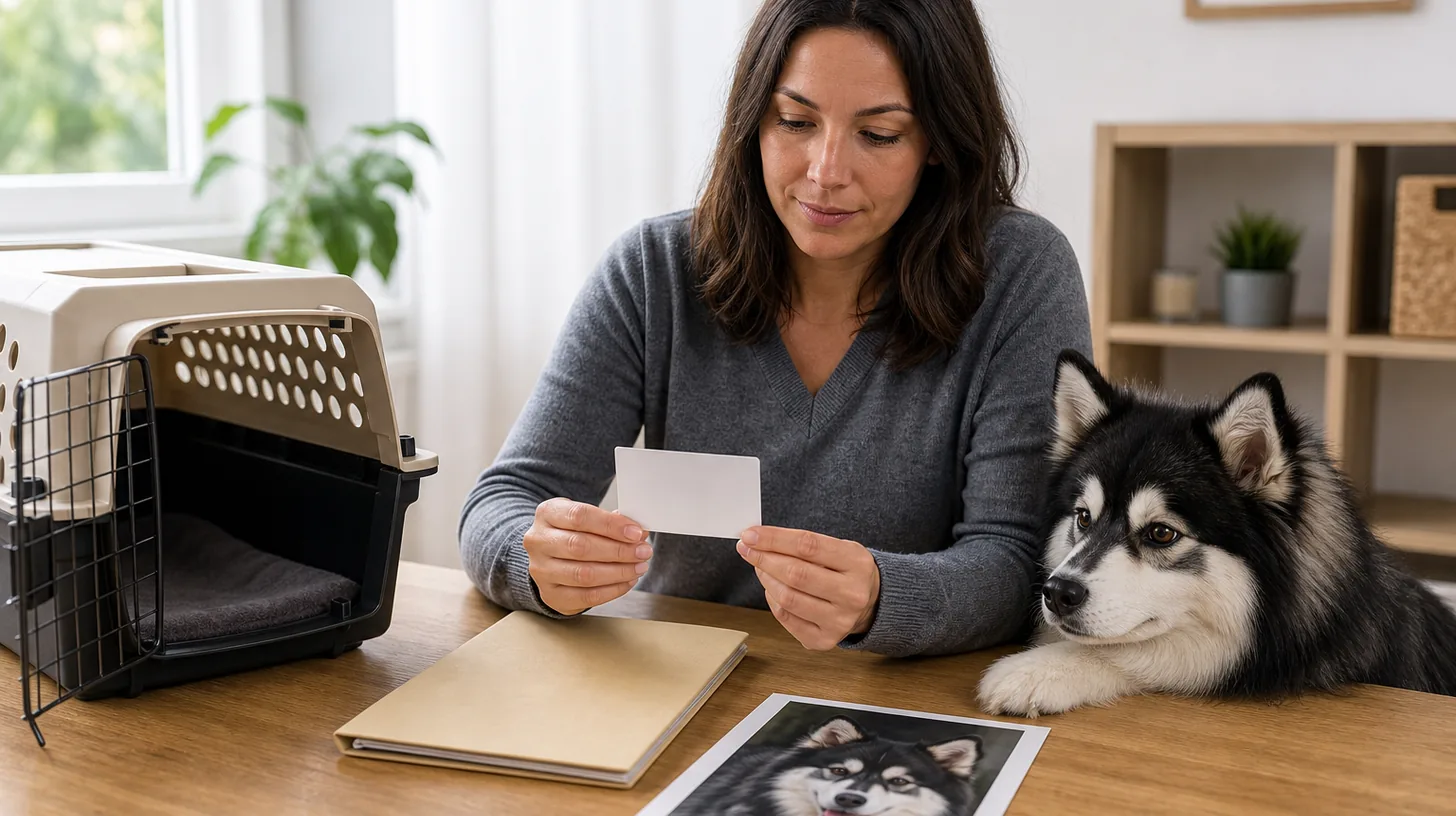
Direct answer: Create a dated card with the Pomsky's verified identity, microchip reference, primary and emergency veterinary contacts, caregiver contacts, current medication-label reference, important documented veterinary notes, full-record location, carrier or transport plan, and backup contact. Reconcile every field against source documents after any change and remove obsolete copies.
An emergency veterinary information card gives a caregiver the minimum verified facts needed to identify the Pomsky, reach the right people, locate records, and begin transport. It is not the full medical record and should not contain guessed diagnoses or dosing instructions. Its value depends on concise fields, current source documents, secure handling, and reconciliation after every material change.
Define the Card's Purpose
The card supports urgent handoff when the primary caregiver is unavailable or stressed. It points to current contacts, medication labels, records, and transport instructions. It should be understandable without prior household knowledge.
Do not try to compress the entire medical history onto one card. Excess detail can hide the information needed first. Keep full records in the referenced secure location.
Identify the Pomsky Clearly
Include the dog's current name, a brief neutral physical description, and another identifier appropriate to the household. Add the microchip number or a secure reference to it when the household's privacy plan permits.
Do not list uncertain breed percentages, predicted adult traits, or decorative descriptions instead of identification. Use a recent clear photograph in the companion record if that helps and can be kept current.
Add Primary Veterinary Contacts
Record the current primary clinic name and verified telephone number. Include the clinic's patient or record reference only if it can be stored appropriately. Confirm the details directly from current clinic material.
Do not assume the regular clinic provides round-the-clock service. Review how the clinic directs after-hours cases and record that route separately.
Add Emergency Veterinary Options
List one or more current emergency facilities appropriate to the household location, with telephone number and address or navigation reference. Verify hours and services periodically because availability changes.
The card should tell a caregiver to call ahead when practical and follow current professional directions. It should not promise acceptance, wait time, or a particular treatment.
Record Caregiver Contacts
List the primary caregiver and an alternate who can make or support decisions under the household's established arrangements. Include the communication method that is likely to work during an urgent event.
Do not expose unnecessary personal information on a card carried openly. Consider a two-layer design: a minimal wallet or carrier card and a secure detailed record.
Reference Current Medications
Copy medication names only from current prescribing labels and point to the exact storage and administration record. Include important timing information only when it can be transferred faithfully from the current veterinary instruction.
Do not create missed-dose advice, change a prescription, or rely on an old list. Date the medication section and reconcile it after every clinic change.
Include Important Veterinary Notes Carefully
Add only current, documented information needed for safe handoff, such as a veterinarian-confirmed condition, known reaction, or handling precaution. Use the wording from the source record when possible.
Avoid household diagnoses, unsupported allergy claims, or long narrative history. The receiving veterinary team will assess the current case and full records.
Point to Full Records
Name the secure physical folder, digital location, or clinic source containing vaccination history, test results, preventive care, medication labels, insurance documents, and authorization material. Explain how an approved caregiver can access it.
Test access before an emergency. A link, password manager, or folder is not useful if the designated caregiver cannot reach it.
Add the Transport Plan
Record the primary vehicle or transport option, carrier or restraint location, building exit, and a backup route. Include any individual handling boundary already established for the Pomsky.
Do not instruct an unprepared person to lift, restrain, or transport the dog in a way that risks injury or escape. Identify who can assist and where suitable equipment is stored.
Include Identification and Recovery Links
Reference the microchip registry, current tag information, and a recent photograph location. Confirm that the registry contact details are current, especially after moving or changing telephone numbers.
This section supports identification if an emergency includes escape or separation. It does not replace the separate lost-dog response checklist.
Keep Financial and Legal Data Separate
The card may point to insurance or payment documents, but avoid carrying full account numbers, identification documents, or sensitive authorization material unnecessarily. Store detailed records according to the household's privacy and legal needs.
Local consent and decision rules vary. Obtain qualified advice when the household needs a formal authorization, not a homemade assumption on an information card.
Use a Clear Date and Version
Print or write the last-reviewed date and a version number. Replace the active card rather than layering corrections until the text becomes ambiguous. Destroy obsolete copies appropriately.
Schedule routine review and immediate reconciliation after moving, clinic changes, medication changes, new veterinary findings, caregiver changes, or a new transport arrangement.
Place Copies Deliberately
Keep copies where approved caregivers can find them, such as the carrier pocket, emergency kit, secure household folder, and caregiver handoff packet. Protect the card from water and damage while keeping it readable.
Do not attach sensitive information to an exterior location visible to strangers. Balance accessibility with privacy.
Test the Handoff
Ask the alternate caregiver to locate the Pomsky, card, carrier, medication record, full veterinary file, and route to the emergency facility. Correct every hesitation or stale field. A short rehearsal reveals gaps that a written checklist cannot.
The completed card should support action without pretending to be medical advice. It identifies the Pomsky, provides verified contacts, points to current veterinary and medication records, explains transport resources, and carries a visible review date so an urgent caregiver can start from reliable information.
Reconcile the Card Against Source Documents
At each review, place the card beside the current microchip record, clinic contact page, medication labels, caregiver list, and transport plan. Check every field character by character and confirm that referenced files still open. Mark missing evidence as unresolved instead of filling it from memory. A second adult should review high-impact contact and medication fields when possible. Record the new review date only after discrepancies are corrected. This reconciliation step separates a dependable emergency card from a convenient but stale household note.
Keep a dated note of each corrected field so future reviewers can understand why the active version changed.
Sources reviewed
Each source is used only for the claim scopes listed below. None establishes a guaranteed Pomsky outcome or replaces individual professional assessment.
- U.S. Centers for Disease Control and Prevention: Pet Emergency Checklist - Supports: emergency kit contents; records; identification; transport supplies. Limit: Adapt the checklist to local hazards and the dog's medical needs.
- American Animal Hospital Association: AAHA-AVMA Canine Preventive Healthcare Guidelines - Supports: preventive exams; individual risk assessment; parasite and vaccination planning. Limit: The veterinarian sets the schedule for the individual dog and location.
- American Animal Hospital Association: Animal Identification and Microchipping - Supports: current microchip registration; visible ID tags; annual chip scan; lost-pet search limits. Limit: Microchips are not GPS devices and do not replace secure containment, a leash, visible ID, or active search.