Written and reviewed by A Pomsky Editorial Team. Originally published 2026-07-26; substantively reviewed July 26, 2026.
Training boundary: Use humane, reward-based methods and protect safety with management. Pain, panic, aggression, a bite history, or serious handling risk requires a veterinarian or qualified behavior professional. Read the editorial policy.
Direct answer: Define the repair scope, place the Pomsky in a prepared room behind a closed door before workers arrive, and assign one adult to every door transition. Keep tools, debris, food, and products contained, follow ventilation and curing directions, preserve care routines, and inspect the work area at dog height before release.
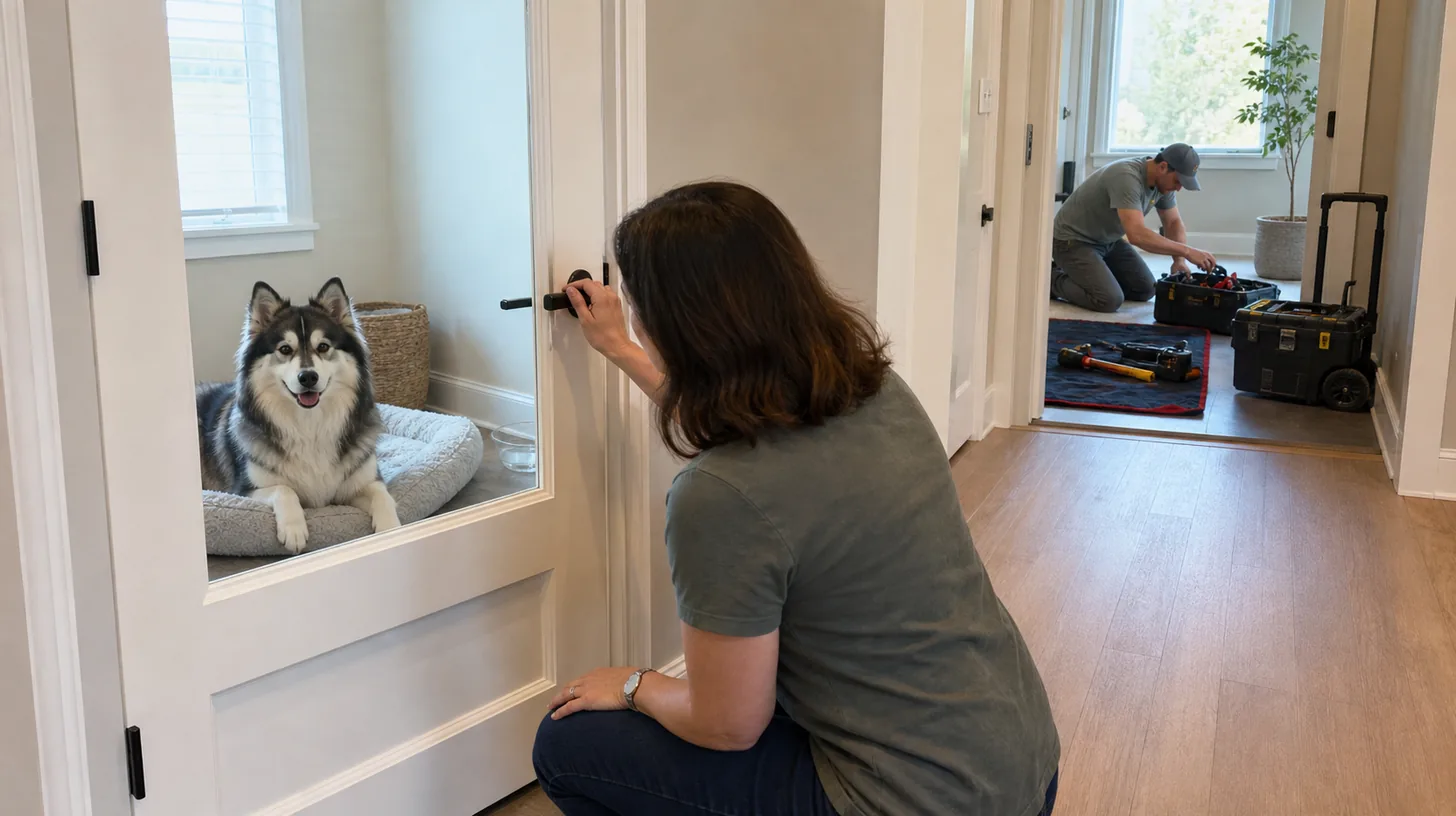
Home repairs create a temporary worksite, not an ordinary visitor event. Repeated exterior-door opening, unfamiliar workers, sharp tools, dust, coatings, electrical access, noise, and displaced furniture can expose a Pomsky to escape, injury, poisoning, or severe stress. Prepare a secure dog-only area before anyone arrives and inspect the work zone before the dog returns.
Define the Exact Work Scope
Ask what rooms, doors, utilities, materials, tools, noise, fumes, and delivery routes the project will involve. Confirm arrival and departure windows, whether workers need exterior access, and whether water, electricity, heating, or ventilation will be interrupted.
Do not rely on a general description such as “small repair.” A brief plumbing visit can involve an open exterior door, chemical product, wet floor, and exposed wall cavity. Update the dog plan when the contractor changes the scope.
Choose a Secure Dog-Only Area
Select a room outside the worker route with a solid closed door, comfortable temperature, water, bedding, and an appropriate familiar activity. Check windows, vents, cords, and anything the Pomsky could damage or ingest. Place a sign on the outside instructing workers not to enter.
Use a second barrier when practical, such as a gate outside the closed room, but do not block required exits. A crate is suitable only when it is already a comfortable, appropriately sized part of the Pomsky's routine and the expected duration fits the individual dog.
Plan Every Door Transition
Secure the Pomsky before the first worker, delivery, or equipment load arrives. One adult should confirm the dog-room door is closed before an exterior door opens. Repeat the verbal check during lunch breaks, material deliveries, inspections, and cleanup.
Do not allow workers to manage the dog, even when they say they like animals. The caregiver controls every transition. Current collar identification and microchip contacts provide backup, not permission to weaken physical containment.
Prepare for Noise and Vibration
Ask when drilling, hammering, sawing, alarms, or heavy equipment will occur. Move the Pomsky away before the sound starts and reduce preventable visual exposure. Use ordinary background sound only if the dog already finds it comfortable and ventilation remains safe.
Do not take the Pomsky closer to “get used to it.” Freezing, pacing, panting outside temperature context, escape attempts, inability to settle, or refusal of familiar food can indicate that the setup is too difficult. Arrange care elsewhere when the home cannot provide sufficient distance.
Control Tools and Building Materials
Require tools, blades, fasteners, wire, adhesives, paint, solvent, insulation, batteries, and debris to remain in the work zone or closed storage. Small screws and offcuts can become ingestion hazards. Secure ladders and prevent access to open walls, floors, cabinets, and utility spaces.
Preserve product labels and follow manufacturer directions for use, ventilation, curing, cleanup, and reentry. Do not assume a dry-looking surface is ready for animal contact. Ask the contractor for written product information before work begins.
Protect Air and Surface Quality
Discuss dust control, extraction, windows, heating or cooling shutdowns, and whether coatings or cleaners will be used. Ventilation must not create an open escape route. If product directions, building rules, or the Pomsky's health needs cannot be met, relocate the dog for the required period.
Keep bowls, food, medication, toys, grooming supplies, and bedding out of the work area. Dust can travel beyond the visible project boundary. Clean and inspect according to product and contractor guidance before returning dog supplies.
Preserve the Daily Care Routine
Plan toilet breaks, meals, medication, rest, and walks around worker transitions. Use an exit that does not cross the active work zone when possible. Attach leash and harness inside the secure area, then confirm the route before opening the door.
Do not skip essential care because workers are present, but do not improvise through unsafe space. Arrange a qualified sitter, boarding option, or trusted alternate location when the project prevents safe routines.
Manage Worker Breaks and Food
Ask workers to keep meals, drinks, packaging, nicotine products, medication, and trash inaccessible. A lunch bag or open vehicle can contain toxic or obstructive items. Provide a closed waste location outside the dog's reach.
The Pomsky should remain separated during breaks. Workers moving casually in and out can be less predictable than the main project sequence, and food increases interest in the area.
Inspect Before Every Release
After workers leave or pause, keep the Pomsky secured while an adult checks doors, gates, windows, floors, furniture, sharp edges, openings, cords, tools, liquids, dust, waste, and treated surfaces. Confirm utilities and temperature are normal.
Use good lighting and inspect at the dog's height. A nail, staple, wire end, or small opening may be easy for an adult to miss. Photograph unresolved defects and keep the area closed until corrected.
Prepare for an Incident
Keep veterinary, emergency, microchip, and contractor contacts available. Preserve product containers and project records. For suspected ingestion or chemical exposure, contact a veterinarian or recognized animal poison service promptly and follow case-specific directions.
If the Pomsky escapes, use the established lost-dog first-hour plan rather than sending uncoordinated workers to chase. If a person is bitten or an animal is injured, secure separation and obtain appropriate medical or veterinary care.
Review Multi-Day Projects
At the end of each day, confirm the next schedule, new products, changed worker route, barrier condition, and dog response. Clean the secure dog room and replenish water and activities. Record any appetite, sleep, behavior, breathing, gait, or skin change.
The completed plan is operational: known scope, secure separation, controlled doors, contained tools and materials, safe air and surfaces, preserved care routines, and a documented inspection before release. Training around visitors can support calm behavior, but it never replaces worksite containment.
Close the Project Formally
At project completion, obtain product names, care instructions, curing or ventilation limits, warranty contacts, and confirmation that tools and waste have been removed. Keep the Pomsky separated while an adult performs the final floor-to-ceiling and dog-height inspection. Check every worker entrance and temporary barrier.
Restore furniture and dog supplies gradually rather than assuming the room has returned to its old risk profile. Observe the first supervised entry, then close access again if the Pomsky investigates a repair, coating, cable, or opening. Preserve photographs and contractor details if a later exposure question arises. A signed invoice does not replace an animal-safety closeout.
Sources reviewed
Each source is used only for the claim scopes listed below. None establishes a guaranteed Pomsky outcome or replaces individual professional assessment.
- American Animal Hospital Association: How Can I Discourage My Dog From Running Away? - Supports: secure fencing; leash use; recall foundations; escape-route checks; appropriate activity. Limit: No recall cue or fence design guarantees that an individual dog cannot escape.
- American Animal Hospital Association: Lifestyle and Safety Assessment - Supports: appropriate confinement; leash, collar and harness planning; lifestyle-specific safety review. Limit: Equipment selection must account for the individual dog's anatomy, behavior, health, and environment.
- American Veterinary Society of Animal Behavior: Humane Dog Training Position Statement - Supports: reward-based training; aversive-method risk; behavior change principles. Limit: Does not guarantee outcomes for an individual dog.