Written and reviewed by A Pomsky Editorial Team. Originally published 2026-07-26; substantively reviewed July 26, 2026.
Training boundary: Use humane, reward-based methods and protect safety with management. Pain, panic, aggression, a bite history, or serious handling risk requires a veterinarian or qualified behavior professional. Read the editorial policy.
Direct answer: Start Pomsky alone-time training by filming a very short ordinary departure and identifying the first behavior change before distress escalates. Practice absences below that point, vary easy durations, manage unavoidable longer absences, and track settling and recovery rather than silence alone. Sudden, severe, or worsening distress requires veterinary and qualified behavior guidance.
A useful Pomsky alone-time plan starts with observation, not a target duration. Record what the dog does during a very short, ordinary departure, identify the first signs that settling is becoming difficult, and practice below that point. Repeated panic is not training, and a camera cannot diagnose the cause of distress.
Establish a Real Baseline
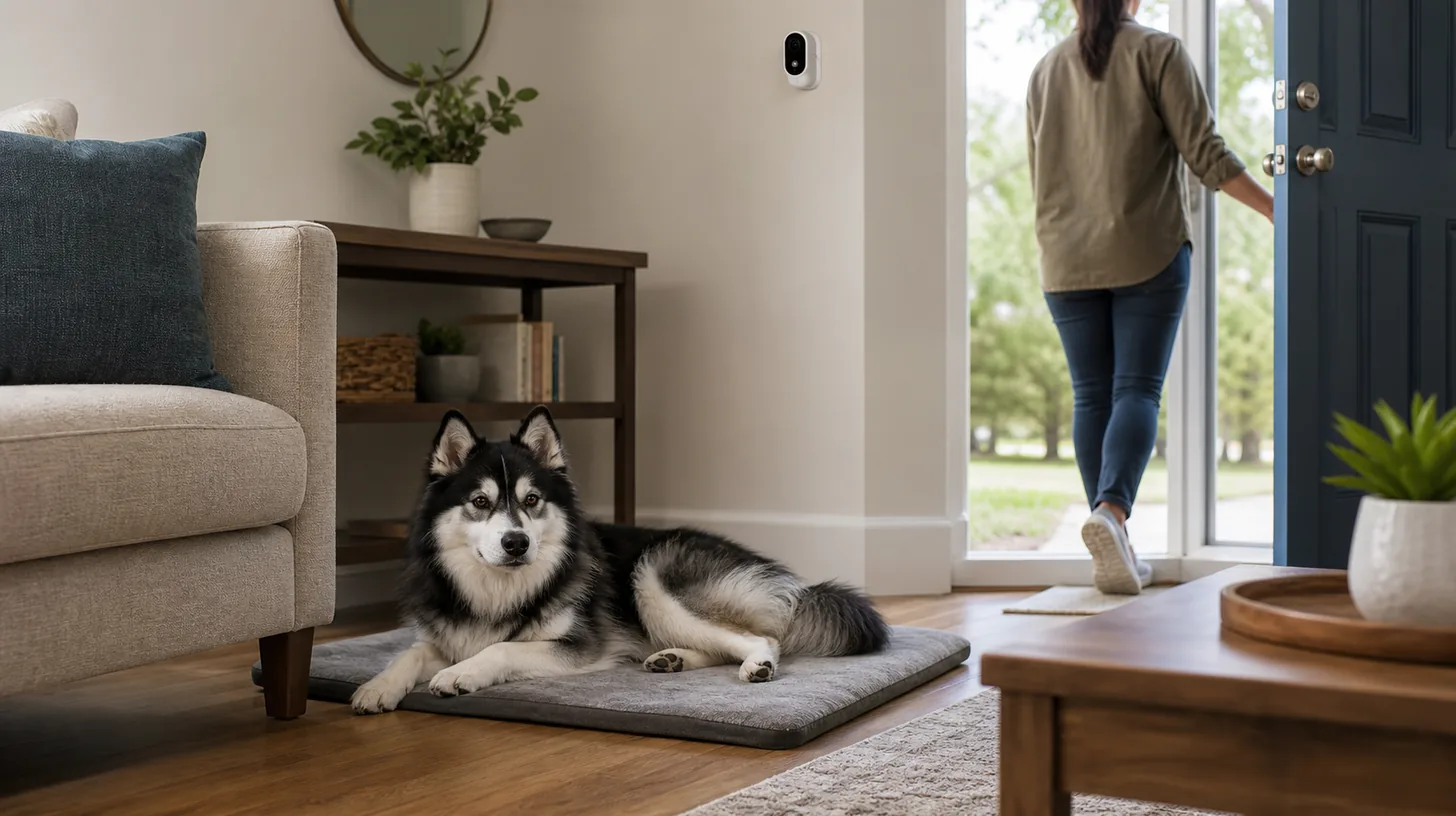
Set up a camera that shows the resting area, entry door, and usual movement route without exposing private household activity. Leave as you normally would for only a brief period that is unlikely to overwhelm the dog. Review the full recording instead of judging the session by whether neighbors heard barking.
Record latency to settle, pacing, scanning, door focus, vocalization, scratching, panting, drooling, elimination, destructive behavior, and interest in a familiar food item. Some dogs move around before resting; others become distressed almost immediately. The baseline should describe observable behavior and timing, not attach a diagnosis.
Separate Setup Problems From Departure Difficulty
Before practicing, confirm that the Pomsky has had an appropriate toilet opportunity, normal access to water, a safe temperature, and a predictable resting area. Remove choking hazards, unsecured trash, cords, and items the dog may ingest. Use only confinement the dog already finds comfortable.
A crate is not an automatic solution. A dog that panics when confined may be safer in a prepared room or gated area, while another dog may rest comfortably in a familiar crate. Test the environment while you remain home. Sudden inability to settle can also accompany pain, illness, medication effects, or environmental changes and deserves veterinary discussion.
Identify the Workable Departure Threshold
Find the shortest sequence that produces awareness without escalating distress. That may be touching keys, putting on shoes, opening the door, stepping outside for one second, or walking briefly out of sight. The correct starting point is individual.
Return while the Pomsky is still able to recover, not after a fixed number of minutes. If the dog stops eating, freezes at the door, begins sustained pacing, or escalates vocalization, the step was too difficult. Shorten the absence or practice an earlier cue. Progress is the ability to remain settled, not endurance after the dog is overwhelmed.
Reduce the Power of Departure Cues
Keys, bags, work clothes, and a particular route through the home can predict a long absence. Practice these cues separately at low intensity: pick up keys and sit down, put on shoes and prepare a meal, or open and close the door without leaving. Do not repeat them rapidly until the dog gives up responding.
Mix easy cue practice into normal life. The aim is to make each cue less certain, not to trick the dog. If cue-only practice increases scanning or following, simplify it and allow a quiet recovery period. A camera can show whether apparently calm behavior continues after you move away.
Build Graduated Absences
Use many easy repetitions and only occasional small increases. A practical session may include one-second, three-second, one-second, and five-second departures rather than a steady climb. Change one feature at a time: duration, distance, door closure, time of day, or outside noise.
Keep sessions short enough that the Pomsky can return to ordinary activity afterward. Several successful seconds can be more useful than one difficult minute. Avoid testing the maximum on every repetition. When behavior changes, return to the last comfortable step instead of adding commands or corrections.
Use Food Without Making It the Only Measure
A safe, familiar food toy may support settling, but acceptance does not prove that the dog is relaxed. Some dogs eat and then become distressed; others are too worried to begin. Review posture, movement, breathing, door focus, and recovery as well as food use.
Do not introduce an unfamiliar chew immediately before leaving, and do not leave items that present a swallowing or entrapment risk. If food disappears only because another pet takes it, separate animals safely. Alone-time practice should not create competition or resource conflict.
Prevent Rehearsal Beyond the Current Skill
Training cannot progress if the Pomsky repeatedly experiences absences far beyond the workable threshold. Arrange household coverage, a suitable sitter, safe day care, adjusted schedules, or other temporary management when practical. Management is not a cure, but it can prevent repeated escalation while training develops.
Choose care based on the individual dog. A dog that is uncomfortable with unfamiliar people or group settings needs a different arrangement. Give caregivers accurate instructions about doors, identification, feeding, medications, and behavior; do not ask them to extend departure exercises independently.
Track Recovery, Not Just Silence
Use a simple log with date, setup, departure cue, duration, first behavior change, ability to eat, time to settle, and recovery after return. Silence can occur with freezing, so it is not the only success measure. Look for looser posture, less door monitoring, voluntary rest, and consistent recovery.
Compare similar sessions rather than treating one unusually good or difficult day as a trend. Noise outside, household changes, exercise, gastrointestinal discomfort, and previous stressful events may affect a session. Keep recordings private and store only what is useful for training or professional review.
Return Without Creating More Arousal
Enter calmly and secure the door before greeting. If the dog is highly aroused, allow movement and breathing to settle before adding excited interaction. Do not punish damage, elimination, or vocalization discovered after the fact; punishment cannot explain the desired behavior and may make departure cues more threatening.
Avoid deliberately waiting outside for a moment of silence when the dog is escalating. A return should prioritize safety. The next session should be easier and may need professional guidance. The plan is built around preventing distress, not making relief contingent on suppressing visible signs.
Know When Professional Help Takes Priority
Contact a veterinarian when alone-time behavior starts suddenly, worsens markedly, includes self-injury, heavy drooling, repeated elimination, escape attempts, appetite change, or other health concerns. Video can help a veterinarian understand timing and observable behavior, but it does not replace an examination.
A qualified reward-based behavior professional can help design departures, management, and measurement. Severe separation-related distress may require a coordinated veterinary behavior plan. Do not use shock, spray, startling devices, forced confinement, or “cry it out” exposure. The appropriate goal is safe, gradual independence at the Pomsky’s actual threshold.
Sources reviewed
Each source is used only for the claim scopes listed below. None establishes a guaranteed Pomsky outcome or replaces individual professional assessment.
- Merck Veterinary Manual: Behavior Problems of Dogs - Supports: separation-distress signs; video observation; differential causes; graduated departure work. Limit: Diagnosis, medication, and individualized treatment belong to a veterinarian or veterinary behaviorist.
- Cornell University College of Veterinary Medicine: Anxious Behavior: How to Help Your Dog Cope With Unsettling Situations - Supports: anxiety signs; separation-related vocalization; gradual desensitization; reward-based professional help. Limit: Howling alone does not diagnose separation anxiety; sudden or severe distress needs veterinary assessment.