Written and reviewed by A Pomsky Editorial Team. Originally published 2026-07-26; substantively reviewed July 26, 2026.
Training boundary: Use humane, reward-based methods and protect safety with management. Pain, panic, aggression, a bite history, or serious handling risk requires a veterinarian or qualified behavior professional. Read the editorial policy.
Direct answer: Teach the doorbell routine away from real arrivals. At low intensity, pair the sound with moving to a mat positioned away from the door, reward calm station behavior, and end before arousal builds. Practice door movement separately, then combine the pieces with a helper while using gates, leashes, and distance. Do not punish barking or force close visitor contact.
Doorbell training works best when the sound and the visitor are trained as separate difficulties. First teach a comfortable station away from the door, then pair low-volume doorbell practice with movement to that station. Real arrivals require barriers, leashes, and a prepared helper until the routine is reliable.
Define the Arrival Behavior
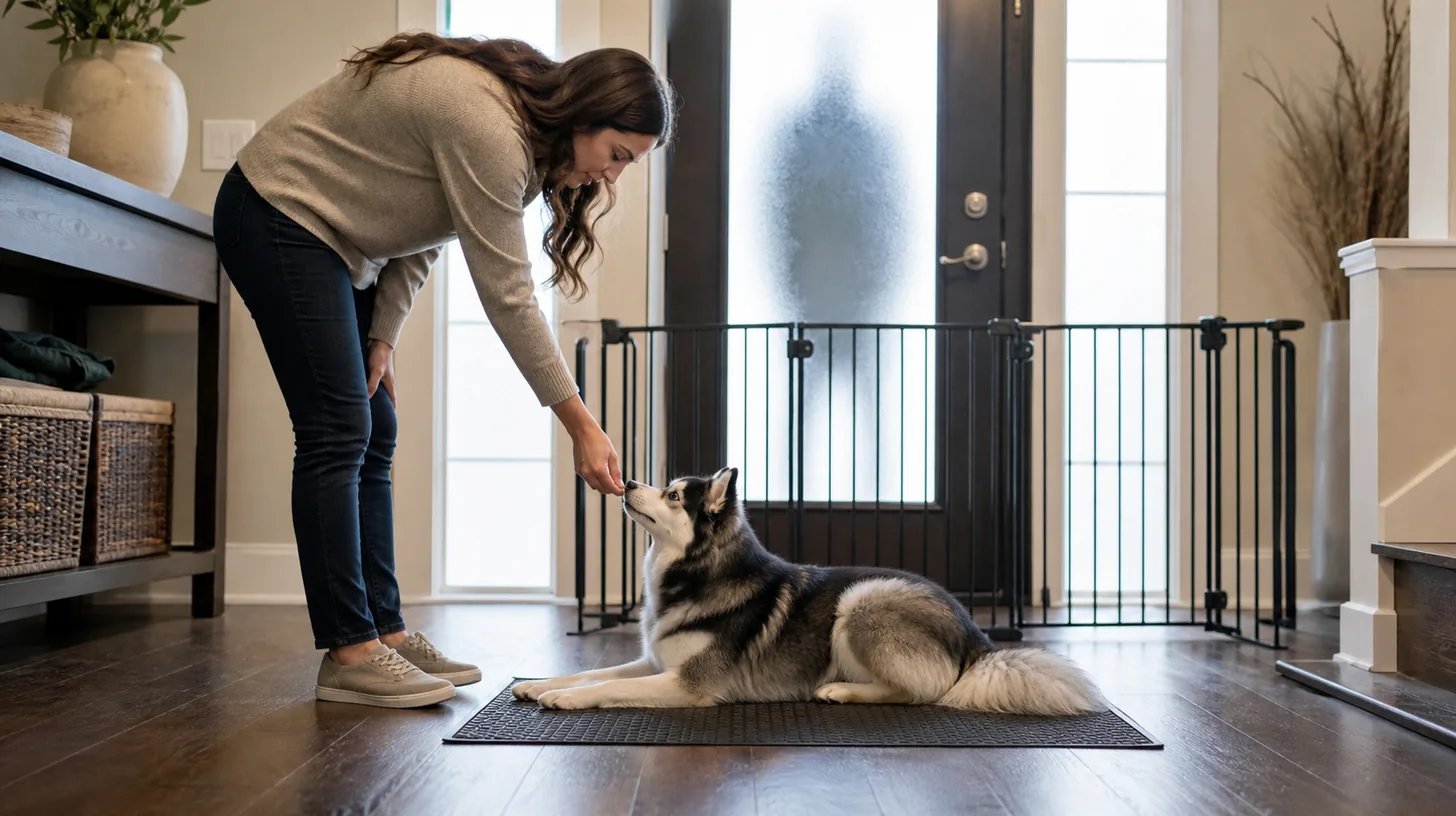
Choose an observable behavior such as going to a mat several feet from the doorway and remaining there while rewards arrive. The station should not block the door or trap the dog near visitors. Decide on a release cue and where the handler will stand.
“Stop barking” is not a complete behavior plan. Barking may reflect alarm, excitement, frustration, or fear, and silence alone does not create safe door access. The replacement routine should tell the Pomsky where to move and what to do.
Teach the Station Without a Doorbell
Place a non-slip mat in a quiet area. Reward looking at it, stepping onto it, and then standing, sitting, or lying comfortably. Deliver rewards on the mat so position is valuable. Add a cue only after the dog is moving there predictably.
Build a short duration and a clear release. Move one step toward the door, return, reward, and release. If the dog follows, reduce the movement. This foundation overlaps with general boundary training, but here the station is designed specifically for an arrival sequence.
Introduce the Sound at Low Intensity
Use a recording or a helper at a volume and distance that the Pomsky notices without rushing, prolonged barking, hiding, freezing, or refusing food. Play one sound, cue or prompt the station, reward there, and stop. Leave a quiet interval before repeating.
Do not play the sound continuously until the dog “gets used to it.” Flooding can increase distress. If the dog reacts strongly, lower the volume, increase distance, or use a softer precursor sound. A dog that cannot recover needs a different setup and possibly professional assessment.
Connect the Sound to the Station
As calm responses become consistent, allow the doorbell sound to predict moving to the station. Fade unnecessary prompts gradually. Vary the recording device and location while keeping volume manageable. Change only one feature at a time.
Reward generously at the station. The goal is not to punish the initial alert. One or two barks followed by a practiced movement may be a realistic household target. Avoid shock, spray, yelling, leash corrections, or startling devices.
Add Door Movement Without a Visitor
Practice touching the handle, opening the door a few centimeters, closing it, and returning to reward. Use a leash or barrier as a backup, not as a correction. Increase door opening only while the dog can remain comfortable at the station.
Check the exterior before every practice. A station cue is not an escape guarantee. If the doorway opens to an unsecured area, use a second physical barrier and ensure identification is current.
Rehearse With a Prepared Helper
Give the helper precise instructions: ring once, wait, enter only when invited, avoid leaning over or reaching for the dog, and ignore the dog initially. Start with the helper remaining outside while the handler completes the station routine. Later add a brief entry.
Keep the Pomsky separated if the dog has a bite history, intense fear, or unsafe rushing. Do not use an unfamiliar visitor as a test. A qualified reward-based trainer or behavior professional can design a safer plan for higher-risk cases.
Manage Real Deliveries
Training is not required during every real arrival. Use a closed door, gate, comfortable room, crate routine, or leash before opening the entrance. Put delivery instructions in the order notes when possible. Store rewards near the station but out of the dog's reach.
Household members should use the same plan. A person who opens the door while the dog is loose can undo the safety layer and create rehearsal. Post a private reminder near the entrance if needed.
Track Recovery and Adjust Difficulty
Record sound volume, distance, number of barks, ability to eat, movement to the station, and time to settle. Improvement should include faster recovery and more voluntary participation, not merely suppressed noise. Sudden worsening may reflect pain, environmental change, or a new frightening event.
Seek veterinary or qualified behavior help when reactions are escalating, the dog cannot recover, aggression is possible, or the household cannot practice safely. Doorbell work is a specific routine, not treatment for every cause of anxiety or reactivity.
Maintain the Routine
Practice occasionally when no visitor is expected, using easy repetitions. Refresh the station after moving furniture, changing the bell, moving home, or adding a new household member. Keep the mat stable and the route clear.
A durable arrival routine combines an understandable behavior, gradual sound exposure, controlled door movement, prepared helpers, and physical management. It cannot guarantee silence, but it can make the doorway more predictable and safer for the dog, household, and visitors.
Adapt the Plan for Different Entrances
Apartment corridors, shared vestibules, detached houses, video doorbells, intercoms, knocks, and delivery alerts create different sound and distance patterns. List the signals that actually predict an arrival in your home. Train one signal at an easy intensity before combining several.
Choose a station that leaves a clear route for the handler and does not place the Pomsky beside a shared wall, stair edge, opening gate, or visitor path. In a multi-dog home, separate stations may be safer than asking dogs to crowd one mat. Train each dog individually before attempting a shared routine.
If the household has a second entrance, repeat the setup there rather than assuming the cue will generalize. Different flooring, sightlines, and exterior activity can change the response. Keep secure barriers at every door used by deliveries.
Tell regular visitors and building staff how to signal arrival without entering unexpectedly. A simple advance message may allow the dog to be settled before the bell. Environmental coordination is not cheating; it reduces uncontrolled rehearsal while training develops.
Review video only when it is captured by an existing camera and does not encourage staged reactions. Note the dog's route, recovery, and barrier use rather than counting noise alone. Delete or store recordings according to household privacy needs, and never use a public clip to invite strangers to diagnose the dog.
Sources reviewed
Each source is used only for the claim scopes listed below. None establishes a guaranteed Pomsky outcome or replaces individual professional assessment.
- American Veterinary Society of Animal Behavior: Humane Dog Training Position Statement - Supports: reward-based training; aversive-method risk; behavior change principles. Limit: Does not guarantee outcomes for an individual dog.
- Cornell University College of Veterinary Medicine: Anxious Behavior: How to Help Your Dog Cope With Unsettling Situations - Supports: anxiety signs; separation-related vocalization; gradual desensitization; reward-based professional help. Limit: Howling alone does not diagnose separation anxiety; sudden or severe distress needs veterinary assessment.