Written and reviewed by A Pomsky Editorial Team. Originally published 2026-07-26; substantively reviewed July 26, 2026.
Training boundary: Use humane, reward-based methods and protect safety with management. Pain, panic, aggression, a bite history, or serious handling risk requires a veterinarian or qualified behavior professional. Read the editorial policy.
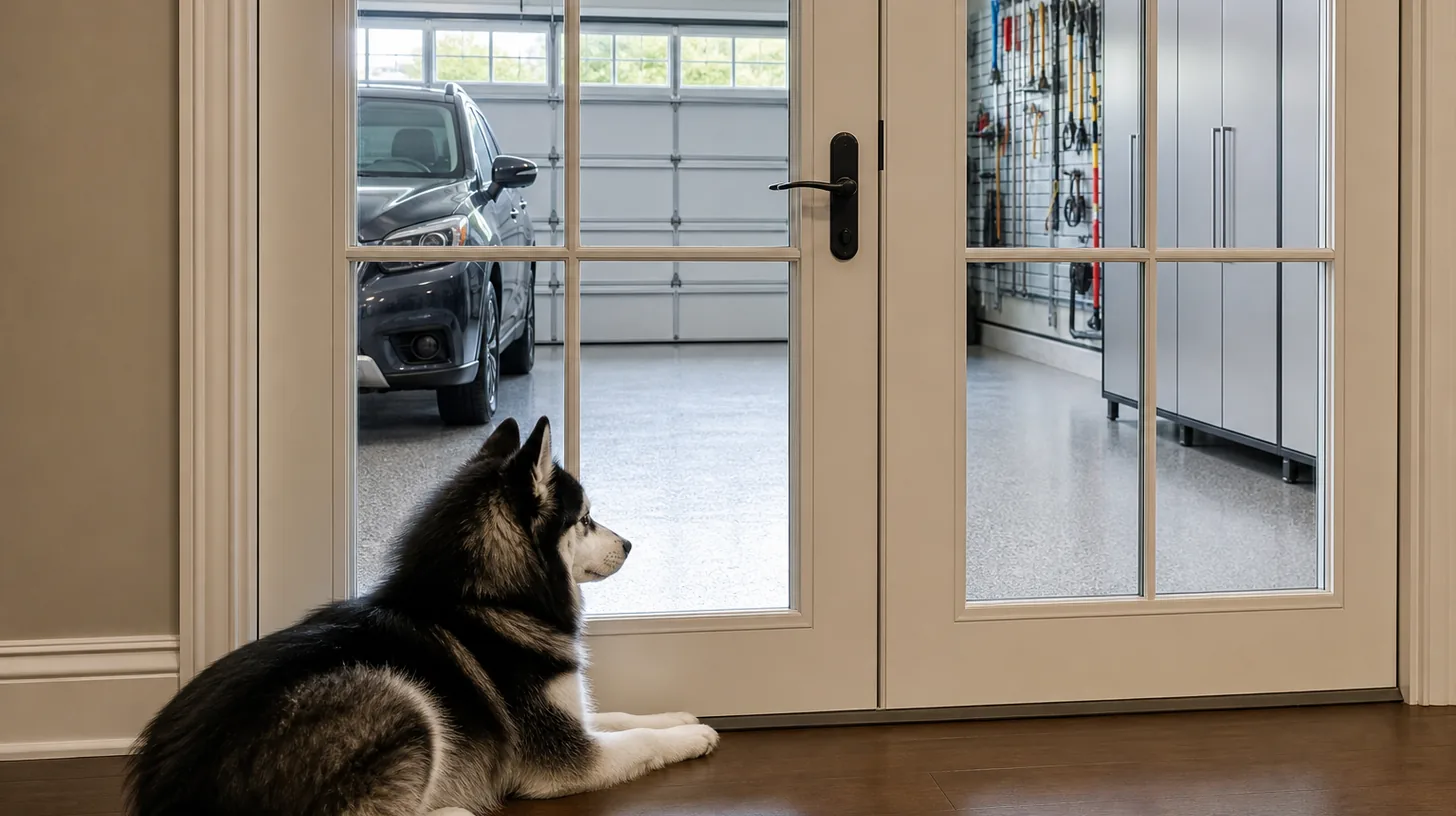
Direct answer: Keep the Pomsky behind a reliable closed interior barrier before any garage door, vehicle, tool, fluid, chemical, or project waste is active. Secure labeled products and sharp material, inspect for leaks and dropped hardware, control vehicle and exterior-door movement, follow ventilation and reentry directions, and contact veterinary or poison professionals after suspected exposure or injury.
A garage or workshop combines escape routes, moving vehicles, tools, automotive fluids, chemicals, sharp debris, batteries, cords, and stored waste. It should be treated as a controlled work zone, not as ordinary indoor living space. A Pomsky remains behind a reliable interior barrier unless an adult has ended all work, removed hazards, ventilated the space, and completed a deliberate inspection.
Establish the Access Boundary
Choose a closed interior door, securely installed gate system, or another barrier the Pomsky has not defeated. The boundary should be in place before the overhead door opens, a vehicle moves, or tools come out. Post a reminder for every household member and worker.
Do not allow the Pomsky to follow someone through the garage as a shortcut outdoors. Repeated door movement and blind vehicle zones make casual passage unsafe. Use the normal leashed exit route instead.
Inventory Automotive Fluids
Locate coolant, antifreeze, fuel, oil, brake fluid, transmission fluid, windshield products, additives, and contaminated rags or absorbent material. Keep original labels and secure every container in closed storage that cannot be tipped or opened by the dog.
Inspect vehicles and floors for leaks. Clean spills according to product and local disposal directions while the Pomsky remains fully separated. A dry-looking stain or small amount should not be assumed harmless.
Secure Tools and Sharp Material
Store blades, saws, drills, bits, nails, screws, staples, wire, hooks, fasteners, and broken material in closed containers. Use a magnetic sweep or careful floor inspection after projects, but do not rely on one method to find everything.
Unplug tools and secure cords. Remove batteries from accessible equipment when appropriate and follow manufacturer storage guidance. A tool that is switched off can still cut, crush, puncture, or be damaged by chewing.
Control Chemicals and Pest Products
Inventory paints, solvents, adhesives, cleaners, pesticides, fertilizers, rodent products, pool supplies, and aerosol cans. Preserve labels and store incompatible products according to their directions. Never move a chemical into a food or drink container.
Do not call a product pet-safe based on odor, packaging color, or a household assumption. Follow the label for use, ventilation, cleanup, drying, and reentry. Suspected exposure routes to veterinary or animal poison professionals.
Manage Vehicle Movement
Confirm the Pomsky is behind the closed interior boundary before starting or moving a vehicle. Walk around the vehicle, check the floor and doorway, and make sure another person has not released the dog. Avoid idling in an enclosed garage.
The driver should control the vehicle; another capable adult can control doors and verify the dog if needed. Cameras and sensors do not replace a physical check. Never ask the Pomsky to stay near a moving vehicle.
Protect Exterior Doorways
Overhead and side doors can expose the dog directly to traffic, neighbors, wildlife, or an unfenced area. Keep them closed except for necessary movement and inspect latches, tracks, and gaps. Remote controls should be inaccessible.
If the garage is used for deliveries or contractors, establish the dog-only room before arrival. A verbal warning is not enough when several people may open doors.
Separate Waste and Recycling
Secure oily rags, food packaging, sharp offcuts, used containers, batteries, filters, and project debris. Follow local hazardous-waste and fire-safety requirements. Do not leave bags on the floor while waiting for disposal.
Workshop waste can contain mixed exposures that are difficult to identify after an incident. Labeling and prompt removal improve both prevention and emergency communication.
Inspect Floors and Low Surfaces
Look under benches, shelves, vehicles, and storage racks with good light. Check for puddles, pellets, fragments, cords, splinters, metal pieces, dropped tablets, and chewable containers. Include low shelves and open drawers at nose height.
Repair cracked containers and unstable stacks. Heavy items should not be positioned where a bump, leash, or climbing attempt can pull them down.
Ventilate Before Reentry
Follow product directions and applicable safety guidance for ventilation and curing. Keep the Pomsky in a separate clean area until work is complete, waste is removed, surfaces meet reentry directions, and air conditions are acceptable.
Do not use the dog as a test of odor or air safety. Smoke, fumes, dust, and aerosol particles can remain after tools stop. If safe ventilation cannot be established, use backup care away from the work area.
Create a Release Checklist
Before opening the interior boundary, confirm vehicles are off and stationary, exterior doors are secured, tools are stored, power is disconnected as appropriate, fluids and chemicals are closed, waste is removed, and floors are inspected. One adult should own this decision.
If the garage remains an active work zone, do not release the Pomsky. A permanent no-dog rule may be the most reliable household choice.
Respond to Exposure or Injury
Move the Pomsky away without putting people at risk. Identify the product or object, timing, possible amount, and observed signs. Preserve labels and contact a veterinarian or recognized animal poison service promptly.
Do not induce vomiting, apply solvents, or give a home remedy unless the professional managing the case directs it. Bleeding, burns, breathing changes, collapse, eye exposure, puncture, or suspected battery, chemical, or sharp-object ingestion requires urgent guidance.
Reaudit After Every Project
Temporary projects change storage, door traffic, waste, and floor hazards. Reaudit before work, during multiday jobs, and after cleanup. Replace failed latches and update household instructions.
The safe garage is a managed work zone: the Pomsky is separated before access begins, hazards remain labeled and secured, vehicle and door movement is verified, and reentry happens only after a deliberate inspection.
Test the Household Handoff
Ask each capable adult to show where the Pomsky is secured before a vehicle moves, how exterior and interior doors are confirmed, where labeled fluids and waste are stored, and who owns the release checklist. Include a realistic interruption such as a delivery without opening any live hazard route. Correct uncertainty in the written procedure rather than relying on verbal habit. Contractors should receive only the instructions needed to protect the boundary and notify the household before door changes. Recheck the handoff whenever storage, vehicles, workers, or caregivers change.
Sources reviewed
Each source is used only for the claim scopes listed below. None establishes a guaranteed Pomsky outcome or replaces individual professional assessment.
- ASPCA: Animal Poison Control - Supports: poison emergency routing; information to collect after exposure. Limit: Never replace urgent veterinary or poison-control instructions with article advice.
- American Animal Hospital Association: Lifestyle and Safety Assessment - Supports: appropriate confinement; leash, collar and harness planning; lifestyle-specific safety review. Limit: Equipment selection must account for the individual dog's anatomy, behavior, health, and environment.
- American Animal Hospital Association: How Can I Discourage My Dog From Running Away? - Supports: secure fencing; leash use; recall foundations; escape-route checks; appropriate activity. Limit: No recall cue or fence design guarantees that an individual dog cannot escape.