Written and reviewed by A Pomsky Editorial Team. Originally published 2026-07-26; substantively reviewed July 26, 2026.
Training boundary: Use humane, reward-based methods and protect safety with management. Pain, panic, aggression, a bite history, or serious handling risk requires a veterinarian or qualified behavior professional. Read the editorial policy.
Direct answer: Park in the lowest-risk available location and connect the Pomsky before opening a vehicle door. Check the surface and interior, use a stable entry method suited to the individual, then secure the travel restraint before removing the hand-held leash as appropriate. At arrival, reconnect first, scan traffic and footing, open only the controlled door, and exit to a safe waiting point.
Many vehicle incidents happen before the trip begins or after it seems finished. A door opens toward a driveway, parking lot, curb, or unfamiliar destination; the dog is excited; and the caregiver is handling keys, bags, restraints, and traffic at once. A fixed loading and unloading sequence keeps the Pomsky connected through every transition.
Choose the Lowest-Risk Position
Park on a stable level surface away from moving traffic when possible. Use the door that opens toward the safest available side. Set the parking brake and complete vehicle shutdown before approaching with the Pomsky.
If the location is unsuitable, move the vehicle or postpone loading. Hazard lights do not make an active traffic lane a safe dog-loading area.
Clear the Human Route
Remove bags, ice, hoses, tools, toys, and other trip hazards between the building and vehicle. Check pavement temperature, snow, oil, broken glass, and standing water. Open gates only after the dog is secured elsewhere.
The caregiver needs one free hand and a stable stance. Load cargo before bringing the Pomsky to the vehicle.
Inspect the Vehicle Interior
Confirm the intended rear seating or cargo area is clear, ventilated as appropriate, and configured with the selected travel restraint. Remove food, medication, loose equipment, cords, sharp objects, and unstable luggage.
Check that folding seats and barriers are locked. Do not discover restraint routing after the dog has entered.
Fit Walking Equipment Indoors
Fit the current harness or collar, identification, and leash before opening the building door. Inspect clips, rings, stitching, and strap placement. Use equipment appropriate to both walking control and the planned transfer to the vehicle restraint.
Do not carry loose equipment beside an unconnected dog. The first connection happens behind a closed exterior barrier.
Approach With the Pomsky Connected
Walk to the vehicle on a controlled leash and pause at a safe waiting point. Scan for traffic, people, dogs, carts, bicycles, and changing doors. Keep the Pomsky away from wheels and the path of another vehicle.
If conditions become crowded, return indoors or increase distance. Do not rush the sequence to avoid holding up another person.
Open Only the Controlled Door
Maintain the leash connection while opening the selected rear door. Block access to other open doors and the driver's area. Check the threshold, floor, restraint, and platform once more.
The Pomsky waits until the caregiver deliberately begins entry. Door opening is not a release cue.
Use an Individual Entry Method
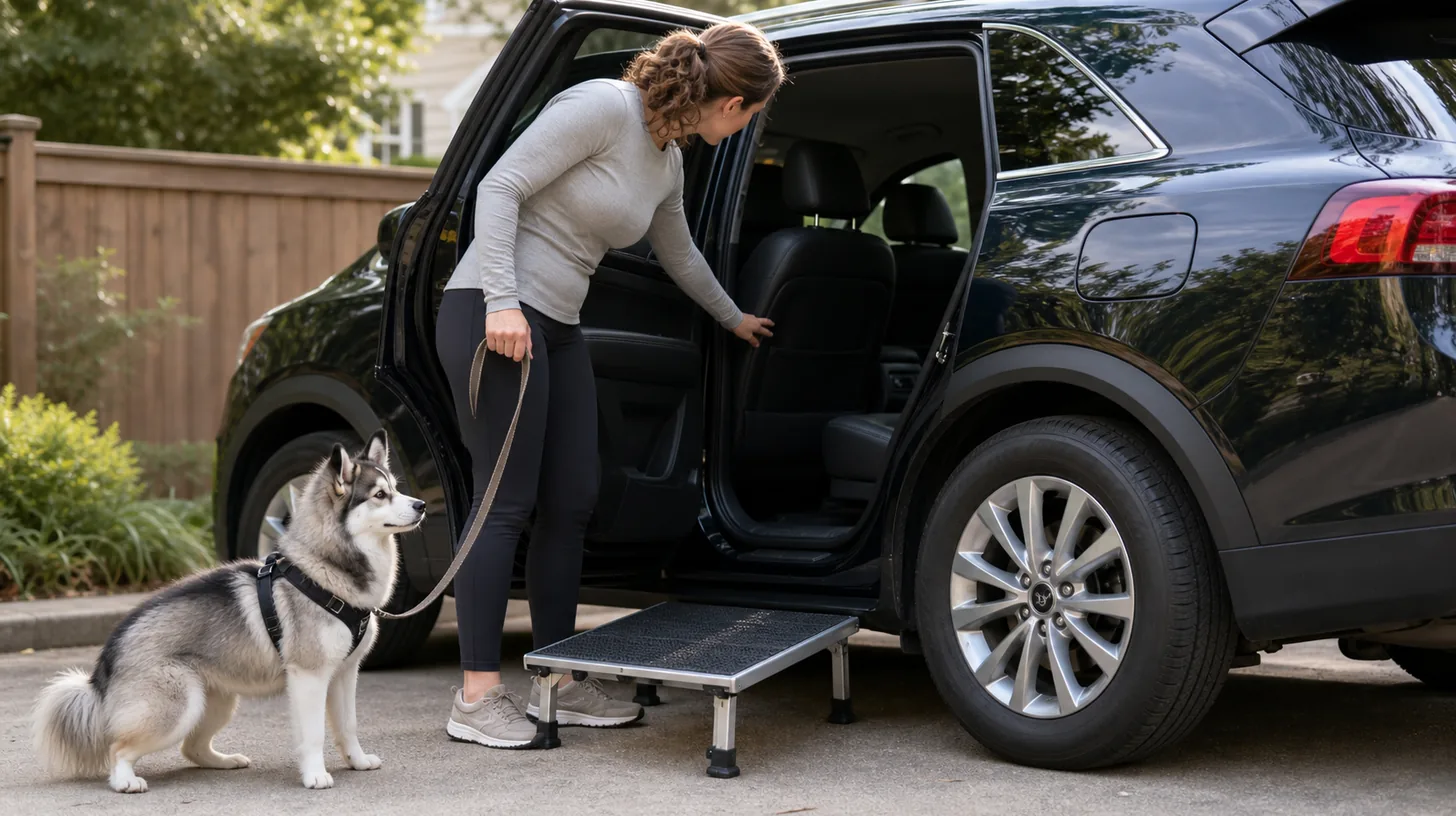
Some dogs can step into a low vehicle; others may need a stable ramp, platform, or professionally recommended assistance. The method should match the Pomsky's size, mobility, confidence, and current veterinary guidance.
Do not pull by the leash, lift by a harness handle unless designed and instructed for that use, or encourage a jump that the dog cannot perform comfortably.
Check Platforms and Ramps
Place equipment on firm ground, lock or brace it according to instructions, and test it before the dog approaches. Confirm nonslip surface, width, angle, weight capacity, and contact with the vehicle.
Keep hands ready to support without crowding. Remove the equipment from traffic immediately after use.
Transfer to Travel Restraint
Once the Pomsky is fully inside and stable, connect the vehicle restraint according to its instructions before changing the hand-held leash connection. Use a sequence that never leaves the dog loose with an open door.
Check for twists, excessive slack, trapped fur, and access to windows or cargo. Close the controlled door only after limbs, tail, leash, and equipment are clear.
Complete the Departure Check
Walk around the vehicle without leaving the Pomsky unattended for an extended period. Confirm doors, ramp storage, cargo, ventilation, and destination plan. Enter the driver's seat only after the dog is secured.
The Pomsky should not travel in the driver's lap, loose in the cabin, or with the head outside a window.
Plan Arrival Before Driving
Know where you will park, which door will be used, where the safe waiting point is, and whether a ramp or second adult is needed. Include weather, surface, traffic, and destination rules.
If the destination cannot provide a controlled unloading area, choose another location rather than improvising beside traffic.
Reconnect Before Opening
At arrival, park and shut down completely. Prepare the hand-held leash inside the closed vehicle, then reconnect or establish control according to the restraint system instructions. Confirm the Pomsky is connected before any exterior door opens.
Do not open the door first to gain room. A partially restrained dog can exit faster than the caregiver can reach a clip.
Scan the Exterior
Look through windows and mirrors for traffic, dogs, people, carts, wildlife, ice, hot pavement, and obstacles. Ask a second adult to clear the area when needed. Wait for conditions to improve.
Choose the safest door even if it is less convenient for luggage.
Reverse the Entry Sequence
Open the controlled door while holding the established connection. Position the platform or ramp securely. Let the Pomsky exit with the same deliberate method used for entry, then move directly to the safe waiting point away from the door.
Close the vehicle before adjusting bags or greeting people. Keep the dog connected throughout.
Handle Fear or Refusal
If the Pomsky will not approach, enter, or exit, increase distance and end the attempt when safe. Do not drag, chase, or repeatedly pressure the dog. Practice individual components at a parked vehicle in a quiet setting.
New reluctance, pain signs, weakness, motion illness, or difficulty jumping deserves veterinary assessment.
Manage Heat and Delay
Never leave the Pomsky unattended in a vehicle while solving loading logistics, even with windows open. Prepare keys, payment, paperwork, and cargo before the dog enters. If a delay develops, return the dog to a safe indoor or supervised location.
Vehicle temperature can become dangerous quickly; the transition plan must avoid waiting in the car.
Record Equipment and Mobility Changes
Note which door, restraint, platform, parking orientation, and caregiver sequence worked. Recheck fit after coat, weight, vehicle, or mobility changes. Retire damaged equipment.
A successful routine feels repetitive: connected before opening, stable entry, restraint before release, reconnect before opening, controlled exit, and immediate movement to safety.
Sources reviewed
Each source is used only for the claim scopes listed below. None establishes a guaranteed Pomsky outcome or replaces individual professional assessment.
- American Animal Hospital Association: How Can I Discourage My Dog From Running Away? - Supports: secure fencing; leash use; recall foundations; escape-route checks; appropriate activity. Limit: No recall cue or fence design guarantees that an individual dog cannot escape.
- American Animal Hospital Association: Lifestyle and Safety Assessment - Supports: appropriate confinement; leash, collar and harness planning; lifestyle-specific safety review. Limit: Equipment selection must account for the individual dog's anatomy, behavior, health, and environment.
- American Kennel Club: The Importance of a Well-Fitting Harness - Supports: harness measurement; strap clearance; shoulder movement; escape and chafing checks. Limit: No harness corrects pulling by itself or fits every body shape; pain, rubbing, or gait change needs reassessment.