Written and reviewed by A Pomsky Editorial Team. Originally published 2026-07-26; substantively reviewed July 26, 2026.
Training boundary: Use humane, reward-based methods and protect safety with management. Pain, panic, aggression, a bite history, or serious handling risk requires a veterinarian or qualified behavior professional. Read the editorial policy.
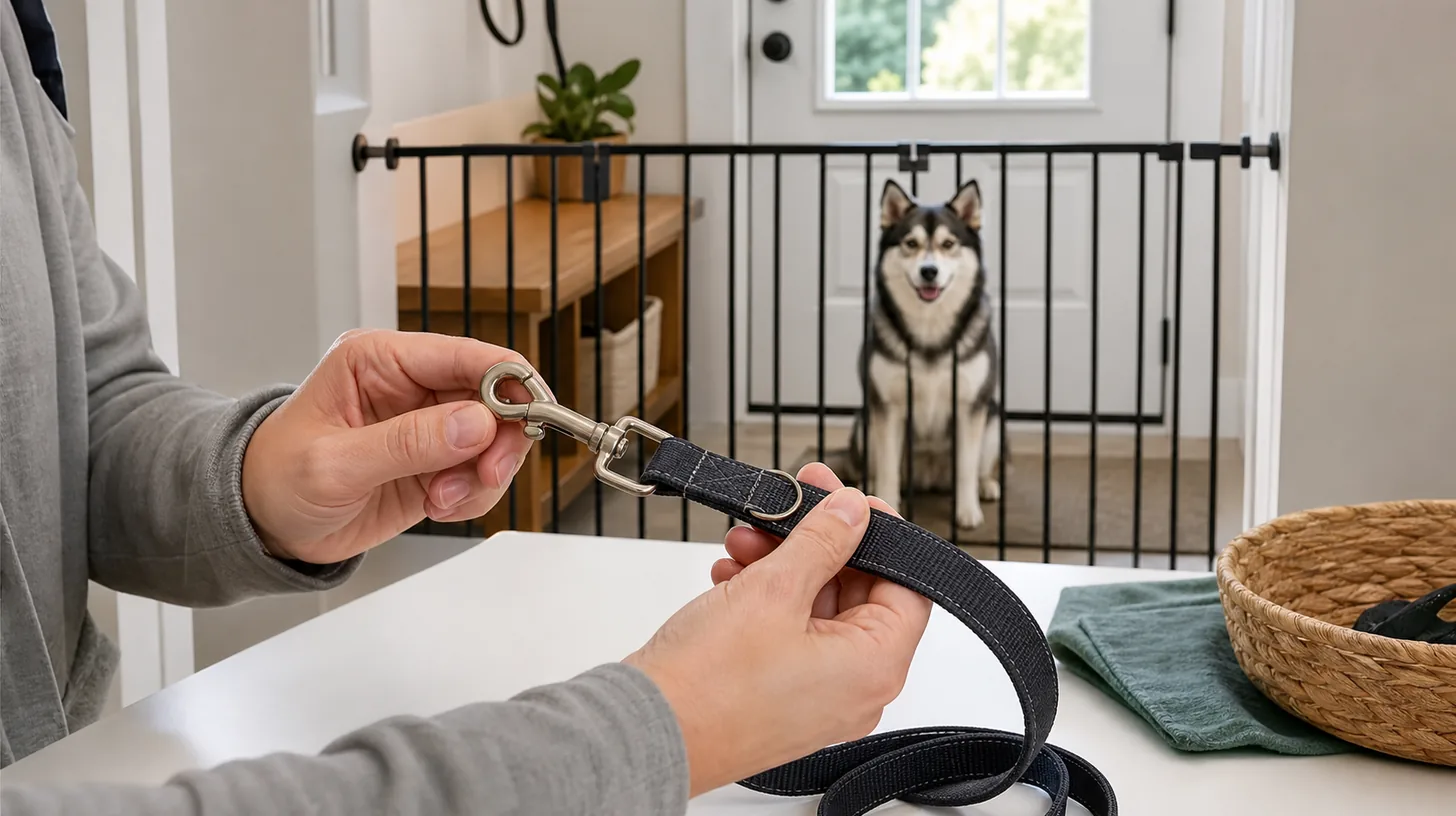
Direct answer: Inspect the entire leash under good light, including material, handle, stitches, clip gate, swivel, rings, locks, corrosion, and compatibility with the intended harness or collar. Clean only under product directions, retire damaged or uncertain gear, and perform a gentle assembly check only inside a secure enclosure.
A leash can look usable while stitching, webbing, a clip spring, swivel, ring, or lock is beginning to fail. Inspect every component in good light before relying on it outside. Retire damaged or uncertain equipment rather than testing it near an open door, traffic, wildlife, or another dog.
Identify the Complete Walking System
Lay out the leash, collar or harness, identification attachment, safety connector if used, and any waist belt or double-ended component. Record which clip attaches to which ring. Mismatched shapes or crowded rings can prevent a gate from closing fully.
Include backup equipment in the inspection. A spare that has sat wet in a vehicle or bag may be less reliable than the primary set. Do not assume new equipment is defect-free.
Inspect Webbing, Rope, or Leather
Run fingers along the full leash while looking for cuts, fraying, thinning, melted fibers, punctures, chew marks, stiffness, cracking, stretching, discoloration, and contamination. Flex the material gently to reveal hidden damage.
Pay special attention near the handle, clip, adjustment points, and any place dragged on the ground. Do not cover structural damage with tape or rely on a knot unless the manufacturer specifically supports that repair.
Check Every Stitch and Seam
Look at both sides of sewn loops and reinforcement boxes. Loose thread alone may be cosmetic, but missing, pulled, abraded, or separating structural stitches can reduce reliability. Compare with an intact section or product documentation.
Do not burn, glue, or restitch load-bearing seams without qualified manufacturer guidance. Retire the leash when the structural role of damage is uncertain.
Examine the Clip Gate
Open and close the clip several times away from the dog. The gate should move smoothly, return fully, align correctly, and remain closed without sticking. Inspect for bending, cracks, sharp edges, corrosion, sand, hair, and residue.
Check the exact gate style. A bolt snap, trigger snap, carabiner-style clip, and other designs have different operating and locking features. Follow the manufacturer's directions rather than assuming every clip works the same way.
Inspect Swivels, Rings, and Locks
Rotate swivels through their ordinary range and look for wobble, separation, grinding, binding, or deformation. Inspect welded rings, D-rings, adjustment hardware, and safety locks for gaps, sharp wear, rust, and distorted alignment.
A lock is useful only when it engages as designed. Do not add improvised clips or stack hardware in a way that changes load direction. Extra components can introduce more failure points.
Check Attachment Compatibility
Attach the clip to the intended harness or collar ring indoors with the equipment off the dog. Confirm the gate closes fully and cannot be held open by a thick ring, tag, fabric fold, or neighboring clip. Move the hardware through normal angles.
The fit of the collar or harness remains a separate check. Reliable leash hardware cannot correct loose, restrictive, damaged, or poorly positioned body equipment.
Clean Under Product Directions
Remove ordinary dirt, salt, hair, and grit using the manufacturer's instructions for the material and hardware. Rinse or dry only as directed. Some cleaners, heat, soaking, or machine cycles can damage coatings, fibers, leather, or lubricated parts.
Keep the Pomsky away during cleaning and drying. Prevent access to cleaning products and loose small parts. Reinspect after washing because wet fibers and moved hardware can reveal wear.
Perform a Controlled Function Check
After visual inspection, attach the complete system to the Pomsky only inside a fully enclosed secure area. Confirm correct fit and observe ordinary standing and walking without pulling hard or creating a deliberate escape attempt.
Do not shock-load the leash, ask someone to run away, or test beside an exterior door. A function check confirms assembly; it does not prove a universal load rating or escape guarantee.
Retire Equipment Conservatively
Replace gear after significant chewing, cuts, failed stitching, cracked or bent hardware, unreliable gate closure, damaged locks, or manufacturer-defined end-of-life conditions. Retire it when history is unknown after a major incident.
Mark discarded equipment so it cannot be mistaken for a usable spare. Dispose of it safely. Do not donate a leash that you would not trust with your own dog.
Set an Inspection Schedule
Use a quick visual and gate check before every outing. Complete a slower inspection after muddy or salty walks, washing, a hard pull, entanglement, travel, storage in heat or moisture, or any escape incident. Record replacement dates when several caregivers share equipment.
Calendar intervals do not replace condition checks. Use, material, environment, storage, and the individual dog affect wear differently.
Coordinate Caregivers
Show every walker which ring to use, how the lock works, where the backup is stored, and which equipment is retired. Label sets by purpose without placing sensitive contact information where it is unnecessary.
Pet sitters and children should not improvise repairs or switch components. If a caregiver cannot assemble and check the system reliably, an experienced adult should handle the outing.
Respond to a Failure
If equipment opens or breaks, protect people from traffic and avoid blind chasing. Use the established lost-dog plan, current microchip details, and recent photograph. Preserve failed hardware and note the circumstances without reusing it.
Report an apparent product defect through appropriate manufacturer and consumer channels, preserving purchase and lot information when available. The purpose of this checklist is not to rank brands. It is to catch visible wear, verify correct assembly, and remove uncertain equipment before the Pomsky depends on it outdoors.
Keep a Minimal Equipment Record
Record the item description, purchase or first-use date when known, intended attachment, cleaning method, inspection date, observed wear, and retirement date. Photograph the intact configuration and any later defect. Do not include private contact information in a label exposed during walks.
For households with several leashes, assign each item a simple internal identifier so caregivers can report the exact one. Store usable and retired gear separately. Review the record after an escape, hard entanglement, fall, chewing episode, or equipment recall. Traceability makes replacement decisions based on the actual component history rather than appearance alone.
Carry a verified backup on trips, but do not clip both primary and spare hardware together unless the complete arrangement has been professionally assessed for fit and safe movement.
Sources reviewed
Each source is used only for the claim scopes listed below. None establishes a guaranteed Pomsky outcome or replaces individual professional assessment.
- American Kennel Club: Finding and Choosing the Right Dog Collar for Your Dog - Supports: neck measurement; flat-collar fit; routine cleaning and rechecking. Limit: A two-finger check is a starting fit check, not a guarantee against escape, injury, or coat compression.
- American Kennel Club: The Importance of a Well-Fitting Harness - Supports: harness measurement; strap clearance; shoulder movement; escape and chafing checks. Limit: No harness corrects pulling by itself or fits every body shape; pain, rubbing, or gait change needs reassessment.
- American Animal Hospital Association: How Can I Discourage My Dog From Running Away? - Supports: secure fencing; leash use; recall foundations; escape-route checks; appropriate activity. Limit: No recall cue or fence design guarantees that an individual dog cannot escape.