Written and reviewed by A Pomsky Editorial Team. Originally published 2026-07-26; substantively reviewed July 26, 2026.
Training boundary: Use humane, reward-based methods and protect safety with management. Pain, panic, aggression, a bite history, or serious handling risk requires a veterinarian or qualified behavior professional. Read the editorial policy.
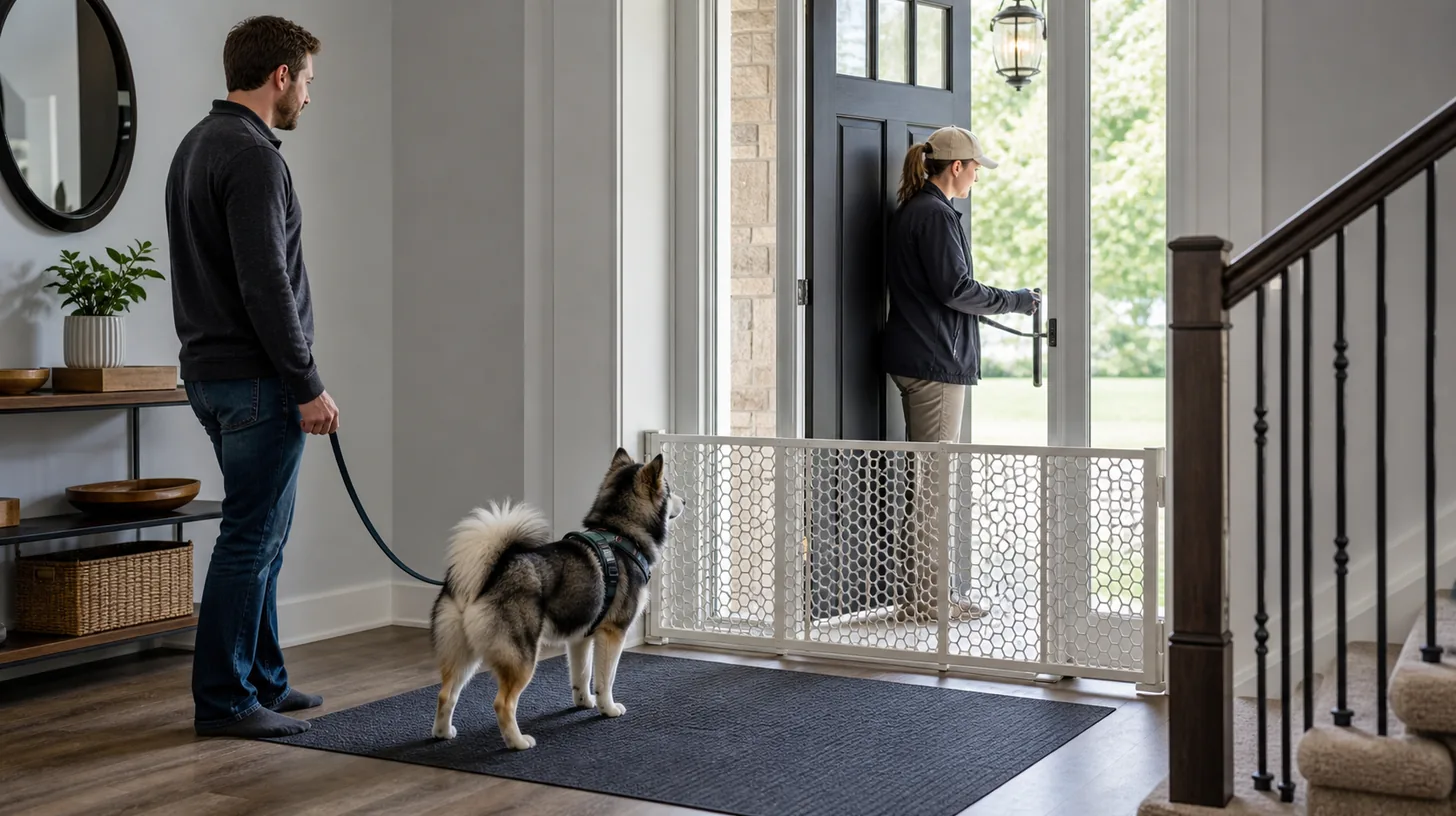
Direct answer: Protect the exterior door with a leash and closed secondary barrier, define a pause line, reward the Pomsky behind it, and add tiny handle and door movements. Introduce one release cue only after the pause is reliable. Close and reset after early movement; never use an open exit to test obedience.
Exterior door training should never depend on obedience alone. A Pomsky can learn to pause behind a doorway and move through only after a release cue, but a leash, closed secondary barrier, secure gate, and current identification remain essential. The training goal is a predictable pause under controlled conditions, not permission to test the dog near an open escape route.
Build Physical Safety Before Training
Choose an exterior door that can be protected by a closed gate, exercise pen, vestibule, or another adult controlling the outside space. Attach a well-fitted leash before approaching the training area. Confirm that collar or harness, identification tag, and microchip contact details are current.
Practice when deliveries, visitors, children, and other animals are not moving through the doorway. Tell household members that the session is active. A door wait cannot prevent escape if someone unexpectedly opens another exit or leaves a gate unsecured. Management must remain in place before, during, and after training.
Define the Doorway Criterion
Decide exactly where the Pomsky should pause. A nonslip mat or a visible floor line several feet behind the threshold can make the criterion easier to understand. The dog does not need a rigid position; standing, sitting, or lying calmly behind the line can all qualify if the paws remain inside.
Choose a release word that is not used casually in conversation. The release means movement through the doorway is available when the handler is ready. It does not guarantee off-leash access. Outdoors, the leash remains attached unless the destination is a fully secured area and local rules allow otherwise.
Teach the Pause With a Closed Door
Walk toward the closed door, stop at the line, and reward the Pomsky for remaining behind it. Touch the handle, reward again, and move away. Repeat until handle movement no longer causes the dog to surge forward. Keep the leash loose enough that the dog is making a choice, while retaining control.
If the Pomsky crosses the line, calmly turn away and reset. Do not jerk the leash, block with a knee, or scold. The consequence of rushing is simply that the door-opening sequence stops. Rewarding the position you want gives the dog clearer information than punishing movement after it occurs.
Add Small Door Movements
Open the door only a crack, close it, and reward the pause. Gradually increase the opening while the secondary barrier remains secured. If the dog's weight shifts forward, close the door before the dog reaches the threshold and reset at an easier opening.
Change one feature at a time. A wider opening, longer pause, person outside, or wind moving leaves are separate challenges. Do not combine them during early training. Several easy door movements help build a stable pattern; repeatedly testing the maximum teaches rushing and makes mistakes more likely.
Introduce the Release Cue
When the Pomsky can remain behind the line with the protected door open, say the release cue once and move through together on leash. Reward outside, then return calmly. The dog should learn that waiting makes the release possible, while moving early closes the opportunity.
Avoid using treats to pull the dog through before the cue. The release itself can be reinforced by access to a short sniff, a walk, or the secure yard. On some repetitions, release the dog and then close the door without a full walk so the cue does not always predict intense excitement.
Practice Entry as a Separate Skill
Returning through the same doorway can create different arousal. Establish an outside pause point where it is safe, ask for the familiar wait, open the door, and release the Pomsky inside. Keep the path clear so the dog does not collide with people, bags, or another pet.
Entry practice is particularly important when the dog anticipates food, play, or greeting someone indoors. Use enough distance to maintain a loose leash. If several animals use the doorway, train and move them separately until each routine is reliable and resource conflict is unlikely.
Add Realistic Distractions Gradually
Practice with a family member walking past outside, a quiet doorbell recording, a bag being carried, or a vehicle parked nearby. Begin at low intensity and reward the pause. The secondary barrier and leash stay in place because distractions can produce a stronger response than ordinary practice.
Do not ask a delivery worker, child, or unfamiliar dog to serve as a training test. Real arrivals should be managed with closed barriers. A planned helper can follow instructions, remain at distance, and stop immediately if the Pomsky becomes unable to eat, orient, or reset.
Create a Household Door Protocol
Write a short protocol everyone can follow: secure the Pomsky, attach the leash, check the exterior, approach the line, open only after a pause, and release once the handler has control. Place delivery notes or a visual reminder where people will see them before opening the door.
Children should not be responsible for controlling the dog at an exterior exit. Visitors should enter only after the Pomsky is behind a closed barrier. Consistency matters because one uncontrolled rush can be highly reinforcing and can also create immediate traffic, bite, or loss risk.
Respond to Mistakes Without Escalation
If the Pomsky crosses early, close the door if safe, move back to the starting point, and reduce the challenge. If the dog repeatedly rushes, end the session and use management. Fatigue, urgent toileting needs, outside animals, or an unusually exciting event can make a familiar exercise temporarily harder.
Never hold the door partly open while struggling with the dog. Secure the exit first. Repeated lunging, redirected biting, intense barking, or panic around the doorway needs a broader safety and behavior assessment, not more repetitions at the same difficulty.
Maintain the Skill and Escape Prevention
Practice a few easy door waits during ordinary routines, including times when no walk follows. Recheck equipment fit, tags, locks, gates, and household procedures regularly. Reward successful pauses throughout the dog's life, especially after moves, schedule changes, or long gaps in practice.
Even a fluent door wait can fail under an unexpected trigger. Secure fencing, leash use, reliable barriers, and updated identification are permanent safety layers. Training improves communication at the threshold; it does not convert an open exterior door into a safe containment system.
Sources reviewed
Each source is used only for the claim scopes listed below. None establishes a guaranteed Pomsky outcome or replaces individual professional assessment.
- American Veterinary Society of Animal Behavior: Humane Dog Training Position Statement - Supports: reward-based training; aversive-method risk; behavior change principles. Limit: Does not guarantee outcomes for an individual dog.
- American Animal Hospital Association: How Can I Discourage My Dog From Running Away? - Supports: secure fencing; leash use; recall foundations; escape-route checks; appropriate activity. Limit: No recall cue or fence design guarantees that an individual dog cannot escape.