Written and reviewed by A Pomsky Editorial Team. Originally published 2026-07-26; substantively reviewed July 26, 2026.
Training boundary: Use humane, reward-based methods and protect safety with management. Pain, panic, aggression, a bite history, or serious handling risk requires a veterinarian or qualified behavior professional. Read the editorial policy.
Direct answer: Verify current campground rules and veterinary access, inspect the site before unloading, and keep the Pomsky under supervised leash or approved secure-enclosure control. Protect food and waste, maintain distance from fire and wildlife, check weather and water hazards, preserve rest and identification, and leave when safe conditions cannot be maintained.
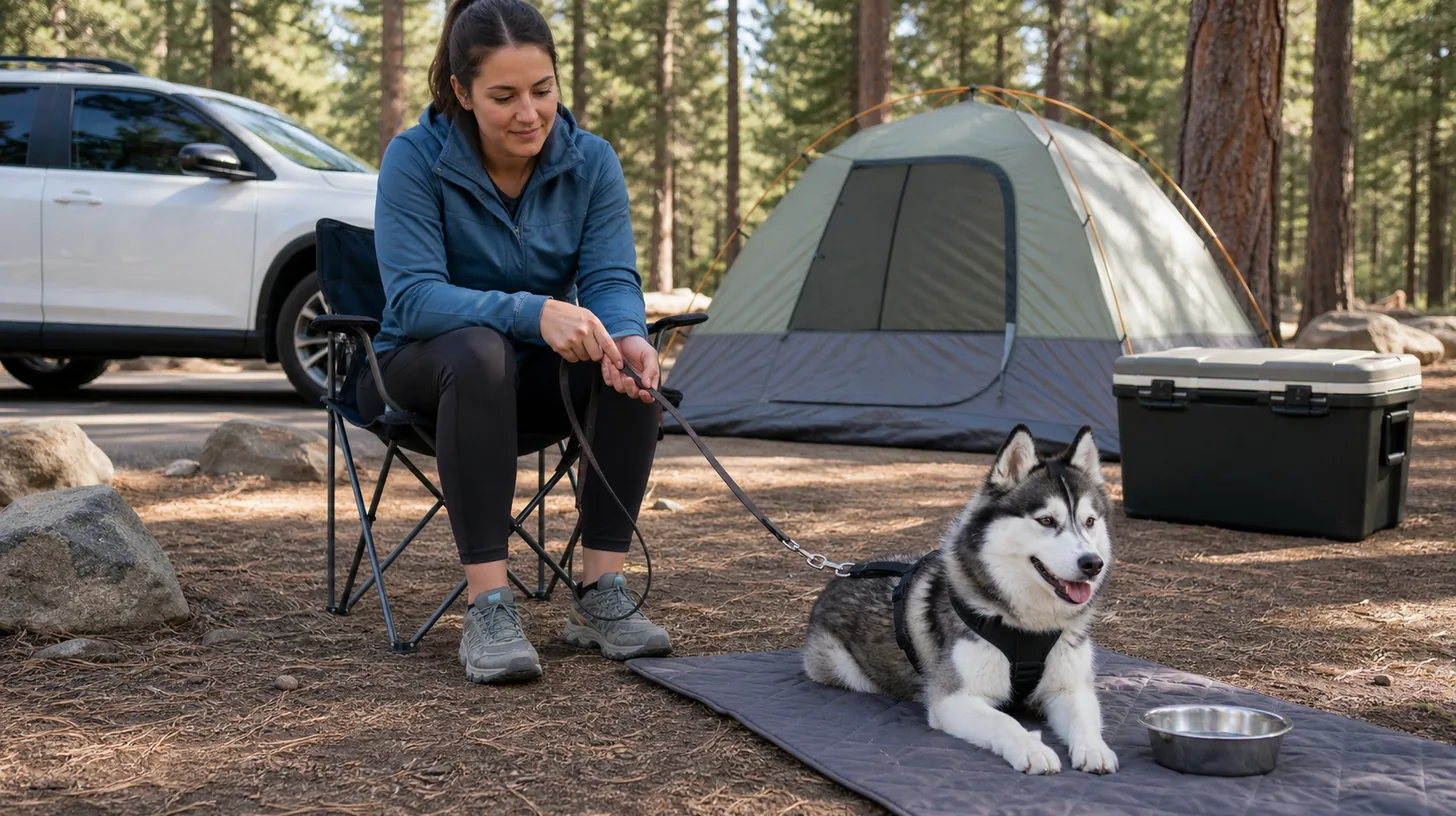
Camping with a Pomsky requires more than packing a leash and food. A campground combines unfamiliar rules, wildlife, food odors, fire, water, weather, loose animals, vehicles, and limited veterinary access. Verify the destination, inspect the exact site, maintain physical control, and leave when conditions cannot be managed safely.
Verify the Campground Before Travel
Read current official rules for dogs, leash length, enclosures, vaccination or documentation, restricted trails, quiet hours, waste, wildlife, fire, and emergency evacuation. Call when wording is unclear. Confirm that the reservation allows the Pomsky's actual lodging setup.
Identify the nearest routine and emergency veterinary services and check operating hours and route access. Download or print essential contacts because cellular service may be unreliable.
Review Individual Travel Suitability
Consider the Pomsky's current health, preventive care, parasite plan, mobility, heat and cold tolerance, behavior around unfamiliar dogs and people, and ability to rest in the chosen setup. Ask the veterinarian about destination-specific concerns.
Do not use a camping trip to test severe noise fear, escape behavior, reactivity, or an unconditioned tent or vehicle routine. A quieter cabin or staying home may be the responsible choice.
Inspect the Site Before Unloading
Keep the Pomsky secured in the vehicle with safe climate control and adult supervision while another adult checks traffic, neighboring dogs, broken glass, fishing hooks, food waste, toxic plants, mushrooms, standing water, sharp branches, insect activity, fire residue, and possible wildlife routes.
Choose the lowest-risk area for rest, feeding, and toilet access. If a solo traveler cannot inspect while maintaining vehicle safety, use a controlled arrival procedure or ask campground staff for current site information.
Maintain Reliable Containment
Use a well-fitted harness or veterinarian-appropriate setup, current identification, and a leash held by an attentive adult. Inspect clips and attachment points before each outing. A portable enclosure is an additional layer only when allowed, stable, supervised, and genuinely secure for that dog.
Never tether the Pomsky unattended to a tree, table, tent, vehicle, or ground stake. Tethers can entangle, fail, expose the dog to wildlife or strangers, and do not protect against weather.
Control Tent, Cabin, and Vehicle Doors
Create one entry sequence: secure leash inside, check the outside area, open one door, move through, close it, and then adjust equipment. Keep screens zipped and solid doors latched. A mesh tent wall is not a reliable unattended barrier.
Store keys, lighting, leash, shoes, and identification where they can be reached without searching. At night, use a light before opening and prevent children from managing the exit.
Store Food and Waste Safely
Follow campground and wildlife authority rules for food, dog food, treats, bowls, coolers, scented products, and waste. Use closed approved storage and keep the Pomsky away while meals are prepared. Remove leftovers promptly.
Do not leave food in a tent when local rules require other storage. Prevent access to human foods, skewers, foil, charcoal, fishing bait, medications, and trash. Wildlife-safe storage protects the dog, people, and animals around the campsite.
Separate the Pomsky From Fire
Keep the dog well outside the fire ring and spark path using distance and physical control. Secure fuel, lighters, hot cookware, ashes, and sharp tools. Check whether fire restrictions or smoke conditions make a fire inappropriate.
Do not rely on a stay cue near open flame. Wind can change direction, a leash can cross heat, and another person can move suddenly. When fire management requires full attention, place the Pomsky in the secure lodging setup with a responsible adult.
Assess Water and Wildlife Hazards
Prevent drinking from lakes, streams, puddles, or communal bowls unless veterinary and local guidance establishes a safe option. Currents, steep banks, algae, contamination, hooks, and cold water can create risk. Swimming suitability is individual and requires close control.
Observe wildlife from a distance. Do not allow chasing, den investigation, carcass contact, or approach to unknown animals. Follow current local instructions for bears, snakes, ticks, insects, and other hazards rather than applying a generic rule.
Adapt to Weather and Air Quality
Check forecast, current temperature, humidity, surface, wind, storms, smoke, shade, and overnight conditions. A double coat does not make heat, smoke, cold, or wet bedding harmless. Modify the schedule or leave before exposure becomes difficult to manage.
Have a weatherproof evacuation destination and transport-ready setup. Marked breathing difficulty, weakness, disorientation, vomiting, collapse, severe pain, or other serious signs require urgent veterinary routing.
Preserve Rest and Routine
Set up a dry, quiet resting area away from foot traffic and food preparation. Offer the regular diet and water under the existing care plan. Keep medication in its labeled storage conditions and record each dose.
Shorten activities when the Pomsky cannot settle, repeatedly scans, vocalizes, startles, or shows altered appetite or recovery. A full itinerary is not more important than sleep and ordinary behavior.
Prepare for Escape or Emergency
Carry a recent photograph, microchip contact, veterinary records, medications, emergency supplies, and a physical map or directions. Tell another person the location and trip schedule. Know the campground's alert and evacuation process.
If the Pomsky goes missing, secure the site, establish the last known location, contact campground staff and relevant organizations, and use the coordinated lost-dog plan. Do not send people into unsafe terrain without direction.
Leave the Site Traceable and Clean
Collect all dog waste, food residue, damaged gear, and small items. Inspect paws, coat, harness contact areas, and general condition in good light without diagnosing findings. Follow veterinary advice for ticks, wounds, ingestion, or illness concerns.
A successful campsite checklist produces a controlled temporary home: verified rules, inspected ground, reliable containment, protected food and rest, fire and wildlife distance, weather exits, and accessible emergency routing. The trip should end early whenever those conditions cannot be maintained.
Hold a Daily Campsite Reset
At morning and evening, count equipment, inspect harness and leash hardware, remove food residue and waste, refresh clean water, check the forecast and alerts, and scan the site for new tracks, droppings, insects, sharp debris, standing water, or neighboring activity. Confirm the vehicle can leave without repacking the entire camp.
Record the Pomsky's appetite, sleep, stool, gait, breathing, skin or paw concerns, and recovery from outings in neutral language. Contact the veterinarian for significant or persistent change. A daily reset catches hazards introduced after arrival and keeps a multi-day trip from depending on the first inspection.
Sources reviewed
Each source is used only for the claim scopes listed below. None establishes a guaranteed Pomsky outcome or replaces individual professional assessment.
- U.S. Centers for Disease Control and Prevention: Pet Emergency Preparedness - Supports: evacuation planning; pet records; emergency supplies; disaster readiness. Limit: Local emergency authority instructions take priority.
- U.S. Centers for Disease Control and Prevention: Pet Emergency Checklist - Supports: emergency kit contents; records; identification; transport supplies. Limit: Adapt the checklist to local hazards and the dog's medical needs.
- American Animal Hospital Association: Lifestyle and Safety Assessment - Supports: appropriate confinement; leash, collar and harness planning; lifestyle-specific safety review. Limit: Equipment selection must account for the individual dog's anatomy, behavior, health, and environment.