Written and reviewed by A Pomsky Editorial Team. Originally published 2026-07-26; substantively reviewed July 26, 2026.
Training boundary: Use humane, reward-based methods and protect safety with management. Pain, panic, aggression, a bite history, or serious handling risk requires a veterinarian or qualified behavior professional. Read the editorial policy.
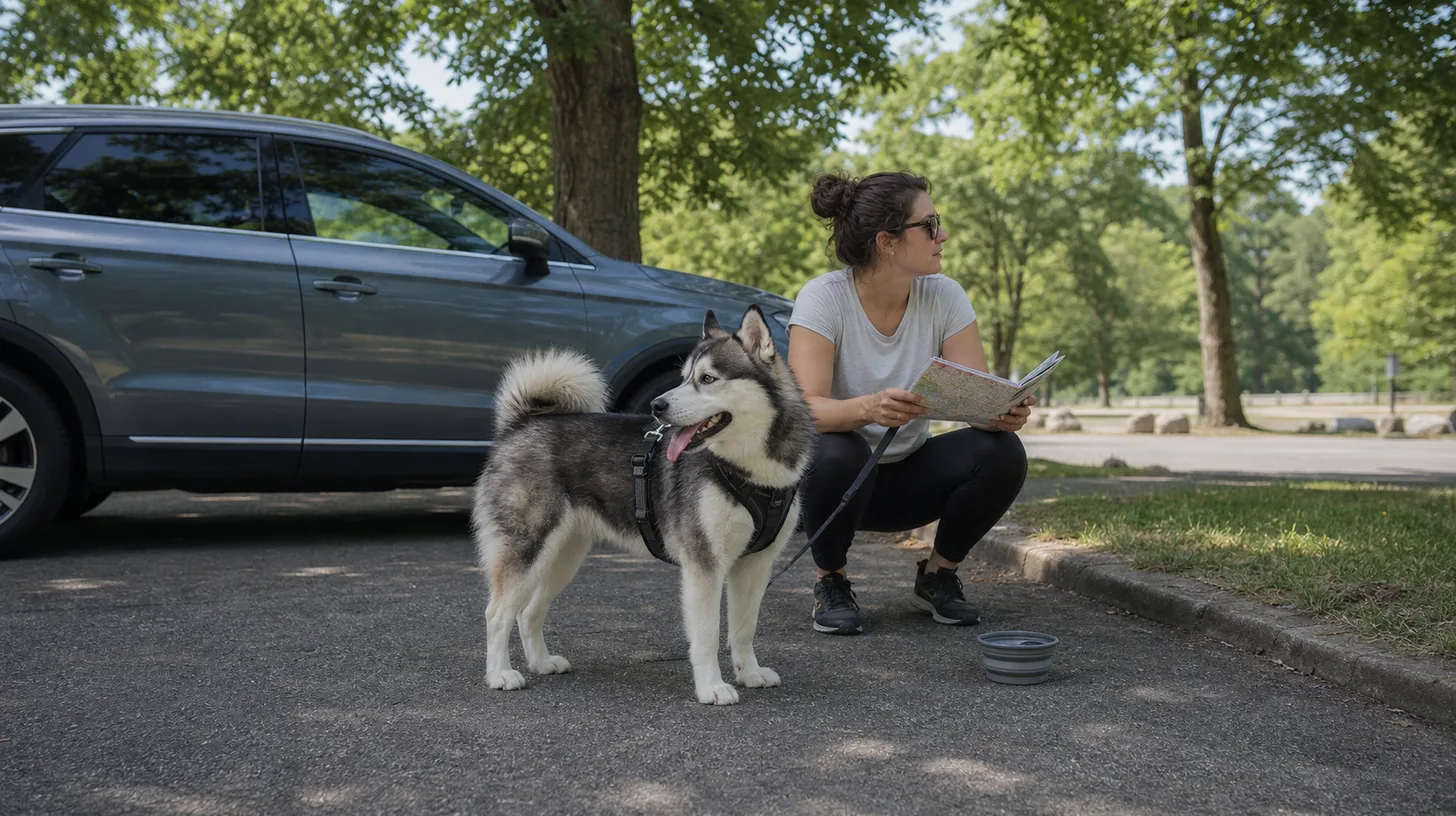
Direct answer: Choose primary and backup stops before travel, inspect for traffic, loose dogs, debris, weather, and surface heat, then secure the Pomsky inside the closed vehicle before opening one assigned door. Use a fitted harness and leash, keep the break brief, offer water, and resecure the dog before any other door opens.
A road-trip rest stop is one of the highest-risk moments for escape because vehicle doors, traffic, unfamiliar smells, heat, people, and other dogs converge. Plan stops before departure, secure the Pomsky before any door opens, inspect the environment, use a short controlled toilet route, and reload the dog before reorganizing people or luggage.
Preselect Several Stop Options
Map primary and alternate stops at reasonable intervals based on the Pomsky's veterinary and routine needs. Prefer low-traffic locations with shade, clean surfaces, lighting, and space away from dog congregation. Check operating hours and seasonal closures.
Do not wait until the dog is urgent or the driver is exhausted. A planned stop can still be rejected on arrival if heat, traffic, loose dogs, broken glass, chemicals, or crowding make it unsafe.
Assign Roles Before Parking
Decide who controls the Pomsky, who checks the area, and who handles children, luggage, or fuel. The dog handler should not also open several doors or search for supplies. Solo travelers should complete one task at a time.
Use a spoken confirmation such as “dog secured” before any vehicle door opens. Everyone should understand that the Pomsky exits and reloads before bags or passengers are rearranged.
Secure Equipment Inside the Closed Vehicle
With all doors closed, attach the leash to the correct well-fitted harness or collar. Verify identification and backup connector if used. Keep the leash short enough to prevent a dash but loose enough to avoid pressure.
Never open the hatch or passenger door first and then try to clip the dog. Travel restraints and carriers should remain secured until the handler has control. A damaged buckle or strap blocks the stop until a safe backup is available.
Inspect Heat, Surface, and Traffic
One adult should look for moving vehicles, hot pavement, ice, salt, glass, trash, standing water, wildlife, and other dogs. Identify a shaded toilet route and a rapid return to the vehicle. Keep the engine and climate plan lawful and safe.
Never leave the Pomsky unattended in a parked vehicle. Interior heat can rise rapidly, and cracked windows do not make the situation safe. If all travelers must leave, choose a pet-accessible arrangement rather than taking turns with the dog alone in unsafe conditions.
Exit Through One Controlled Door
Open only the door chosen for the Pomsky. Position the handler between the dog and traffic when possible, maintain leash control, and use a practiced pause before release. Close the vehicle door immediately after exit.
Do not allow the dog to jump from a high cargo area without an appropriate ramp or assistance plan. Slippery, hot, or uneven surfaces can cause injury. Use the transport setup already conditioned to the dog.
Use a Short Low-Conflict Route
Walk directly to the selected area, maintain distance from unfamiliar dogs and people, and avoid communal bowls or crowded pet zones. A rest stop is not a socialization session. Let the Pomsky toilet and sniff briefly without extending exposure unnecessarily.
Observe gait, breathing, posture, and willingness. Heat, nausea, pain, fear, or travel stress may change behavior. End the stop and seek veterinary guidance when concerning signs appear.
Offer Water Appropriately
Carry clean water and a personal bowl. Offer it in a safe location according to the dog's established travel plan. Do not force drinking or allow access to puddles, unknown bowls, or contaminated sources.
Record unusual refusal, excessive interest, vomiting, or repeated distress. Feeding during travel should follow the veterinarian-informed plan rather than an improvised large meal at the stop.
Manage Waste and Hygiene
Pick up waste, seal it, and use designated disposal. Wash or sanitize hands after handling waste and before food. Keep cleaning products and waste bags away from the Pomsky.
Do not let the dog investigate trash, discarded food, antifreeze, fuel, or landscaped plants. A short leash and active attention are more reliable than repeated leave-it cues in a high-risk environment.
Reload Before Other Tasks
Return to the chosen vehicle door, check traffic, open only that door, and guide the Pomsky into the carrier or restraint. Close and confirm the dog is fully secured before passengers enter, luggage moves, or another door opens.
Do not remove the leash until the door is closed and the internal restraint setup is ready. Prevent leash entanglement according to the travel system design. Perform a final verbal confirmation.
Reassess the Route and Schedule
Note whether the stop was suitable, how long it took, and any hazards or stress. Replace poor locations in the route plan. Delays, weather, and illness may require shorter intervals or an overnight change.
Do not continue driving merely to meet a booking when the Pomsky or driver is unwell. Identify veterinary hospitals along long routes and know how to access records.
Prepare for Escape or Illness
Keep a recent photograph, microchip contacts, veterinary information, emergency hospital list, towel, waste supplies, and backup equipment accessible without opening the dog's area. Know the last-known-location response before travel.
If the Pomsky escapes, protect people from traffic and coordinate rather than chasing blindly. If illness occurs, contact a veterinary service and follow routing. Do not medicate with leftover travel remedies.
Use the Same Protocol Every Time
Consistency makes each stop easier to manage: inspect, secure inside, one door, short route, water, return, reload, confirm. Share the protocol with every driver and caregiver. Children do not control the dog near vehicles.
A Pomsky road-trip rest-stop plan is successful when it limits exposure and preserves control, not when the stop is long or entertaining. The safest stop is planned, brief, shaded when needed, free of forced contact, and completed with the dog secured before anything else changes.
Coordinate Human Needs Separately
Plan fuel, meals, toilets, and driver changes so the Pomsky is never left in unsafe vehicle conditions and is not repeatedly loaded and unloaded. When two adults travel, assign one to remain responsible for the secured dog while the other handles the human stop. A solo driver may need pet-welcoming locations, curbside options, or a changed route.
Never leave climate safety to a cracked window, shade assumption, or brief intended absence. Vehicle conditions can change quickly, and local laws vary. If the driver cannot maintain a safe supervised setup, continue to a suitable location or change the trip plan.
Before departure, mark primary and backup stops with enough space to choose another area if loose dogs, broken glass, traffic, crowds, pesticide notices, or extreme surface temperatures are present. Share the route with another person and keep essential equipment reachable. The stop protocol should still work after a delay or closure; otherwise it is only an itinerary, not a safety plan.
Sources reviewed
Each source is used only for the claim scopes listed below. None establishes a guaranteed Pomsky outcome or replaces individual professional assessment.
- U.S. Centers for Disease Control and Prevention: Pet Emergency Checklist - Supports: emergency kit contents; records; identification; transport supplies. Limit: Adapt the checklist to local hazards and the dog's medical needs.
- American Animal Hospital Association: Lifestyle and Safety Assessment - Supports: appropriate confinement; leash, collar and harness planning; lifestyle-specific safety review. Limit: Equipment selection must account for the individual dog's anatomy, behavior, health, and environment.
- ASPCA: The Dangers of Leaving an Animal in a Hot Car and Other Heat-Related Hazards - Supports: parked-car heat risk; heat-distress warning signs; need for prompt emergency response; jurisdictional law variation. Limit: Local law and emergency-dispatch instructions control whether and how a private person may enter a vehicle.