Written and reviewed by A Pomsky Editorial Team. Originally published 2026-07-26; substantively reviewed July 26, 2026.
Training boundary: Use humane, reward-based methods and protect safety with management. Pain, panic, aggression, a bite history, or serious handling risk requires a veterinarian or qualified behavior professional. Read the editorial policy.
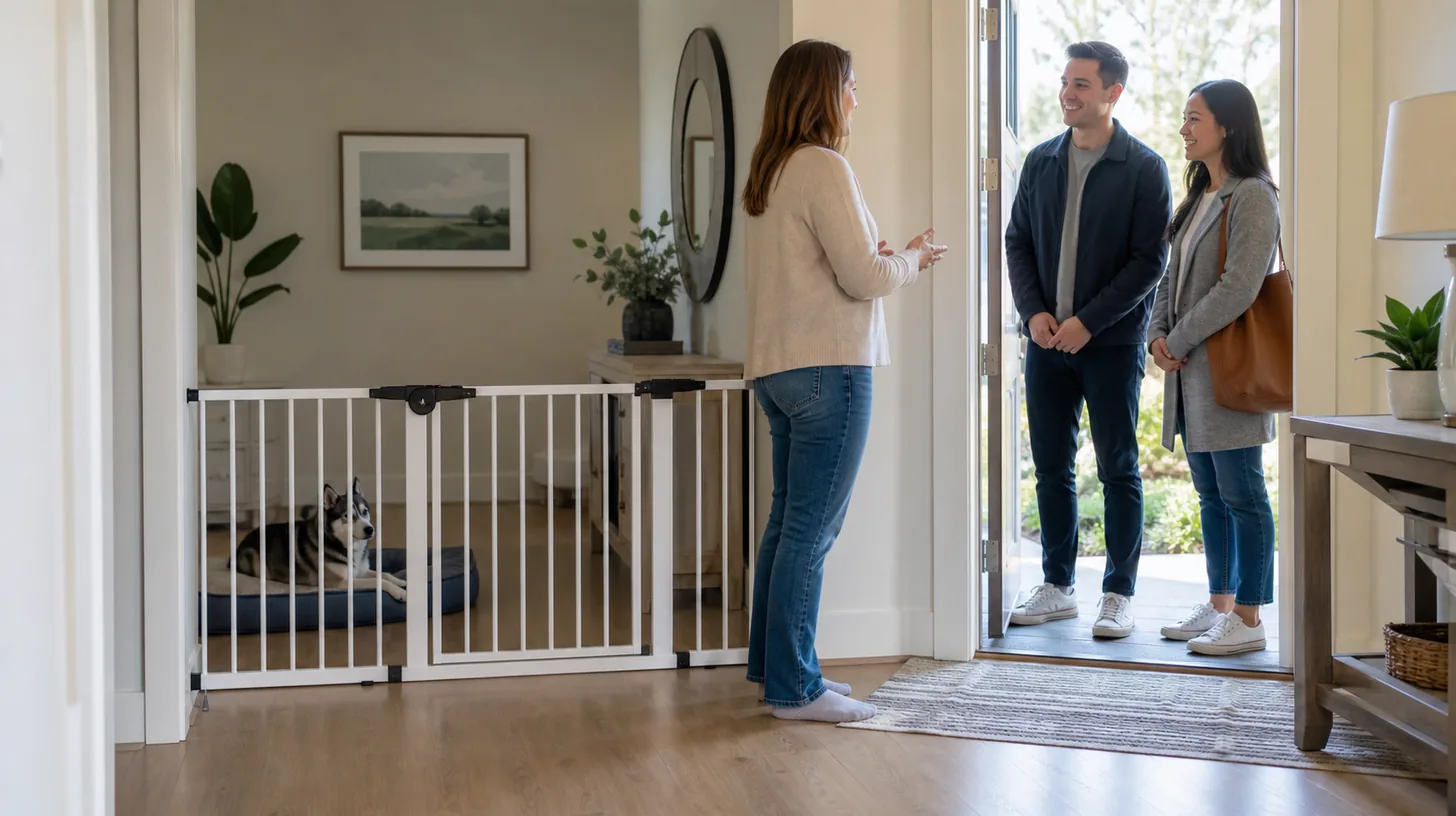
Direct answer: Decide before arrival whether the Pomsky will remain separated or may participate. Secure the dog behind a closed barrier before opening the exterior door, give visitors simple no-contact instructions, and allow interaction only when the dog is comfortable and the household can supervise. Preserve a retreat area throughout, and restore containment before coats, bags, deliveries, or departure reopen the doorway.
Visitors change the sound, movement, scent, and access pattern of a home. A Pomsky may be social, uncertain, excited, avoidant, or different with each person. Safe hosting begins before the exterior door opens: choose whether the dog will participate, set physical barriers, explain visitor behavior, preserve retreat space, and control departure as carefully as arrival.
Choose Separation or Participation
Decide the default plan for this visit based on the Pomsky's current behavior, the visitor, available adults, room layout, visit length, and any history of fear, guarding, jumping, escape, or bites. Separation is a complete and acceptable plan; a greeting is not required.
If the household cannot supervise continuously, use prepared separation. Do not improvise participation because a visitor says they are comfortable with dogs.
Prepare a Retreat Area
Set up a room or gated area away from the entrance with water, comfortable footing, resting space, and a safe familiar activity if appropriate. Remove objects that could be guarded, swallowed, or damaged. Check the barrier from both sides.
The area should remain available throughout the visit. It is not a punishment location, and visitors should not enter it to make friends with the dog.
Brief Visitors Before Arrival
Send a short message explaining that the Pomsky will initially be separated. Ask visitors to wait outside until invited, avoid knocking repeatedly, keep bags and food controlled, and ignore the dog unless the caregiver changes the plan.
For a larger group, designate one household member to manage the door and another to manage the dog. Clear roles prevent the leash and door handle from ending up in the same overloaded hand.
Secure the Pomsky Before Opening
Move the dog into the prepared area and close the primary barrier before anyone touches the exterior door. Use a second layer when practical, such as a closed interior door plus a gate. Confirm the barrier latched rather than relying on appearance.
Keep the Pomsky away from coats, packages, food delivery, and luggage placed near the entrance. These items add movement and can create guarding or ingestion concerns.
Manage the Doorway
Open the exterior door only after the dog is secured. Let visitors enter, close and lock the door, then move people away from the entry path. Store bags, umbrellas, and food where the Pomsky cannot access them.
The doorway is not a greeting area. It combines escape access with narrow space and people leaning forward, which makes it a poor place to assess comfort.
Let the Home Settle
Give the Pomsky time to hear and smell the visitors from behind the barrier. Continue normal quiet activity. Avoid a group approaching the gate, calling the dog's name, making eye contact, or offering hands through openings.
Observe whether the Pomsky can move away, rest, take familiar food, and recover from voices or chair movement. Silence alone does not prove comfort.
Decide Whether to Change the Plan
Participation should occur only when an adult can supervise, the room offers distance and exits, visitors can follow instructions, and the Pomsky is showing flexible behavior. Keep the initial contact optional. The dog may remain behind a gate with visual access or stay fully separated.
Do not use food to lure a hesitant Pomsky into touching distance. Rewards can be delivered away from visitors to reinforce disengagement and retreat.
Structure Optional Interaction
Ask visitors to sit or stand sideways, keep hands neutral, and avoid staring, reaching over the head, hugging, or crowding. Let the Pomsky choose whether to approach and leave. One visitor at a time is easier to observe than a group greeting.
End interaction while behavior remains comfortable. A visitor should not follow the dog to continue contact, block an exit, or remove an item from the dog's mouth.
Protect Children and Vulnerable Visitors
Use physical separation when visitors cannot reliably follow adult instructions, including young children or anyone with limited balance, hearing, vision, or mobility. Adult supervision does not replace a barrier when a sudden movement could create injury or escape risk.
Never ask a child to feed, restrain, hug, wake, or take an object from the Pomsky. Family photographs can be taken without placing people and dog in contact.
Manage Food and Personal Items
Keep plates, medications, gum, candy, bags, and waste inaccessible. Ask visitors not to feed the Pomsky. Separate the dog during meal service and cleanup, even when earlier interaction was calm.
Secure coats and bags because they may contain food or medication. Count serving utensils and clear dropped items before allowing the Pomsky into the area.
Watch for Stress and Escalation
Look for repeated retreat, freezing, hard staring, tucked posture, inability to settle, pacing, hiding, barking that intensifies, growling, guarding, snapping, or lunging. Increase distance and restore separation rather than correcting communication.
The appropriate response to uncertainty is more management. Do not ask the visitor to test whether the dog will tolerate another approach.
Plan Bathroom and Outdoor Breaks
Move visitors away from the path before transferring the Pomsky. Connect equipment behind a closed barrier, verify the exterior route, and keep doors controlled. If the yard gate will be used, confirm it is closed before the dog leaves the house.
Visitors should not hold the leash unless the household has deliberately assigned that role to a capable caregiver familiar with the dog.
Control Departure
Departure recreates the highest-risk features of arrival: standing people, bags, coats, voices, and an open exterior door. Return the Pomsky to secure separation before visitors gather belongings. Close the barrier, then open the exterior door.
After guests leave, lock the door, clear food and waste, and wait until the entry area is quiet before releasing the dog.
Review the Visit
Record the visitor type, management choice, distance, duration, dog behavior, recovery, food or object issues, and any barrier problem. Note what should change next time. A visit that remained fully separated can still be a successful, low-stress event.
If the Pomsky has a bite history, escalating fear, repeated barrier charging, or aggression risk, seek individualized guidance from a veterinarian and qualified reward-based behavior professional. The household plan should prioritize prevention, not prove that the dog can greet.
Sources reviewed
Each source is used only for the claim scopes listed below. None establishes a guaranteed Pomsky outcome or replaces individual professional assessment.
- American Veterinary Medical Association: Dog Bite Prevention - Supports: bite-risk awareness; leash and secure-gate prevention; avoiding escalation; professional behavior help. Limit: Breed alone does not predict bite risk, and general prevention guidance cannot control an active loose-dog encounter.
- American Veterinary Society of Animal Behavior: Humane Dog Training Position Statement - Supports: reward-based training; aversive-method risk; behavior change principles. Limit: Does not guarantee outcomes for an individual dog.
- Cornell University College of Veterinary Medicine: Anxious Behavior: How to Help Your Dog Cope With Unsettling Situations - Supports: anxiety signs; separation-related vocalization; gradual desensitization; reward-based professional help. Limit: Howling alone does not diagnose separation anxiety; sudden or severe distress needs veterinary assessment.