Written and reviewed by A Pomsky Editorial Team. Originally published 2026-07-26; substantively reviewed July 26, 2026.
Training boundary: Use humane, reward-based methods and protect safety with management. Pain, panic, aggression, a bite history, or serious handling risk requires a veterinarian or qualified behavior professional. Read the editorial policy.
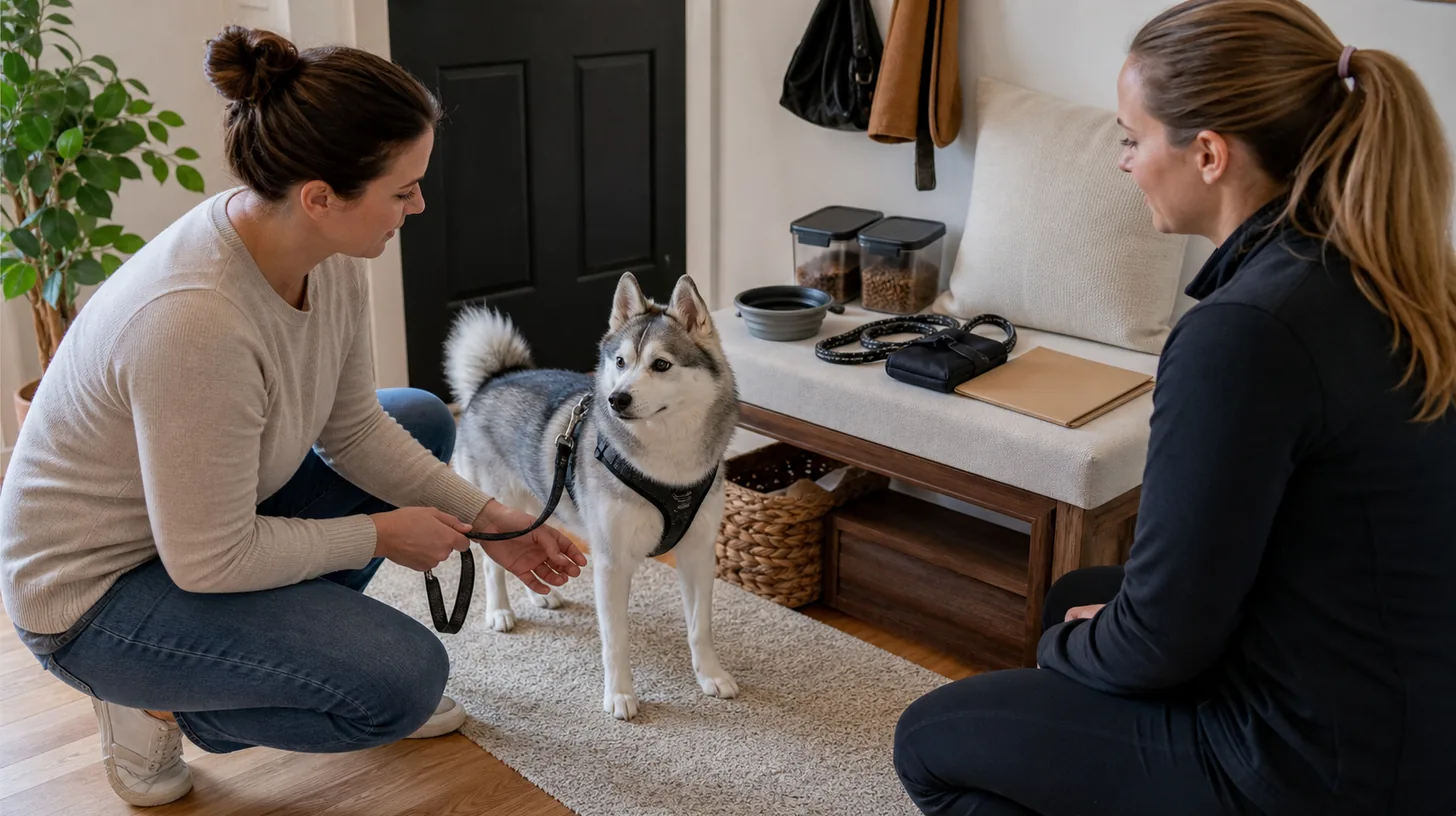
Direct answer: Give the sitter one current handoff with Pomsky identification, owner and veterinary contacts, measured feeding and medication directions, walking equipment, door protocol, household boundaries, observable behavior triggers, emergency routing, and backup coverage. Rehearse entry, exit, feeding, and leash routines together instead of relying on written notes alone.
A pet sitter should not have to reconstruct a Pomsky's routine during an emergency. Prepare one concise, current handoff that covers identity, veterinary contacts, feeding, medications, walking equipment, household boundaries, behavior triggers, and access. Then rehearse the actual routine together. A folder alone is not proof that the sitter can safely manage the dog.
Confirm the Care Arrangement and Limits
Record the exact dates, arrival and departure times, overnight expectations, walk frequency, and whether anyone else may enter the home. Confirm which tasks the sitter has accepted and which require another professional. Do not assume that ordinary pet-sitting includes medical procedures, off-site transport, grooming, or behavior training.
Discuss the Pomsky's size, strength, handling tolerance, and response to unfamiliar people before finalizing care. A sitter who is not comfortable with the dog's needs should decline before the handoff. Identify a backup caregiver who has also agreed to the role.
Create an Identity and Contact Page
List the Pomsky's name, clear recent photograph, age, sex, coat description, microchip registry contact, tag information, and any distinguishing marks. Add the owner's primary and alternate numbers, travel contact details, regular veterinarian, emergency hospital, poison service, and local animal-control contact.
Include written authorization for emergency veterinary care when appropriate, along with payment and decision limits discussed with the clinic. Protect sensitive information: provide only what the sitter needs, store it securely, and avoid leaving unnecessary account credentials or identity documents in an open folder.
Write Measured Feeding Instructions
Name the exact food, amount, measuring tool, meal times, storage location, and approved treats. State which human foods, chews, or supplements are prohibited. If food must be prepared in a particular way, demonstrate it and label containers by date.
Do not write vague directions such as “one scoop” unless the scoop is clearly identified and its level measurement is shown. Explain how to record appetite, vomiting, diarrhea, or refusal. The sitter should contact the owner or veterinarian rather than independently changing portions or substituting a diet.
Document Medications and Health Boundaries
List each active medication with the label instructions, prescribed timing, route, storage, and what to do after a missed or refused dose according to the veterinarian's existing directions. Identify documented reactions and current health concerns without converting suspicions into diagnoses.
Demonstrate only tasks the sitter has agreed and is competent to perform. Never ask a sitter to force medication, alter a dose, or reuse an old prescription. Provide a veterinary contact for questions and clear criteria for urgent care, including breathing difficulty, collapse, repeated vomiting, seizure, injury, or sudden major behavior change.
Rehearse Entry, Exit, and Door Safety
Walk through the exact entry sequence: unlock, close the exterior door, secure any secondary gate, locate the Pomsky, and attach equipment before opening another exit. Explain delivery procedures, visitor restrictions, alarms, cameras, and gates. Mark any door that must never be opened while the dog is loose.
Practice one departure and return while the owner observes. If the Pomsky rushes doors, hides, guards space, or becomes highly aroused, adjust the arrangement before the trip. Written instructions cannot compensate for an unsafe access routine.
Fit and Label Walking Equipment
Show the correct collar, harness, leash, waste bags, lights, and weather gear. Demonstrate fit and attachment points. State whether walks must avoid dog parks, greetings, traffic corridors, hot surfaces, road salt, wildlife areas, or particular neighborhood triggers.
Provide a route with safe alternatives and turnaround points. The sitter should not test recall off leash, change equipment, use retractable leads against instructions, or introduce unfamiliar dogs. Record what to do if a loose dog approaches or the Pomsky slips equipment.
Explain Behavior Without Labels
Describe observable patterns: “barks when the hallway door closes,” “moves away from overhead reaching,” or “freezes when another dog is within one driveway.” Avoid broad labels such as stubborn, dominant, friendly, or safe. Give the sitter the management response that already works.
List cues the Pomsky knows, the exact words and hand signals, useful rewards, and situations in which cues are unreliable. Prohibit punishment, startling devices, forced greetings, and improvised training. Significant aggression, panic, or escape risk may require a more specialized care arrangement.
Map the Home and Daily Routine
Show water locations, rest areas, allowed rooms, closed rooms, trash storage, cleaning supplies, plants, temperature controls, and the safe confinement setup the dog already uses. Explain sleep, toileting, play, and quiet-time patterns without requiring a rigid minute-by-minute schedule.
Label supplies and leave enough for delays. Test keys, codes, lighting, and phone reception. If cameras are used, disclose them according to applicable law and respect the sitter's privacy. Do not rely on a camera as a substitute for agreed visits.
Build an Emergency Decision Tree
Write the first contact for a missing dog, injury, illness, fire alarm, severe weather, utility failure, inaccessible home, or owner communication outage. Include the Pomsky's evacuation equipment and meeting point. Specify when the sitter should go directly to emergency veterinary care.
Keep the decision tree short enough to use under stress. Provide the current preventive-care record and emergency kit location, but avoid burying urgent instructions inside a long narrative. Confirm that the sitter can transport the dog or knows who will.
Define Update and Documentation Expectations
Agree on a simple update schedule and what each message should include: visit time, food offered and eaten, water, elimination, medications, walk, behavior changes, and a photograph when appropriate. A shared log can reduce confusion between multiple caregivers.
Ask the sitter to report uncertainty rather than guessing. Missed medication, an open gate, equipment damage, appetite change, or unusual stool should be documented promptly. Do not require constant messaging that distracts from safe handling.
Complete a Final Handoff Review
Review the document immediately before departure and update anything that changed. Confirm food, medication, keys, contact availability, veterinary authorization, equipment, home temperature, and backup coverage. Leave a printed copy in a known place and a secure digital copy accessible during an evacuation.
Ask the sitter to explain the entry routine, emergency contact order, and one important behavior boundary in their own words. This checks understanding without turning the handoff into a test. A successful plan gives the temporary caregiver clear, bounded decisions and gives the Pomsky continuity without inventing new routines.
Sources reviewed
Each source is used only for the claim scopes listed below. None establishes a guaranteed Pomsky outcome or replaces individual professional assessment.
- U.S. Centers for Disease Control and Prevention: Pet Emergency Checklist - Supports: emergency kit contents; records; identification; transport supplies. Limit: Adapt the checklist to local hazards and the dog's medical needs.
- American Animal Hospital Association: AAHA-AVMA Canine Preventive Healthcare Guidelines - Supports: preventive exams; individual risk assessment; parasite and vaccination planning. Limit: The veterinarian sets the schedule for the individual dog and location.