Written and reviewed by A Pomsky Editorial Team. Originally published 2026-07-26; substantively reviewed July 26, 2026.
Training boundary: Use humane, reward-based methods and protect safety with management. Pain, panic, aggression, a bite history, or serious handling risk requires a veterinarian or qualified behavior professional. Read the editorial policy.
Direct answer: Match the correct Pomsky to the current prescribing label, copy instructions without changing them, use one dated administration record, secure the medication and measuring device, and have the incoming caregiver read back the next action and last recorded dose. Pause and contact the prescribing veterinary team after any mismatch, missed or uncertain dose, spill, vomiting, or concerning sign.
A veterinary medication handoff should transfer an existing prescription accurately between caregivers without creating new medical advice. The source of truth is the current prescribing label and veterinary team. The household system identifies the individual Pomsky, prevents duplicate administration, preserves storage instructions, records what was actually given, and routes every uncertainty back to the prescriber.
Start With the Current Prescribing Label
Use the original current container or pharmacy document. Copy the medication name, strength, form, prescribed amount, route, timing, duration, storage, and any printed instructions exactly. Do not rely on memory, a text message fragment, or an old pill organizer.
Confirm that the label names the correct Pomsky and matches the medication inside. If anything is illegible, inconsistent, expired, damaged, or transferred to an unmarked container, contact the prescribing veterinary team before the handoff.
Identify the Individual Dog
Record the Pomsky's name plus another household identifier when more than one animal is present. Keep each animal's medication physically separated and clearly associated with its own record. Similar containers and shared storage create duplicate or wrong-pet risk.
Do not combine medications for multiple pets in one unlabeled bag or organizer. A caregiver should be able to match the dog, label, administration record, and storage location without guessing.
Build a Plain Administration Schedule
Translate the label into a simple dated schedule without changing its meaning. Include each due time or condition exactly as prescribed and leave a space for initials, actual time, and relevant observation. Preserve start and stop dates.
Do not invent a missed-dose rule, move times for convenience, split or crush a dose, or convert units without veterinary confirmation. If the printed schedule is hard to follow, ask the clinic to clarify it in writing.
Use a Single Confirmation Method
Choose one shared record, whether a paper sheet or a secure household system. The person administering the medication marks it immediately, not at the end of the day. Verbal handoff alone is too easy to forget.
Before giving anything, check the dog, medication, label, scheduled time, and last recorded administration. If the record is blank but another caregiver may have given the dose, pause and verify rather than assuming.
Preserve Storage and Handling Instructions
Follow the label for temperature, light, refrigeration, shaking, measuring, food relation, and disposal. Keep medication in a secure location inaccessible to the Pomsky, children, visitors, and other animals. Separate it from food preparation and ordinary household products.
Do not freeze, heat, repackage, or place medication in a humid room unless directed. Measuring devices should match the prescribed form and unit. Household spoons are not substitutes for a supplied or recommended device.
Prepare the Caregiver Handoff
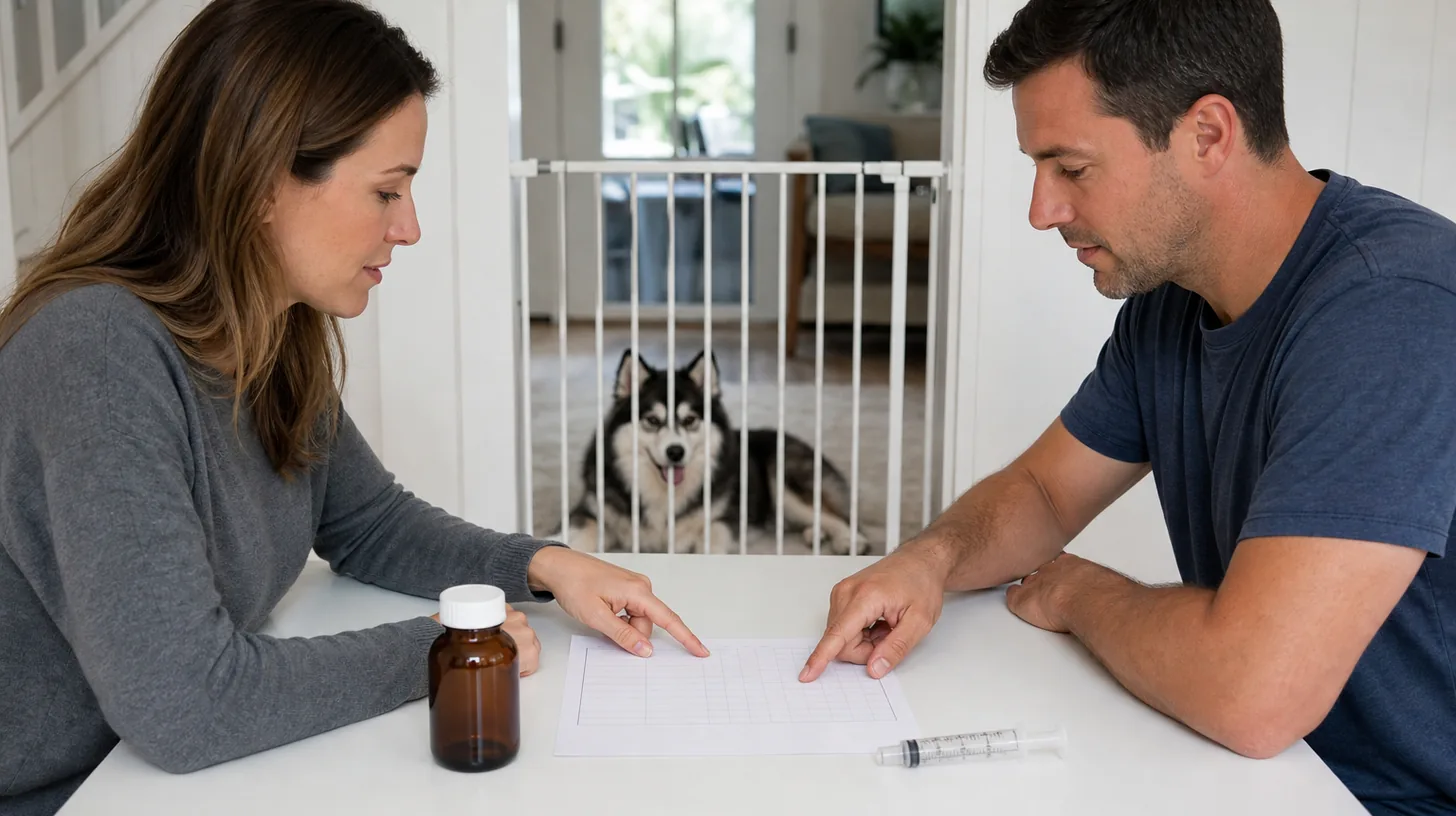
Show the next caregiver the original label, storage location, schedule, administration record, measuring device, and veterinary contact. Ask the caregiver to explain the next due action in their own words. Correct discrepancies before leaving.
Include what to do when the Pomsky refuses handling: stop, secure the medication, and contact the responsible caregiver or veterinary team. Do not authorize force, restraint escalation, or hiding medication in food without an approved plan.
Record What Actually Happened
Document the actual administration time and the caregiver's initials. Note whether the complete prescribed amount was confidently given, whether any was spilled or expelled, and any observable change relevant to the veterinary instructions.
Do not redose because a partial amount might have been lost unless the prescribing team advises it. An uncertain dose is a reason to call, not to estimate.
Handle Missed or Uncertain Doses
When a dose appears late, missed, duplicated, vomited, spilled, or otherwise uncertain, contact the prescribing veterinary team or the emergency service named in the care plan. Provide the label, dog identity, medication, timing, and record.
Do not use generic internet instructions or another medication's rule. The correct response can depend on the drug, formulation, condition, timing, and individual dog.
Watch for Concerning Changes
Follow any observation instructions from the veterinary team. Record changes in behavior, appetite, drinking, elimination, breathing, gait, skin, vomiting, diarrhea, alertness, or other relevant signs without diagnosing their cause.
Urgent or severe signs require prompt veterinary contact. If accidental ingestion by the Pomsky, another pet, or a person is possible, secure the package and contact the appropriate emergency or poison resource rather than waiting for the next scheduled handoff.
Prevent Access and Disposal Errors
Count and store medication only when that practice is appropriate and safe. Pick up dropped tablets immediately and inspect the floor. Keep used patches, syringes, applicators, and packaging secured according to veterinary, pharmacy, and local disposal directions.
Never place medication waste in an accessible trash bin. Do not share a prescription, save it for an unrelated future problem, or use it for another animal.
Reconcile After Every Change
Replace the handoff sheet when the veterinary team changes the medication, amount, timing, duration, or storage. Mark old copies obsolete and remove them from the active area. Confirm the change directly from the updated label or written clinic instruction.
At the end of a course, record completion and follow disposal instructions. Do not let a stale schedule remain available to a pet sitter or family member.
Keep the Boundary Clear
This checklist organizes communication; it does not decide whether a medication is appropriate, interpret side effects, or modify a prescription. Veterinary questions remain with the prescribing team.
A successful handoff is auditable: the correct Pomsky is matched to the current label, one schedule and one record are used, storage is secure, every administration is documented, and uncertainty causes a pause and professional call rather than household improvisation.
Perform a Read-Back Before Responsibility Changes
The incoming caregiver should identify the Pomsky, read the current label, locate the medication and measuring device, state the next scheduled action, and point to the last recorded administration. The outgoing caregiver compares that read-back with the same source documents. Resolve every mismatch before leaving. Do not turn the exercise into a demonstration dose or open a container unnecessarily. For a remote handoff, use a secure method that preserves privacy and still lets both people confirm the active record. Document who accepted responsibility and when the handoff ends.
Sources reviewed
Each source is used only for the claim scopes listed below. None establishes a guaranteed Pomsky outcome or replaces individual professional assessment.
- American Animal Hospital Association: AAHA-AVMA Canine Preventive Healthcare Guidelines - Supports: preventive exams; individual risk assessment; parasite and vaccination planning. Limit: The veterinarian sets the schedule for the individual dog and location.
- U.S. Centers for Disease Control and Prevention: Pet Emergency Checklist - Supports: emergency kit contents; records; identification; transport supplies. Limit: Adapt the checklist to local hazards and the dog's medical needs.