Written and reviewed by A Pomsky Editorial Team. Originally published 2026-07-26; substantively reviewed July 26, 2026.
Training boundary: Use humane, reward-based methods and protect safety with management. Pain, panic, aggression, a bite history, or serious handling risk requires a veterinarian or qualified behavior professional. Read the editorial policy.
Direct answer: Inventory every waste location, put bins and bags behind a reliable closed barrier, remove high-risk waste promptly, and separate the Pomsky during disposal activity. Reinforce a floor station away from bins and never bait or punish. If an item is taken, avoid force; identify possible ingestion and contact veterinary or poison professionals when warranted.
Trash raiding is an access problem with potentially serious consequences. A bin can contain food, packaging, medication, cleaning residue, sharp material, spoiled waste, bones, string, or other objects a Pomsky should not reach. Prevention begins by making waste unavailable, then builds a predictable alternative routine without punishment or staged temptation.
Audit Every Waste Location
List kitchen, bathroom, bedroom, office, nursery, garage, outdoor, recycling, compost, and temporary event bins. Include bags waiting by a door and waste held during cleaning. Record the container, lid, cabinet, room barrier, emptying schedule, and the times the Pomsky can reach it.
Inspect the surrounding area for spilled residue, hanging bags, paper towels, used food containers, dental floss, personal-care items, and dropped medication. A strong kitchen bin does not solve access to a small bathroom basket or an open recycling box.
Remove Access Before Training
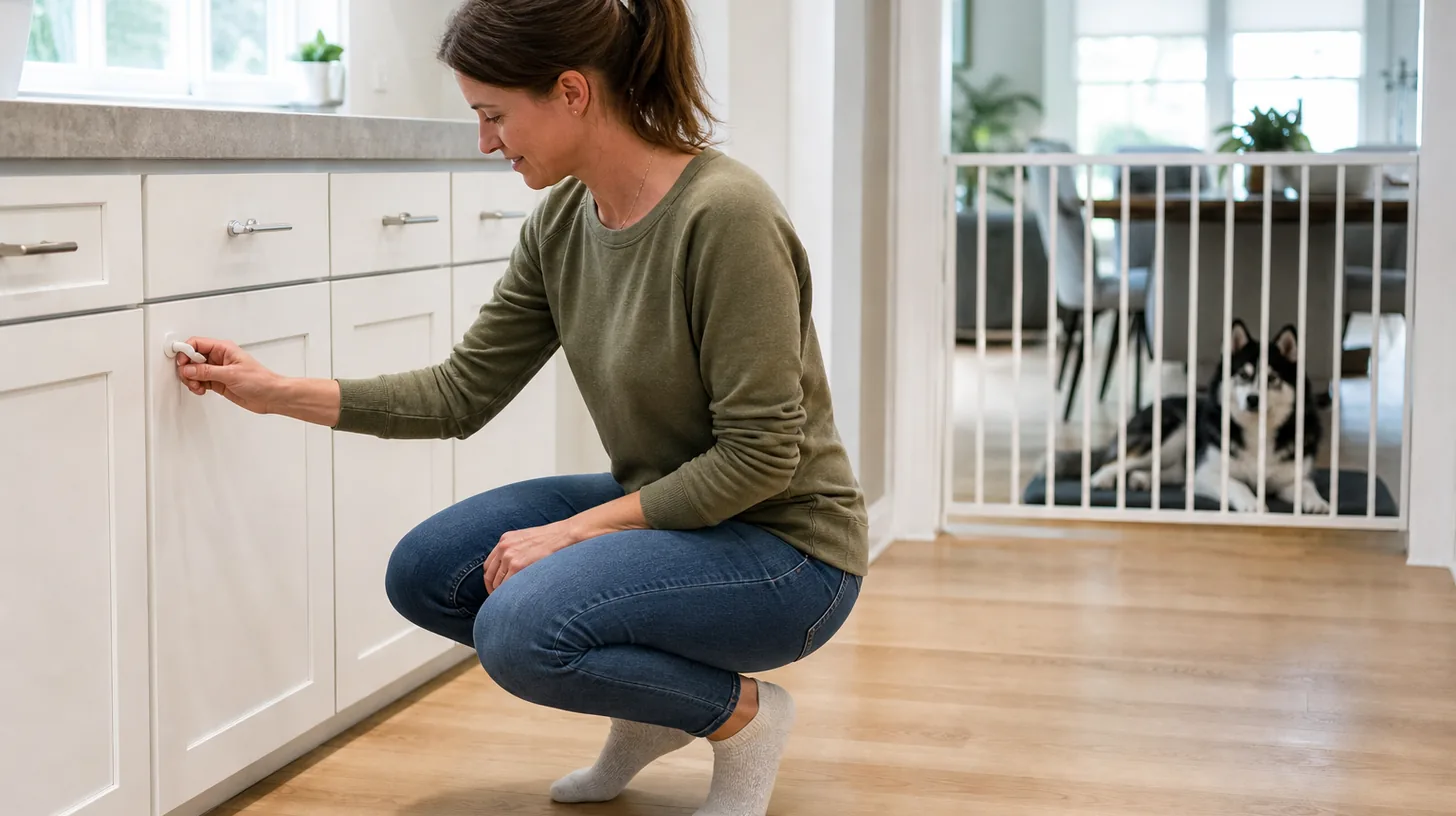
Place waste behind a reliably closed door, latched cabinet, or other barrier the Pomsky has not defeated. Select containers for the actual dog and household, not for their marketing label. A lid that tips, slides, or opens under nose pressure is not secure enough.
During cooking, parties, deliveries, diaper changes, and cleaning, use a prepared dog-only area before waste accumulates. Do not ask the Pomsky to ignore an open bag while several people are distracted. Management protects the dog and prevents the behavior from paying.
Change the Disposal Routine
Empty high-risk waste promptly and carry it directly to secured outdoor storage. Rinse recyclable containers when appropriate and follow local waste guidance. Keep compost, meat packaging, bones, coffee grounds, and food-soiled material inaccessible from the moment they are discarded.
Assign responsibility instead of assuming someone else will close the cabinet. Visitors and children should know where waste goes but should not manage the dog near a bin. During unusual events, full separation is safer than relying on the normal routine.
Identify What Maintains the Behavior
Observe when the Pomsky checks bins and what happens afterward. Occasional food makes repeated checking worthwhile, but attention, chasing, or grabbing can also add excitement. Hunger, schedule changes, boredom, stress, or a newly accessible location may change the pattern without explaining it completely.
Use a camera only for observation, never remote punishment. The goal is to locate open access routes and timing gaps. Do not leave attractive waste out to test whether training has worked.
Teach a Separate Floor Station
Choose a mat or bed away from the waste route. Begin when no trash is present and reward voluntary movement to the station. Build short duration, a release cue, and calm reinforcement before practicing easy household activity.
The station can support meal cleanup or bag replacement, but it does not replace a closed barrier. If food, medicine, sharp material, or several people are moving, secure the Pomsky in the prepared area first. A station should never tether the dog beside the bin.
Reinforce Useful Choices
Reward the Pomsky for passing the waste area, orienting to a caregiver, moving to the station, or engaging with an appropriate activity. Deliver reinforcement away from the bin. Keep rewards within the dog's feeding plan and coordinate them across caregivers.
If the Pomsky approaches a protected bin, calmly redirect at a level the dog understands and improve the environment. Avoid yelling, spraying, startling, striking, or rubbing the dog's nose near waste. Punishment can create fear or conflict while leaving future access rewarding.
Use Leave-It and Drop-It Correctly
Leave-it can help before the Pomsky possesses a visible low-risk item, but it should not carry the safety plan. Do not place dangerous waste on the floor for practice. Change access after the cue rather than repeatedly asking the dog to resist an open bin.
If an item is already in the mouth, use an established drop-it or trade routine only when safe. Do not chase, corner, or force the mouth open, especially when guarding or bite risk is present. Move children and other animals away.
Respond to Suspected Ingestion
Identify the item, approximate amount, timing, packaging, and any observed signs. Contact a veterinarian or recognized animal poison service promptly for toxic material or concerning uncertainty. Preserve labels or packaging when it is safe to do so.
Do not induce vomiting, give a home remedy, or wait for symptoms unless the professional handling the case directs that response. Sharp objects, string, batteries, medication, chemicals, and unknown mixed waste can require urgent assessment even when the Pomsky initially appears normal.
Address Guarding Without Conflict
A Pomsky that stiffens, freezes, growls, snaps, or runs away with waste needs distance and a safer plan. Do not reach into the mouth or turn retrieval into confrontation. Secure other people and animals, prevent future access, and seek qualified reward-based behavior help.
Guarding can be made worse by repeated forced removal. A behavior professional can design trades and management at a level that protects everyone. Veterinary review is appropriate when behavior changes suddenly or accompanies appetite, pain, digestive, or medication changes.
Measure Prevention Rather Than Temptation
Track secured-bin days, accidental access events, open-door gaps, successful station use, and who was responsible for each transition. Progress means hazards remain unavailable and household routines become reliable. It does not mean the Pomsky can be left alone with an open bin.
After any incident, repair the system: change the latch, relocate the container, shorten emptying intervals, or add a barrier. Avoid interpreting a long incident-free period as proof that access is now safe.
Maintain the System
Reaudit after moving, renovations, a new child, a new pet, caregiver changes, holidays, or a different waste service. Check hardware for wear and confirm that outdoor storage cannot be tipped or opened by animals.
The durable plan is simple but strict: waste is secured at creation, high-risk material leaves promptly, the Pomsky has a reinforced place away from disposal activity, and suspected ingestion or guarding routes to professional help without delay.
Verify the Bin System Under Ordinary Use
Observe an adult complete one normal disposal cycle while the Pomsky remains safely separated. Confirm the waste enters secure storage immediately, the lid or latch closes, residue is removed, the exterior route does not create an escape opening, and responsibility is handed back clearly. Do not shake, tip, or bait the container as a strength test. If normal use leaves a bag exposed or a door open, redesign the workflow. The system must succeed during routine household distraction, not only during a formal audit.
Sources reviewed
Each source is used only for the claim scopes listed below. None establishes a guaranteed Pomsky outcome or replaces individual professional assessment.
- American Veterinary Society of Animal Behavior: Humane Dog Training Position Statement - Supports: reward-based training; aversive-method risk; behavior change principles. Limit: Does not guarantee outcomes for an individual dog.
- ASPCA: People Foods to Avoid Feeding Your Pets - Supports: common unsafe human foods; poison-risk awareness. Limit: Suspected exposure requires immediate professional poison-control or veterinary advice.
- ASPCA: Animal Poison Control - Supports: poison emergency routing; information to collect after exposure. Limit: Never replace urgent veterinary or poison-control instructions with article advice.