Written and reviewed by A Pomsky Editorial Team. Originally published 2026-07-26; substantively reviewed July 26, 2026.
Training boundary: Use humane, reward-based methods and protect safety with management. Pain, panic, aggression, a bite history, or serious handling risk requires a veterinarian or qualified behavior professional. Read the editorial policy.
Direct answer: Prevent kitchen food exposures by storing hazardous foods in closed cabinets or appliances, clearing counters and floors promptly, securing trash and compost, and separating your Pomsky from cooking and guest-food areas. Treat suspected ingestion as time-sensitive: preserve the package and estimate what, how much, and when, then contact a veterinarian or animal poison service rather than trying an unapproved remedy.
A kitchen safety plan prevents access to hazardous human foods before an accident. It does not decide whether a particular exposure is safe or provide home treatment. Secure ingredients, control counters and bins, supervise gatherings, and contact a veterinarian or animal poison service promptly after suspected ingestion.
Inventory Human-Food Hazards
Review the ASPCA guidance on people foods to avoid and make a household list of items that require strict control. Include ingredients used in baking, drinks, sugar-free products, snacks, supplements, and foods stored for guests. Read labels because a hazard may be an ingredient rather than the product's obvious name.
Do not turn the list into a dose chart. Risk depends on the substance, concentration, amount, timing, dog, and medical context. An online article cannot calculate whether an exposure is harmless. Keep packaging and ingredient lists available for professional assessment.
Redesign Storage and Counter Access
Store higher-risk ingredients in closed cabinets or containers that the Pomsky cannot open. A pushed-back countertop item may still be reached by jumping, climbing, or pulling a bag. Keep handbags, lunch boxes, grocery bags, and delivery packages out of reach as soon as they enter the home.
Create a landing zone for unpacking groceries behind a closed door or barrier. Put ingredients away before releasing the dog into the area. Avoid leaving cooling racks, rising dough, dirty pans, or prepared drinks unattended. Training a leave-it cue supports the system but does not replace secure storage.
Control Bins, Compost, and Dishwashers
Use a lidded bin that remains secure when tipped or place waste behind a closed cabinet. Empty it before it becomes overfilled. Compost and recycling may contain food residues, wrappers, bones, coffee products, alcohol containers, or moldy material. Treat them as food access points.
Keep the dishwasher closed. A dog can lick residue from knives, dishes, or detergent compartments. Load sharp utensils with care and do not allow the Pomsky to investigate an open machine. Wipe spills promptly and check under appliances and cabinets for dropped ingredients.
Plan Cooking and Meal Service
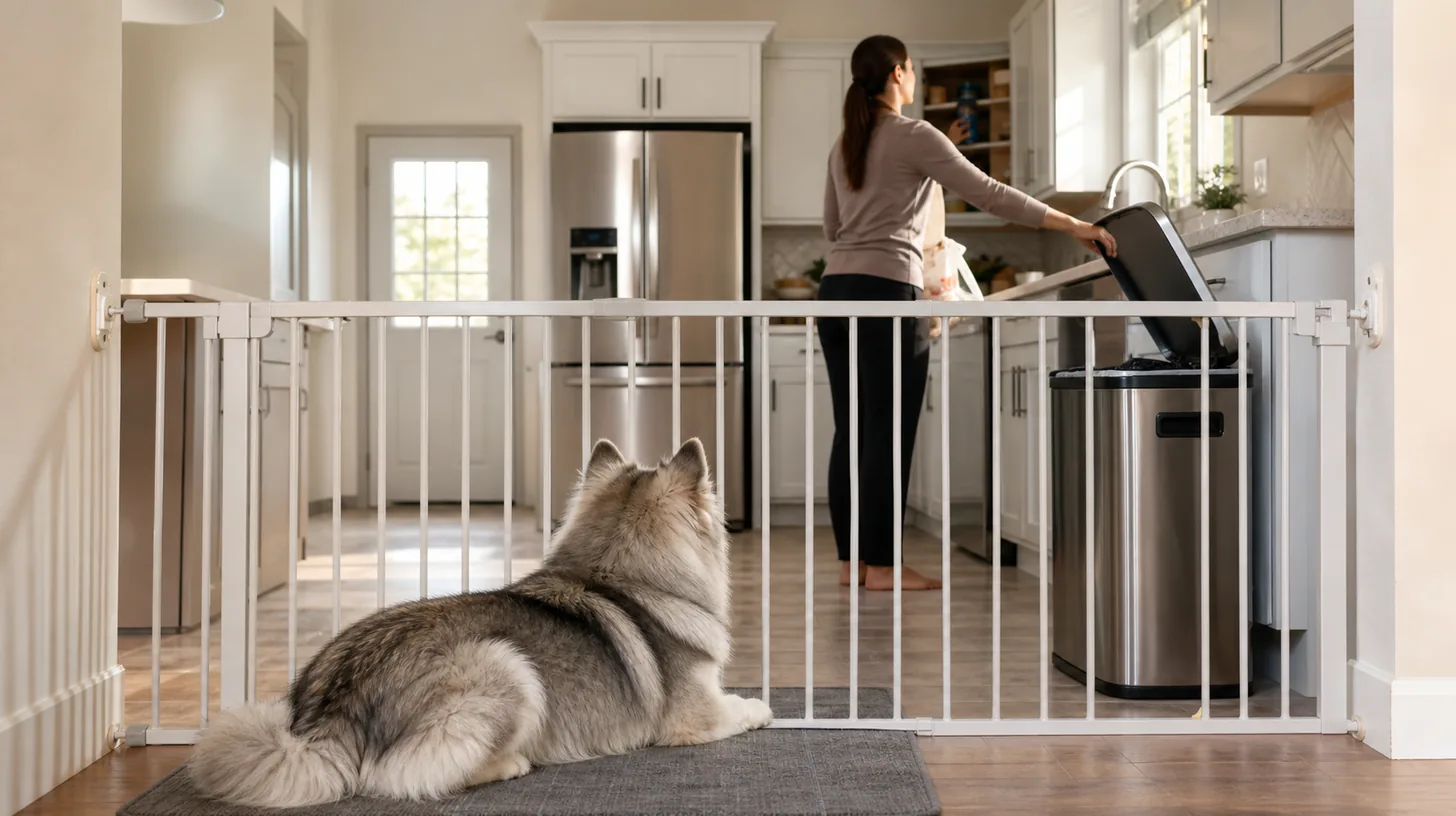
During active cooking, use a gate, station, crate, or separate room that the dog already knows and can use comfortably. This prevents contact with hot surfaces, falling cookware, sharp tools, and ingredients. Reward calm behavior away from the work zone rather than repeatedly pushing the dog back.
At the table, every household member should follow the same rule about feeding. Inconsistent handouts maintain begging and increase the chance that a guest offers an unsafe item. Provide any planned dog treat from the dog's measured daily allowance and away from the dining table.
Prepare for Guests and Holidays
Tell guests not to feed the Pomsky and explain where bags, coats, and food should go. Children require active adult supervision; a verbal instruction alone is not enough. Use physical separation during buffets, gift opening, parties, and cleanup, when food is widely distributed and attention is divided.
Seasonal products can appear briefly and escape the normal kitchen system. Audit gift baskets, candy bowls, baking supplies, party drinks, medications carried by visitors, and discarded packaging. Reset the room before the dog regains access.
Build a Suspected-Ingestion Response
Post contact details for the regular veterinarian, emergency clinic, and animal poison service. Keep the Pomsky's current weight, medications, and medical conditions available. Identify transport options before an incident. A pet sitter should know who is authorized to approve emergency care.
After suspected ingestion, prevent further access and gather the product package, ingredient list, estimated amount, time, and observed signs. Call promptly. Do not induce vomiting, give salt, milk, oil, charcoal, food, or medication unless a veterinarian or poison professional instructs you for that exact case.
Recognize Emergency Escalation
Collapse, seizures, breathing difficulty, severe weakness, loss of consciousness, marked swelling, repeated vomiting, or rapidly worsening signs require emergency veterinary direction. Do not wait for every possible symptom or rely on the dog appearing normal immediately after an exposure.
If the dog is guarding the item, do not reach into the mouth or provoke a confrontation. Use distance and barriers when possible and tell the professional about the behavior. Human safety remains part of the response.
Audit the System Regularly
Repeat the checklist when the household changes diets, starts a new medication or supplement, remodels the kitchen, adopts a new waste system, or hosts visitors. Watch the actual points where food is dropped or left unattended and redesign those points rather than blaming the dog.
A robust kitchen plan has multiple layers: controlled purchasing and storage, supervised preparation, secure waste, consistent household rules, and fast professional escalation. No single cue, container, or list guarantees prevention, but a layered routine makes accidental access less likely and response information easier to collect.
Create a Caregiver Kitchen Handoff
Write a short household rule sheet for pet sitters, cleaners, guests, and family members. Identify the dog-free preparation zone, where bags and groceries go, which bin must remain locked, whether the dishwasher must stay closed, and who to call after possible ingestion. Keep the sheet practical and free of unsupported dose advice.
Ask caregivers to report near misses, not hide them. A dropped ingredient recovered immediately still reveals a weak point in the system. Record where and when it happened, then change storage, barriers, or workflow. Do not punish the dog after the fact.
For a child or visitor, use active supervision and physical separation rather than expecting them to remember a long hazard list. A secure room or gate during cooking and meals is easier to verify than repeated verbal correction.
Review the handoff after grocery delivery services, new appliances, a change in waste collection, or a new household schedule. The most useful checklist follows the real movement of food from the front door through storage, preparation, eating, and disposal.
Include power outages and appliance failures in the review. Food moved from a refrigerator or freezer can temporarily appear on counters, in coolers, or in open bins. Secure the Pomsky before reorganizing supplies and discard spoiled food in a container the dog cannot access.
Document who completed the temporary cleanup.
Sources reviewed
Each source is used only for the claim scopes listed below. None establishes a guaranteed Pomsky outcome or replaces individual professional assessment.
- ASPCA: People Foods to Avoid Feeding Your Pets - Supports: common unsafe human foods; poison-risk awareness. Limit: Suspected exposure requires immediate professional poison-control or veterinary advice.
- ASPCA: Animal Poison Control - Supports: poison emergency routing; information to collect after exposure. Limit: Never replace urgent veterinary or poison-control instructions with article advice.