Written and reviewed by A Pomsky Editorial Team. Originally published 2026-07-26; substantively reviewed July 26, 2026.
Training boundary: Use humane, reward-based methods and protect safety with management. Pain, panic, aggression, a bite history, or serious handling risk requires a veterinarian or qualified behavior professional. Read the editorial policy.
Direct answer: Clear every food-preparation surface, block kitchen access during cooking and cleanup, and teach a rewarded mat station away from the counter. Reinforce four paws on the floor and prevent unattended rehearsal. Do not punish, bait unsafe tests, or chase stolen items; use established trade skills and professional routing when needed.
Counter surfing is best treated as an access and reinforcement problem, not a character flaw. A Pomsky that reaches food, packaging, dishes, or attention on a counter has learned that jumping up can pay. The safest plan removes those rewards, protects the food-preparation area, teaches a useful alternative place to be, and gives every caregiver the same routine.
Start With Immediate Kitchen Safety
Clear counters, the sink edge, the table, and nearby carts before the Pomsky enters the area. Move food, knives, hot cookware, glass, medication, cleaning products, compost, and packaging into closed storage. Push appliances back and secure cords. A clean counter is both a training condition and poisoning, burn, and injury prevention.
Use a closed door, securely installed gate, exercise pen, or another reliable barrier during cooking, unloading groceries, parties, and cleanup. Training should not be tested while grease splatters, a hot pan moves, or several people carry food. If the environment cannot be controlled, the Pomsky belongs in a prepared safe area.
Identify How the Behavior Is Reinforced
Keep a short record of when jumping occurs, what was present, who was in the room, and what happened next. Food found on the surface is an obvious reward, but eye contact, talking, pushing the dog away, or a dropped item can also maintain repeated attempts.
Look beyond scheduled meals. Dirty dishes, reusable shopping bags, lunch boxes, crumbs beneath a toaster, grocery deliveries, and a child's snack can make the outcome unpredictable but valuable. The solution is not to catch the Pomsky doing it more often. It is to make access reliably unproductive while building another behavior.
Create a Floor Station Away From the Counter
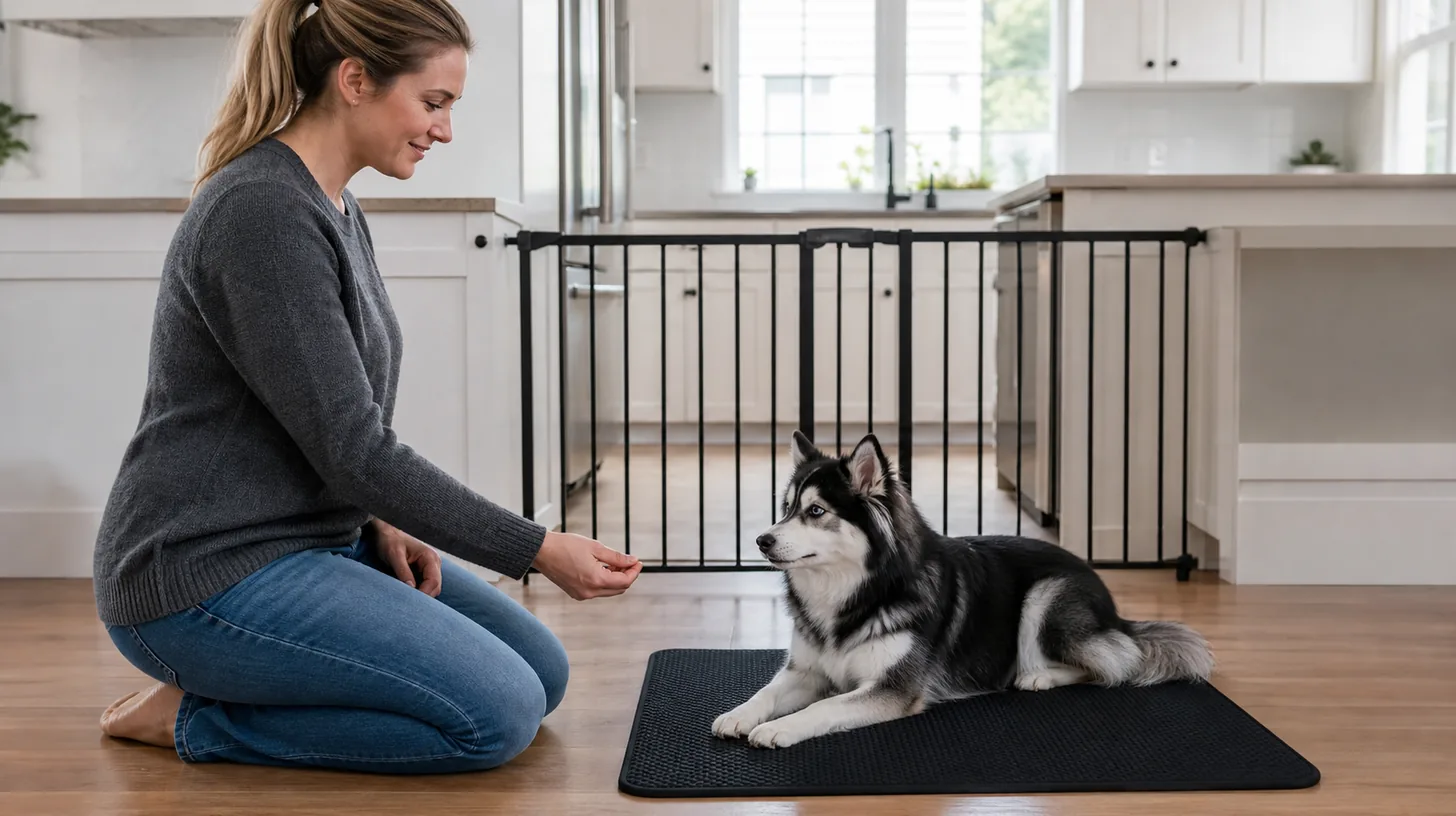
Place a nonslip mat or dog bed outside the main movement path and beyond reach of the counter. Begin when no food is being prepared. Reward the Pomsky for looking at, approaching, and standing or resting on the station. Release after a few seconds before the dog chooses to leave.
Build duration gradually, then add one easy kitchen movement at a time. A cabinet opening, an empty plate, or one step toward the sink should be introduced separately. Deliver rewards at the station so the dog does not need to return to the counter area. The station is voluntary training, not a tether point.
Use Management During Real Food Preparation
Early station practice does not make a live cooking session safe. Put the barrier in place first, then offer a suitable activity in the protected area. This might be part of the measured regular diet in an appropriate enrichment item, provided it fits the dog's feeding and safety plan.
If a caregiver wants to practice during a simple kitchen task, choose a cold, low-risk activity and keep the Pomsky far from the work surface. End while the dog is successful. Hot cooking, sharp tools, raw ingredients, and crowded events remain management situations even after training improves.
Reinforce Four Paws on the Floor
Notice and reward ordinary floor behavior before the Pomsky jumps. A calm stand, orientation toward the caregiver, movement to the station, or choice to remain outside the kitchen can all earn reinforcement. This makes the desired location more informative than repeated correction.
If front paws rise, quietly prevent access with distance or the existing barrier and reset the environment. Avoid grabbing legs, kneeing the chest, shouting, spraying, or startling the dog. Punishment can add fear, increase conflict, and still leave the counter reward available when people are absent.
Keep Leave-It in Its Proper Role
A trained leave-it cue can interrupt interest in a visible item before possession, but it should not carry the entire prevention plan. Do not place tempting or dangerous food on the counter to test the cue. Do not repeat the cue while the Pomsky is already reaching an unsafe surface.
Use leave-it only at a difficulty the dog has practiced, reward movement away, and then change access. A physical barrier and cleared surface remain necessary when the caregiver cannot actively train. An emergency cue is not a substitute for storing hazards.
Coordinate Every Caregiver
Write down the counter rules, station location, barrier routine, permitted rewards, and response to jumping. Everyone should avoid handing food from the counter edge or laughing and engaging when paws go up. One occasional payoff can keep persistent checking worthwhile.
Children and visitors should not manage the training. Put the Pomsky behind a barrier before guests arrive and explain that food must remain out of reach. If several people share the kitchen, assign one adult to the dog or use full separation rather than assuming someone else is watching.
Prevent Rehearsal When Nobody Is Watching
Close kitchen access during sleep, work calls, deliveries, and departures. Check whether chairs, stools, boxes, or a nearby sofa create a climbing route. A camera can show whether the Pomsky patrols counters when alone, but it should be used for observation rather than remote correction.
Secure trash, compost, and recycling behind a door or in a genuinely dog-resistant system. Rinsed containers can still carry attractive residue. Do not rely on a lid that has already been opened or tipped by the dog.
Respond Safely to a Stolen Item
If the Pomsky already has an item, do not chase, corner, or force the mouth open. Use the established drop-it or trade routine only when it is safe to do so. Move other people and animals away and determine whether the item creates poisoning, obstruction, burn, or sharp-object risk.
Contact a veterinarian or recognized animal poison service promptly for a potentially toxic ingestion or concerning object. Preserve the package and estimate timing and amount without delaying professional advice. Do not induce vomiting or give a home remedy unless the professional handling the case directs it.
Measure Progress Without Creating Tests
Track the number of managed cooking sessions, voluntary station choices, successful releases, and accidental access events. Progress means the environment stays safe and the Pomsky increasingly chooses the floor station under carefully increased difficulty. It does not mean leaving food out to prove the dog has changed.
When a failure occurs, identify the open access route or training jump. Shorten duration, increase distance, lower food intensity, or restore the barrier. Avoid interpreting one incident as defiance or one good week as permanent reliability.
Know When to Get More Help
Seek veterinary guidance if food seeking changes suddenly, accompanies increased hunger or thirst, weight change, digestive signs, medication changes, or other health concerns. Behavior can be affected by medical factors, and a home training plan cannot assess them.
A qualified reward-based behavior professional can help when counter attempts are intense, involve guarding or snapping, generalize to tables and stoves, or create conflict between caregivers. The goal is a practical household system: inaccessible hazards, predictable barriers, a well-reinforced alternative station, and no reason for the Pomsky to keep checking the counter.
Sources reviewed
Each source is used only for the claim scopes listed below. None establishes a guaranteed Pomsky outcome or replaces individual professional assessment.
- American Veterinary Society of Animal Behavior: Humane Dog Training Position Statement - Supports: reward-based training; aversive-method risk; behavior change principles. Limit: Does not guarantee outcomes for an individual dog.
- ASPCA: People Foods to Avoid Feeding Your Pets - Supports: common unsafe human foods; poison-risk awareness. Limit: Suspected exposure requires immediate professional poison-control or veterinary advice.