Written and reviewed by A Pomsky Editorial Team. Originally published 2026-07-26; substantively reviewed July 26, 2026.
Training boundary: Use humane, reward-based methods and protect safety with management. Pain, panic, aggression, a bite history, or serious handling risk requires a veterinarian or qualified behavior professional. Read the editorial policy.
Direct answer: Teach drop it by trading a safe low-value toy for a better reward, marking the voluntary release, and often returning the toy. Add the cue only after the release is predictable, generalize one variable at a time, and never chase, pry the mouth open, or conduct close trades when guarding makes approach unsafe.
Define a voluntary release
“Drop it” should mean open the mouth and release the current object without being chased, cornered, or physically forced. The cue is useful because it replaces conflict with a predictable exchange. It differs from “leave it,” which asks the dog not to take an item in the first place. Keeping those meanings separate helps a Pomsky learn exactly which action is being reinforced.
Start with safe objects that the dog enjoys but does not guard intensely. A soft toy used in calm play is better than food, stolen laundry, or a prized chew. Prepare small, high-value rewards and a second toy of similar value. Practice in a quiet, enclosed room. If the dog stiffens, freezes, hovers over the item, growls, snaps, or has a known bite history, do not conduct close-range trade drills without qualified professional guidance.
Start with low-value toy trades
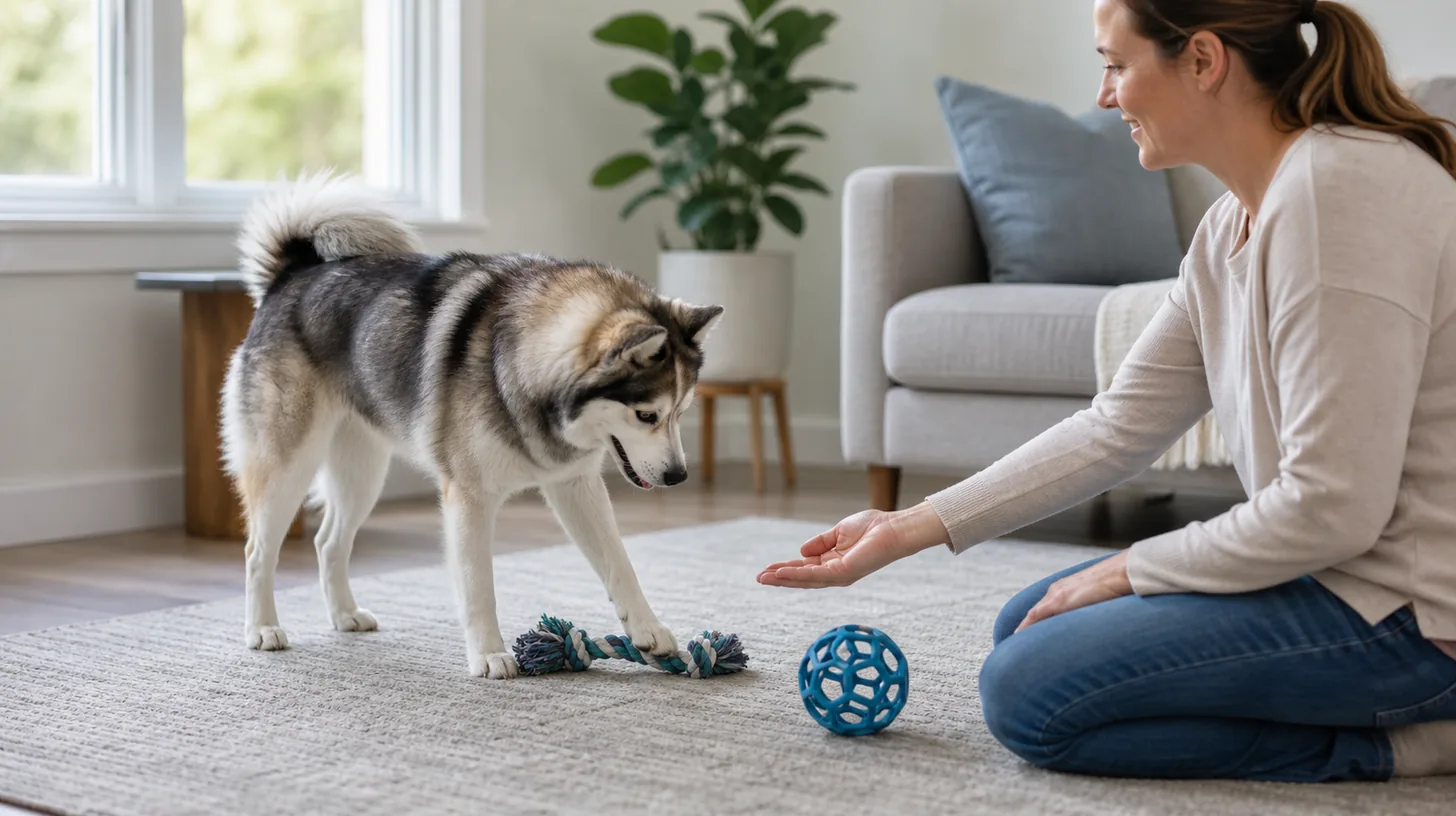
Offer the first toy and allow a few seconds of gentle play. Become still, then present a food reward near the dog’s nose without pushing it into the face. Most dogs will open their mouth to take the food. As the toy falls, mark the release, deliver the reward, and calmly pick up the toy. After the dog finishes the reward, offer the toy again. Returning safe items teaches that release does not always end access.
At this stage, do not say “drop it.” You are first building the behavior and the emotional expectation that a person approaching can predict a fair exchange. Keep your posture sideways and relaxed. Avoid reaching over the head or grabbing toward the mouth. If the Pomsky moves away, lowers its head over the toy, or becomes tense, increase space and use a lower-value object. The training setup should reduce competition, not create it.
Add the cue and return safe items
When the dog reliably releases as the trade appears, say “drop it” just before presenting the reward. After several successful sessions, give the cue, pause for one second, and then show the reward. Mark the moment the mouth opens. Gradually increase that pause so the verbal cue predicts the behavior rather than merely accompanying visible food.
Continue returning the toy on many repetitions. On other repetitions, trade for a second toy and begin a new game. The return is not appropriate for unsafe, damaged, or prohibited items, but it is valuable during training because it prevents the dog from learning that human hands always confiscate possessions. End sessions with a clear transition to another activity, not by abruptly taking every object away.
Generalize to objects and locations
Practice with different safe toys, textures, rooms, and handler positions. Change only one variable at a time. A release from a fleece tug in the living room does not prove the cue will work with a ball outdoors. Use a long line or enclosed area for outdoor practice and keep the environment quiet at first. Increase object value gradually and return to an easier step after any failed repetition.
Track three details: the object, the time to release, and body language. A fast drop with loose muscles and easy re-engagement is different from a delayed release with freezing or hard staring. Do not chase a Pomsky that carries an object away. Chasing can become a game or increase defensive behavior. Instead, reduce access to escape routes, move away, invite the dog to follow, and use a practiced trade at a safe distance.
Handle an unsafe-item emergency
Prevention comes first: secure medications, batteries, sharp objects, string, food waste, and small swallowable items. During an incident, stay calm and assess whether approaching is safe. If the dog is not guarding and a trade can be offered without pushing the item deeper into the mouth, use a very high-value reward and move the dog away after release. Keep other people and pets out of the area.
Do not blindly sweep the mouth, pry the jaws open, induce vomiting, or offer home remedies. Those actions can injure the dog or handler and may worsen some exposures. If a hazardous object may have been swallowed, contact a veterinarian or animal poison service promptly and provide the item, quantity, timing, and the dog’s current signs. A training cue can assist management, but it is not emergency medical treatment.
Avoid chase force and guarding conflict
Punishment may suppress warning signals without changing the underlying concern about losing possessions. Do not yell, hit, alpha roll, pin, shock, spray, or repeatedly take food away to “prove” control. Do not let children practice object trades. Resource guarding, aggression, repeated ingestion of non-food objects, or sudden behavior change deserves a veterinary check and a qualified behavior plan.
Also avoid turning every release into a food lure forever. Once the behavior is established, vary the reinforcement: food after difficult drops, a resumed game, a second toy, praise, or access to another safe activity. Keep enough high-value payment for challenging situations. Reliability grows through a history of fair outcomes, not through testing the cue when the dog is likely to fail.
Maintain the cue in daily routines
Use brief practice in play, grooming preparation, and household cleanup. Ask for one or two easy releases, reward them, and move on. Every adult handler should use the same cue and avoid grabbing. Pair the cue with “leave it” training, secure storage, safe chew selection, and supervision so the dog is not repeatedly rehearsing theft.
Revisit foundation trades after a long break or a stressful event. If response time lengthens, the dog begins avoiding people with objects, or body language becomes tense, lower the item value and rebuild. The practical goal is a voluntary release supported by prevention and professional escalation when needed. No cue can guarantee recovery of every object, especially under fear, pain, high arousal, or guarding.
Audit the environment whenever stealing becomes frequent. Laundry on the floor, open bins, unattended children’s toys, and unrestricted access to food preparation can create more practice than a short training session can overcome. Change storage and supervision first, then rehearse easy releases. A strong household system makes the trained response more likely because the dog is not repeatedly rewarded for running away with forbidden objects.
Sources reviewed
Each source is used only for the claim scopes listed below. None establishes a guaranteed Pomsky outcome or replaces individual professional assessment.
- American Veterinary Society of Animal Behavior: Humane Dog Training Position Statement - Supports: reward-based training; aversive-method risk; behavior change principles. Limit: Does not guarantee outcomes for an individual dog.
- American Veterinary Society of Animal Behavior: How to Select a Behavior Consultant - Supports: trainer credentials; behavior consultant selection; red flags. Limit: Avoid implying that a title alone proves competence.