Written and reviewed by A Pomsky Editorial Team. Originally published 2026-07-26; substantively reviewed July 26, 2026.
Training boundary: Use humane, reward-based methods and protect safety with management. Pain, panic, aggression, a bite history, or serious handling risk requires a veterinarian or qualified behavior professional. Read the editorial policy.
Direct answer: Choose a quiet route with safe surfaces and exit options, inspect the harness and leash, and allow the Pomsky to investigate clean areas at an individual pace. Prevent scavenging and forced greetings, modify for weather and triggers, and finish before comfort or recovery declines. No universal distance or duration applies.
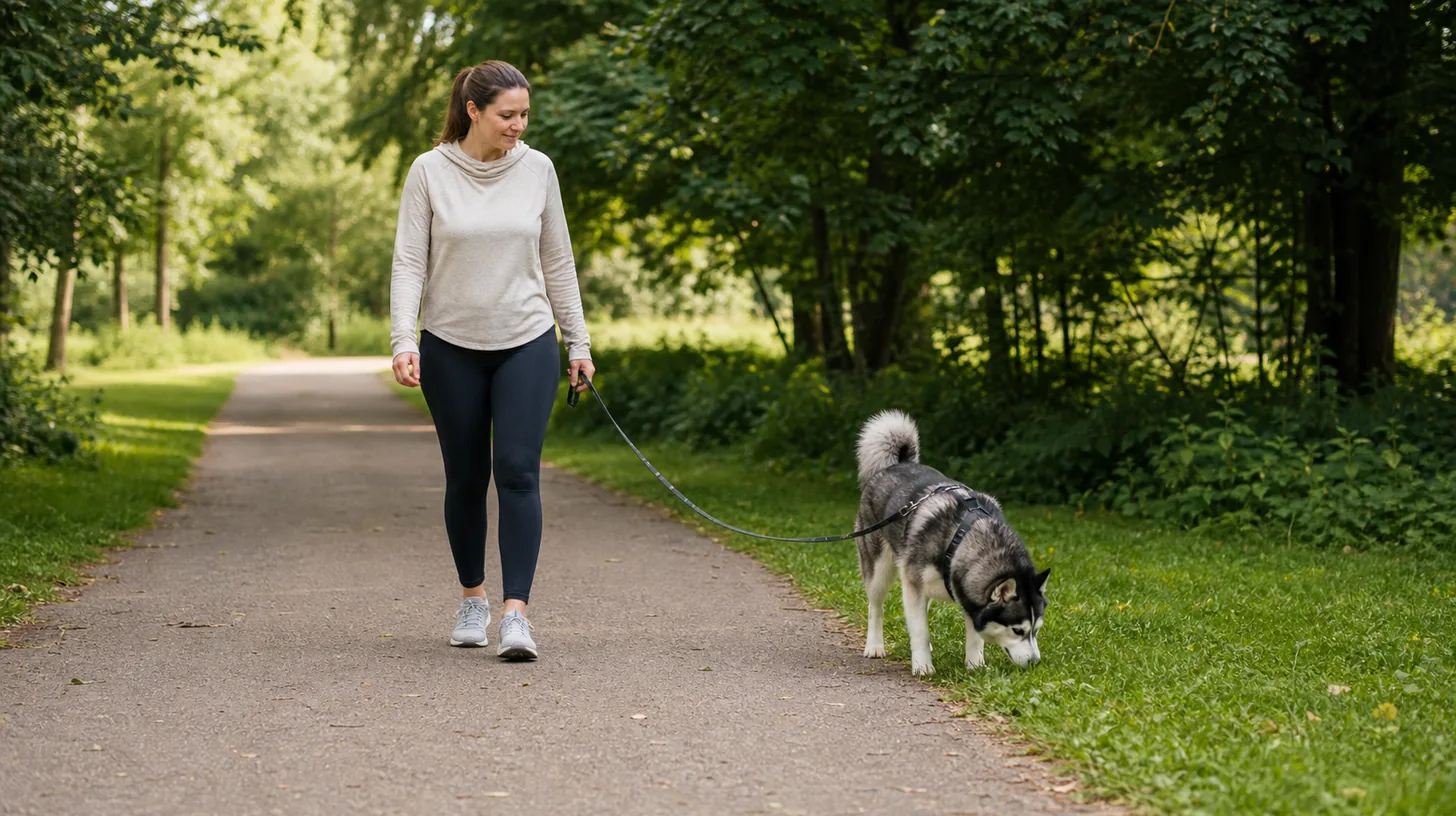
A sniff-and-explore walk gives a Pomsky time to investigate a suitable environment at an individual pace. It is not a prescribed distance, a cure for behavior problems, or permission to ingest whatever is on the ground. Plan the route, equipment, weather, and exit options first, then let safe voluntary exploration shape the outing.
Define the Purpose of This Walk
Separate exploration from a brisk exercise session, toilet trip, social outing, or training class. The aim is to provide safe choices about where to pause and sniff while the caregiver maintains environmental control. Distance and speed are secondary.
Choose a short time window that fits the Pomsky's current health, conditioning, age, weather tolerance, and ordinary routine. A veterinarian should guide activity limits for puppies, seniors, dogs with health conditions, and dogs returning after illness or injury.
Select a Low-Pressure Route
Preview the route without the dog when possible. Look for wide paths, low traffic, clean surfaces, shade, safe turnaround points, and enough space to avoid unfamiliar dogs and people. Note food waste, toxic plants, broken glass, standing water, wildlife, pesticides, and road crossings.
Have a backup route and an early exit. A quiet familiar block may be more useful than a scenic but crowded trail. Check current closures, weather, smoke, and local leash rules before leaving.
Check Equipment Before Departure
Use a well-fitted harness or veterinarian-appropriate walking setup, current identification, and a leash long enough for comfortable sniffing but short enough for the environment. Inspect clips, stitching, rings, and attachment points. Avoid retractable line use where traffic, wildlife, cyclists, or other dogs can appear quickly.
Carry water when conditions and route length require it, along with waste bags and any emergency information. Equipment should support control without tightening continuously. Stop if the setup rubs, restricts movement, or allows escape.
Begin With a Calm Transition
Secure the Pomsky before the exterior door opens and move through parking areas or road crossings under close control. Reach the exploration area before offering more leash length. A consistent cue can signal that sniffing is available, but the cue should not override safety.
Allow a brief orientation pause. If the dog is already scanning, pulling hard, freezing, or unable to take familiar reinforcement, increase distance from the trigger or choose another location. Exploration is not beneficial when the Pomsky is overwhelmed.
Let Safe Sniffing Set the Pace
Follow the dog's voluntary interest within the route boundaries. Pause while the Pomsky investigates a clean patch, then move on with a gentle cue and reinforcement when necessary. Avoid dragging the dog away from every scent or demanding constant eye contact.
At the same time, do not allow entry into private property, roadway edges, dense brush, waste areas, or unsafe water. Choice exists inside a caregiver-defined safety envelope. The leash prevents access; it should not be used for jerking corrections.
Prevent Scavenging and Ingestion
Scan several steps ahead and shorten the leash before food waste or unknown material comes within reach. Use practiced leave-it for manageable situations, reward movement away, and change the route. Do not create a test by walking directly past a known hazard.
If the Pomsky obtains an item, use a trained trade when safe. Contact veterinary or poison professionals promptly for suspected toxins, sharp objects, batteries, medication, or concerning ingestion. Do not wait for symptoms or improvise treatment.
Avoid Forced Greetings
A sniff walk does not require meeting dogs, children, runners, or wildlife. Use distance, a curve, a parked-car visual barrier, or a planned turnaround. Ask other handlers not to approach and keep moving before the Pomsky becomes trapped.
For a dog with reactive behavior, use the dedicated route-and-distance plan and professional guidance. Do not use exploration time to flood the dog with triggers. Calm withdrawal is a valid outcome.
Adjust for Weather and Surface Conditions
Check heat, humidity, sun, wind, precipitation, surface temperature, ice, salt, smoke, and shade. Modify or cancel rather than relying on a single universal threshold. Double coats do not eliminate heat risk, and paw protection does not make every surface safe.
Watch the individual Pomsky for slowing, repeated seeking of shade, altered gait, unusual panting, reluctance, or difficulty recovering. Marked breathing difficulty, weakness, disorientation, vomiting, collapse, or severe pain requires urgent veterinary routing.
Include Rest and Water Without Pressure
Pause in a safe shaded place when the dog chooses to settle or conditions call for a break. Offer clean water appropriately and prevent sharing communal bowls. Do not force drinking or continue solely to meet a step, time, or distance target.
Some Pomskies become more stimulated with extended exploration. Shorten the outing if scanning, pulling, vocalization, or inability to disengage increases. More sniffing time is not automatically better.
Record the Outing Briefly
Note route, duration, weather, surface, notable triggers, sniffing engagement, gait, breathing, and recovery. Compare similar outings rather than judging one day in isolation. This helps caregivers choose workable locations and provide accurate context to a veterinarian.
Do not convert the log into a breed-wide exercise prescription. Appetite, medication, sleep, illness, and many other factors can affect response. Record observable facts and seek professional review for repeated change.
Build Difficulty One Variable at a Time
When familiar outings remain comfortable, change only one feature: a few more minutes, a slightly different block, a new surface, or a modestly busier time. Keep the exit route and reinforce voluntary check-ins. Return to the easier version after a difficult day.
The completed plan is simple: a suitable route, inspected equipment, safe exploration choices, protection from ingestion and forced contact, weather-aware limits, and honest recovery observation. A successful sniff walk ends with the Pomsky safely home, not with a particular mileage total.
Use a Simple Go-or-Change Check
Before attaching the leash, answer five questions: Is the Pomsky behaving normally? Is the current weather suitable? Is the route free of a known event or hazard? Is the equipment intact? Is an exit option available? A “no” does not always cancel activity, but it requires a safer modification.
After returning, check paws, coat, harness contact areas, gait, breathing, and ordinary settling without trying to diagnose a condition. Refill supplies and note hazards for the next route choice. Contact a veterinarian when a physical or behavioral change is marked, persistent, or concerning. This short before-and-after routine keeps exploration connected to the individual dog's current condition.
Sources reviewed
Each source is used only for the claim scopes listed below. None establishes a guaranteed Pomsky outcome or replaces individual professional assessment.
- American Animal Hospital Association: AAHA-AVMA Canine Preventive Healthcare Guidelines - Supports: preventive exams; individual risk assessment; parasite and vaccination planning. Limit: The veterinarian sets the schedule for the individual dog and location.
- American Veterinary Society of Animal Behavior: Humane Dog Training Position Statement - Supports: reward-based training; aversive-method risk; behavior change principles. Limit: Does not guarantee outcomes for an individual dog.