Written and reviewed by A Pomsky Editorial Team. Originally published 2026-07-26; substantively reviewed July 26, 2026.
Training boundary: Use humane, reward-based methods and protect safety with management. Pain, panic, aggression, a bite history, or serious handling risk requires a veterinarian or qualified behavior professional. Read the editorial policy.
Direct answer: Map a reactive Pomsky walk before leaving: choose quieter times, wide paths, visual barriers, safe crossings, and several exits. Use well-fitted equipment, create distance at the first posture change, reinforce voluntary disengagement, and practice exit skills away from triggers. Avoid forced greetings and seek veterinary or qualified behavior help for bite risk or worsening recovery.
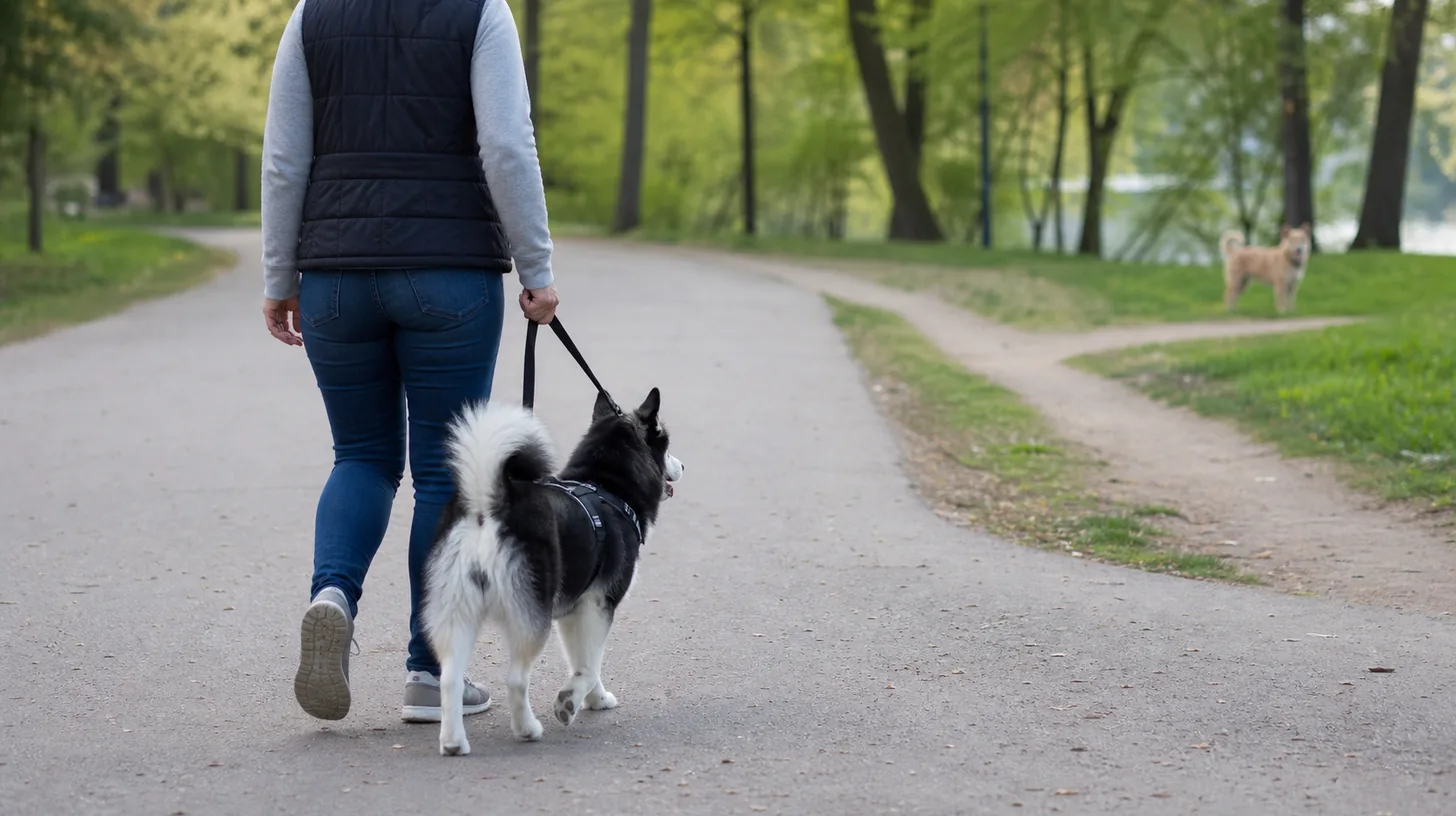
A reactive-walk plan should create distance and exits before a trigger appears. Map quieter routes, crossing points, visual barriers, and turnaround options; use well-fitted equipment; observe the distance at which the Pomsky can still eat and disengage; and avoid forced greetings. The objective is safer movement and recovery, not proving the dog can tolerate every encounter.
Define Observable Walk Problems
Record what happens without relying on labels such as aggressive, stubborn, or overexcited. Note staring, freezing, weight shift, whining, barking, lunging, spinning, hiding, taking food, responding to a cue, and time to recover. Identify trigger categories and context.
A Pomsky may react differently to one dog, several dogs, runners, vehicles, narrow paths, or direct approaches. Pain and health changes can alter behavior. Sudden onset or marked worsening deserves veterinary assessment before simply increasing training.
Audit Equipment Before the Route
Use a well-fitted harness or other veterinarian- or trainer-recommended walking setup that allows normal movement and resists escape. Inspect buckles, stitching, leash hardware, and identification. Avoid retractable leads where quick distance control and traffic safety are important.
Equipment cannot create emotional comfort by itself. Choke, prong, shock, and other aversive tools may add pain or fear around triggers. If a basket muzzle is part of a professional safety plan, condition it positively in advance and confirm fit; do not introduce it during a difficult encounter.
Map Lower-Pressure Routes
Walk the area without the dog or review a map to identify wide sidewalks, quiet times, parked-car visual barriers, driveways, side streets, and safe places to turn. Mark narrow bridges, blind corners, school release times, loose-dog locations, and areas with no escape.
Choose a route based on management quality, not distance goals. A shorter predictable loop can provide better exercise and training than a long route filled with unavoidable triggers. Weather, lighting, construction, and seasonal activity can change the route daily.
Establish Workable Distance
The workable distance is where the Pomsky notices a trigger but can still move, sniff, take food if normally motivated, and orient away. It is not a fixed number. Trigger movement, direction, sound, and environment affect the threshold.
When posture changes or recovery slows, create distance early. Cross the street, use a visual barrier, turn into a driveway with permission, or make a calm U-turn. Waiting for barking or lunging makes the exit harder and rehearses the full response.
Teach Exit Skills Away From Triggers
Practice a cheerful U-turn, hand target, follow cue, treat scatter, and movement behind a barrier in quiet places. Reward prompt movement and then release. These skills should be familiar before they are needed near a trigger.
Do not repeat cues while the dog is unable to respond. Use the physical route to create distance. A cue is not a command to stay close to something frightening. If food scatters increase competition, traffic risk, or ingestion risk, choose another exit method.
Reinforce Voluntary Disengagement
At workable distance, mark and reward the Pomsky for noticing a trigger and then turning back, sniffing, or moving with the handler. Keep repetitions brief. The goal is not prolonged staring followed by obedience.
Move away while the dog is successful. Gradually varying distance should happen across sessions, not during one approach to the limit. If the trigger closes distance unexpectedly, prioritize exit rather than trying to complete a training exercise.
Prevent Forced Greetings
Tell other handlers clearly that the dog needs space. Step off the path where safe, use your body position and movement to leave, and avoid leash tangles. Do not allow nose-to-nose greetings merely because another person says their dog is friendly.
An unexpected off-leash approach requires a separate emergency response. Avoid reaching between dogs or tightening both animals into face-to-face contact. Use available barriers and local safety guidance. Injuries require veterinary or medical assessment as appropriate.
Balance Activity With Recovery
Reactive walks can be physically and emotionally demanding. Use sniffing in safe areas, quiet enrichment, and suitable home activity so every exercise need does not depend on crowded routes. Schedule genuine recovery after a difficult event.
More intense exercise is not automatically calming and may expose the dog to additional triggers. Match activity to age, health, weather, and individual fitness. A veterinarian can advise when physical limitations or heat and cold risk affect the plan.
Keep a Route and Threshold Log
Record route, time, weather, trigger type, estimated distance, first behavior change, exit used, recovery time, and equipment. A map can reveal predictable pressure points. Avoid treating exact distance estimates as medical measurements.
Look for fewer unavoidable encounters, earlier handler action, easier disengagement, and faster recovery. A quiet walk with careful distance is successful even if the dog did not pass close to a trigger. Do not increase difficulty solely because several walks were uneventful.
Plan for Household Consistency
Every walker should know the route, exit cues, equipment checks, and what not to do. Avoid handing a high-risk dog to an unprepared person. Provide a written emergency contact and identify places where the walk should end rather than continue.
If different walkers produce different responses, compare timing, leash tension, route, and trigger exposure without blaming the dog. Simplify the plan to steps everyone can execute safely. Management must remain reliable when the primary trainer is unavailable.
Seek Qualified Help for Escalation
Consult a veterinarian and qualified reward-based behavior professional for lunging that cannot be managed safely, bite history, redirected behavior, inability to recover, sudden change, or shrinking workable distance. Provide concise logs and ordinary safe video if available.
Do not stage close encounters for assessment footage. A professional plan may combine health evaluation, environmental management, skill training, and additional safety equipment. The route plan reduces preventable exposure; it does not diagnose reactivity or guarantee behavior change.
Review the map after construction, seasonal schedule changes, or repeated loose-dog sightings. Retire routes that no longer provide exits. Keep a backup home-enrichment plan for days when safe distance is unavailable rather than turning a known high-pressure route into a test.
Record the date each route was last checked so outdated assumptions remain visible.
Sources reviewed
Each source is used only for the claim scopes listed below. None establishes a guaranteed Pomsky outcome or replaces individual professional assessment.
- American Animal Hospital Association: How Can I Safely Walk My Reactive Dog? - Supports: distance and route management; well-fitted walking equipment; reward-based handling; professional behavior referral. Limit: Equipment and general management cannot guarantee safety during an uncontrolled loose-dog encounter.
- American Veterinary Society of Animal Behavior: Humane Dog Training Position Statement - Supports: reward-based training; aversive-method risk; behavior change principles. Limit: Does not guarantee outcomes for an individual dog.