Written and reviewed by A Pomsky Editorial Team. Originally published 2026-07-26; substantively reviewed July 26, 2026.
Training boundary: Use humane, reward-based methods and protect safety with management. Pain, panic, aggression, a bite history, or serious handling risk requires a veterinarian or qualified behavior professional. Read the editorial policy.
Direct answer: For each activity, record type, active duration, breaks, distance when reliable, terrain, surface, weather, observable effort, gait, breathing, water, and time to usual behavior. Compare similar sessions for repeated changes and share the original log with a veterinarian. Do not use a breed-wide duration target or diagnose from recovery time.
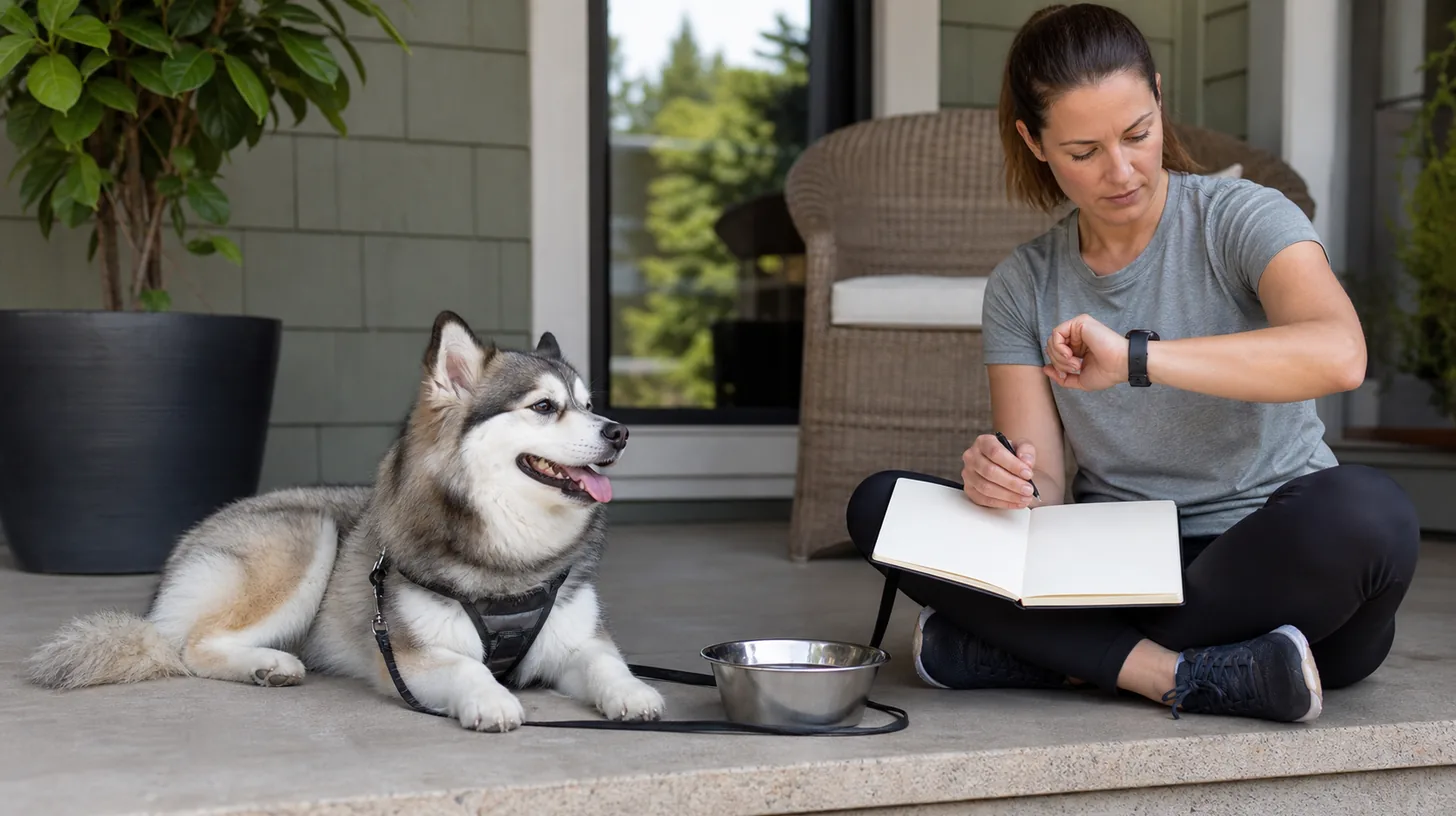
An exercise log should record what a Pomsky did and how the dog returned to ordinary behavior. Track activity type, duration, surface, weather, pace, gait, breathing, willingness, water context, and recovery. Use repeated changes to support veterinary review; do not turn the record into a universal exercise prescription or a competition for distance.
Establish an Ordinary Baseline
For several routine days, record normal walks, play, training, rest, appetite, and recovery. Choose activities already appropriate for the Pomsky. The baseline should reflect ordinary life, not a maximum-effort test.
Age, body condition, health, fitness, temperature, coat, and medication affect response. A baseline can change. Reassess after illness, travel, seasonal change, or a long break.
Define Each Activity Clearly
Name the activity: leash walk, sniff walk, indoor play, training, swimming, hiking, or another task. Record start and end time, active minutes, breaks, terrain, and whether the dog chose the pace.
“One hour outside” may include substantial rest, while ten minutes of intense chasing can be demanding. Describe the actual work rather than relying only on clock time.
Record Environmental Context
Note temperature, humidity, sun, wind, air quality, surface, elevation, road salt, ice, and access to shade or water when relevant. Mark unusual noise, crowds, travel, or dog encounters that added stress.
Environmental context helps explain variation but cannot prove causation. A hot-weather decision should occur before the outing, not be reconstructed only after difficulty.
Observe Willingness and Movement
Record whether the Pomsky approached equipment, moved freely, lagged, stopped, pulled toward home, lifted a paw, shortened stride, stumbled, or avoided a surface. Compare both sides when possible without manipulating painful limbs.
Do not use leash pressure or food to make a reluctant dog continue. Sudden gait or willingness change can indicate pain or illness and deserves veterinary guidance.
Track Breathing and Heat Response
Describe panting compared with the dog's ordinary response, breathing effort, tongue and gum appearance, shade seeking, and ability to orient. Do not invent a safe breathing threshold without veterinary instruction.
Marked breathing difficulty, weakness, disorientation, vomiting, collapse, or suspected heat illness requires emergency veterinary routing. The log must never delay care.
Define Recovery in Observable Terms
Record time to ordinary breathing, comfortable posture, interest in water or food, normal gait, and usual social behavior. “Recovered” should mean the dog returned to its own baseline, not merely stopped moving.
Freezing or exhaustion can look quiet. Note restlessness, inability to settle, persistent panting, pain, coughing, or unusual sleep. Contact a veterinarian according to the signs and care plan.
Include the Following Day
Some changes appear later. Record stiffness, reluctance on stairs, appetite, stool, sleep, and willingness for the next routine activity. Do not repeat demanding exercise to test whether a concern persists.
If activity routinely affects the following day, share the pattern with a veterinarian. Adjustment may require examination and individualized planning, not only shorter sessions.
Separate Training Stress From Physical Load
A crowded or trigger-heavy walk may be mentally difficult despite short distance. Record scanning, inability to eat, reactive events, recovery after triggers, and whether the route provided exits. Keep behavior observations neutral.
Use the reactive-walk plan for distance and safety rather than adding duration to overcome behavior. A difficult environment can be modified independently of physical conditioning.
Coordinate Multiple Caregivers
Use one shared log so walks, daycare, play, training, and family activity are visible. Record who handled the Pomsky and whether equipment or route changed. This prevents accidental stacking of demanding sessions.
Sitters and walkers should report concerns promptly rather than finishing a target duration. A contract does not override the dog's current safety.
Review Weekly Patterns
Compare similar activities and conditions. Look for increasing recovery time, repeated gait changes, falling willingness, weather sensitivity, or stable comfortable response. Avoid treating one unusual day as a trend.
Summarize evidence in a few sentences and retain the original entries. Corrections should be dated. Do not rewrite data to fit a preferred explanation.
Pair With Weight and Health Records
Review activity beside consistent weight, veterinarian-confirmed body condition, medications, preventive care, and relevant symptoms. Exercise response and body weight affect each other but have many possible explanations.
Do not increase activity simply to pursue a number on a scale. Nutrition and exercise changes should be individualized with veterinary guidance.
Bring the Log to Veterinary Review
Provide the activity summaries, recovery times, videos of gait when safely obtained, medication list, weight record, and specific questions. The veterinarian may recommend examination, diagnostics, treatment, or different monitoring.
Update the log fields to match the care plan. A specialist or rehabilitation professional may use different measures. Do not apply another dog's targets.
Use the Record to Make Conservative Plans
Choose future activities from comfortable repeated responses, current conditions, and professional guidance. Increase only one feature at a time and keep easier days. Stop before the Pomsky is exhausted.
The value of a Pomsky exercise and recovery log is individual evidence: what happened, in which conditions, and how recovery changed. It supports safer decisions without claiming that one duration, distance, or intensity fits the breed.
Standardize Observations Across Caregivers
Define each field before several people use the log. For example, record activity duration from departure to return, separate active movement from breaks, and describe surface and weather with consistent terms. Recovery begins when the planned activity ends and should use observable markers such as settled breathing, comfortable posture, normal gait, interest in water, and return to usual behavior.
Avoid labels such as lazy, stubborn, hyper, or exhausted without describing what occurred. One caregiver's "easy walk" may include hills, heat, pulling, or play that another person would record separately. Neutral details let the veterinarian compare sessions and reduce false conclusions.
Review entries weekly during a monitoring period and highlight only repeated or clinically important changes. Preserve ordinary days as the baseline. If a walker, sitter, or trainer cannot complete the full form, ask for start time, route, unusual events, and recovery observations. A shorter accurate entry is better than invented precision. The log should make hidden workload visible while remaining simple enough that everyone who exercises the Pomsky will actually use it.
Sources reviewed
Each source is used only for the claim scopes listed below. None establishes a guaranteed Pomsky outcome or replaces individual professional assessment.
- American Animal Hospital Association: AAHA-AVMA Canine Preventive Healthcare Guidelines - Supports: preventive exams; individual risk assessment; parasite and vaccination planning. Limit: The veterinarian sets the schedule for the individual dog and location.
- American Animal Hospital Association: 2021 AAHA Nutrition and Weight Management Guidelines - Supports: nutrition screening; weight and body-condition monitoring; unexplained weight change as a risk factor; extended nutritional evaluation. Limit: A general article cannot diagnose the reason for weight loss or prescribe calories, diets, tests, or treatment.
- World Small Animal Veterinary Association: Body Condition Score for Dogs - Supports: body condition scoring; rib and waist checks. Limit: A visual or at-home check is not a diagnosis.