Written and reviewed by A Pomsky Editorial Team. Originally published 2026-07-26; substantively reviewed July 26, 2026.
Safety boundary: This guide is educational and cannot diagnose, treat, or replace veterinary, medical, public-health, emergency-dispatch, animal-control, or jurisdiction-specific legal guidance. Use the health disclaimer and contact the appropriate professional for the actual situation.
Direct answer: Confirm the property’s current pet rules before booking, bring familiar care and safety equipment, inspect and secure the room, and give your Pomsky time to settle before any departure. Maintain toilet, meal, rest, and leash routines, and arrange supervision when the hotel or the dog cannot support comfortable alone time.
Verify the property policy and room constraints
Confirm the hotel’s current pet rules directly before booking and again before arrival. Ask about size or number limits, fees, restricted floors, vaccination or record requirements, permitted relief areas, elevator routes, housekeeping procedures, crate expectations, and whether a dog may ever remain alone in the room. A listing marked “pet friendly” does not answer those operational questions.
Request a room away from busy elevators or service doors when possible, but do not rely on a location request as a noise solution. Identify the nearest exterior exit, safe walking area, veterinary clinic, and emergency route. Record the room number and property contact in the travel plan. If the policy conflicts with the Pomsky’s needs or training level, choose another property or arrange different care rather than improvising after check-in.
Pack a familiar hotel kit
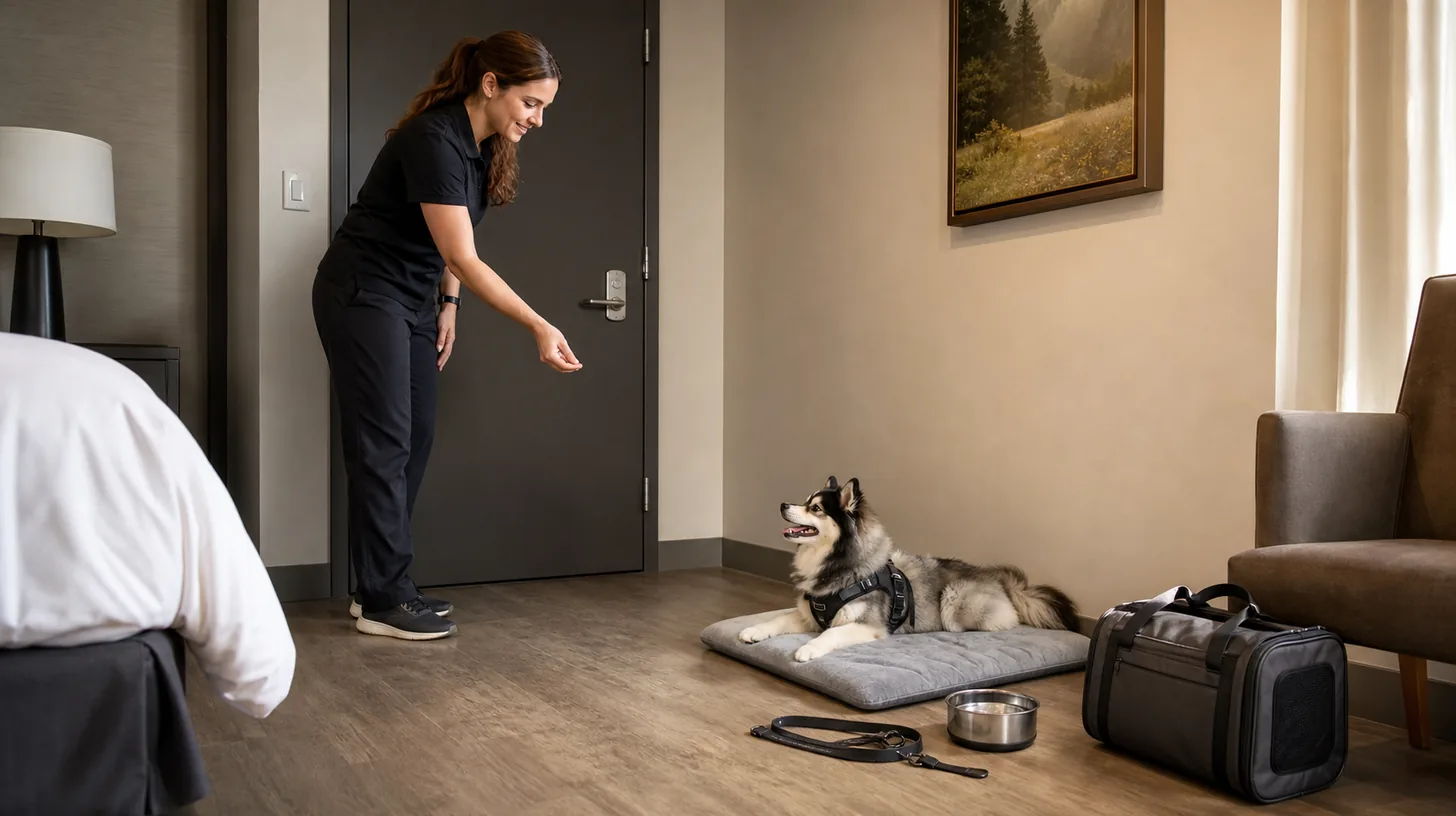
Bring the dog’s usual food, measured portions, water plan, bowls, medication with instructions, identification, current records, waste bags, cleaning supplies, a secure harness and leash, familiar bedding, and a few quiet enrichment items. Avoid introducing several new foods or chews during travel. Pack a barrier or carrier only if the dog is already comfortable with it and the property permits its use.
Create a one-page routine sheet with meal, toilet, walk, medication, and rest times. This helps multiple adults follow the same plan. Include a recent photo and microchip registration details, but do not treat a microchip as GPS. Inspect collars and harnesses before departure because unfamiliar hallways, parking lots, and automatic doors increase escape opportunities.
Make arrival calm and predictable
Give the Pomsky a toilet and sniffing break before entering the lobby. Choose a quieter route and keep enough distance from unfamiliar dogs and people. Move through common areas without greetings unless the dog is relaxed and the other party consents. In the room, keep the leash attached while inspecting hazards and locating the resting area.
Offer water and let the dog explore one area at a time. Place familiar bedding away from the door and heating or cooling vents. Run a short settling routine the dog already knows, such as going to a mat, receiving a few rewards, and resting. Do not immediately leave for dinner after check-in. The first goal is recovery from travel and orientation to the new space.
Secure the room before allowing freedom
Check the door latch, connecting doors, balcony, windows, cords, bins, cleaning products, dropped medication, food, sharp objects, and gaps behind furniture. Block access to unsafe areas without moving hotel equipment in a way that creates damage or risk. Hang the property’s pet or privacy notice according to policy and tell staff how housekeeping should be handled.
Keep the dog contained or directly supervised whenever the room door opens. A closed bathroom or properly conditioned carrier may provide a temporary secondary barrier, but only if temperature, ventilation, comfort, and policy are appropriate. Never tether a dog unattended. Children should not answer the hotel door while responsible for holding the leash.
Plan toilet breaks and noise management
Use the same relief route when practical and increase toilet opportunities after travel, diet disruption, or schedule change. Carry cleaning supplies and report any damage or accident promptly. Walk on a secure harness and leash, watching for traffic, ice melt, hot pavement, discarded food, and other unfamiliar hazards.
For hallway noise, place the resting area away from the door, use low-level familiar background sound if the dog is accustomed to it, and reward calm orientation back to the handler. Practice an easy mat behavior rather than waiting for repeated barking. Do not punish alarm barking or use aversive collars. If the environment keeps the dog over threshold, change rooms, reduce exposure, or change the lodging plan.
Manage meals rest and enrichment
Maintain usual meal timing and portions unless veterinary guidance says otherwise. Keep food sealed and clean bowls after use. Choose quiet enrichment that does not create choking, guarding, noise, or property damage. Supervise unfamiliar items and remove anything that begins to break apart.
Travel days can be stimulating even when physical exercise is limited. Balance short sniffing walks, simple training, and uninterrupted rest instead of trying to tire the dog with intense activity. Monitor appetite, water intake, stool, breathing, and behavior. Sudden illness, repeated vomiting, breathing trouble, collapse, or severe distress requires professional help, not another hotel routine adjustment.
Decide whether the dog can be left alone
First follow the property rule; some hotels prohibit unattended pets. Even when allowed, do not make a hotel the first place a Pomsky practices being alone. Test a very short departure only after the dog settles, and use a camera only if it can be set up lawfully and without recording staff or other guests. Return before vocalization or pacing escalates.
If the dog cannot remain comfortable, arrange a responsible adult to stay, use an appropriate local service that has been verified, or change activities. A “do not disturb” sign does not prevent emergencies, alarms, or staff entry. Never leave a dog during conditions in which temperature, health, fire safety, or evacuation would be uncertain.
Check out without losing the routine
Pack while the dog is safely contained away from the open door. Inspect the room for dropped food, medication, toys, waste, and damage. Give a final toilet break before loading the vehicle. Keep the dog secured until every bag and person is ready, then follow the same travel restraint plan used on arrival.
After the stay, note which room location, sounds, routes, and routines worked. Wash bedding and inspect paws and skin after unfamiliar environments. Resume the normal home schedule promptly, but allow extra rest. Hotel stays should be evaluated individually; a dog that tolerated one quiet property may not be comfortable in a crowded venue, and no routine guarantees a disturbance-free stay.
Save the property’s verified rules, the room features, the dog’s response, and any incident in the travel record. That record can guide the next booking without assuming conditions will be identical. Reconfirm every future reservation because ownership, policies, fees, renovation, and relief areas can change. Reliable travel planning is based on current facts and the individual dog’s demonstrated comfort.
Sources reviewed
Each source is used only for the claim scopes listed below. None establishes a guaranteed Pomsky outcome or replaces individual professional assessment.
- American Veterinary Society of Animal Behavior: Humane Dog Training Position Statement - Supports: reward-based training; aversive-method risk; behavior change principles. Limit: Does not guarantee outcomes for an individual dog.
- American Animal Hospital Association: Lifestyle and Safety Assessment - Supports: appropriate confinement; leash, collar and harness planning; lifestyle-specific safety review. Limit: Equipment selection must account for the individual dog's anatomy, behavior, health, and environment.