Written and reviewed by A Pomsky Editorial Team. Originally published 2026-07-26; substantively reviewed July 26, 2026.
Training boundary: Use humane, reward-based methods and protect safety with management. Pain, panic, aggression, a bite history, or serious handling risk requires a veterinarian or qualified behavior professional. Read the editorial policy.
Direct answer: After rinsing, keep the Pomsky on a nonslip surface, press water from the coat with absorbent towels, and use only cool or comfortably conditioned airflow at a tolerable distance. Separate coat layers with fingers and a suitable brush, check the skin beneath, and stop for distress, pain, or unsafe equipment.
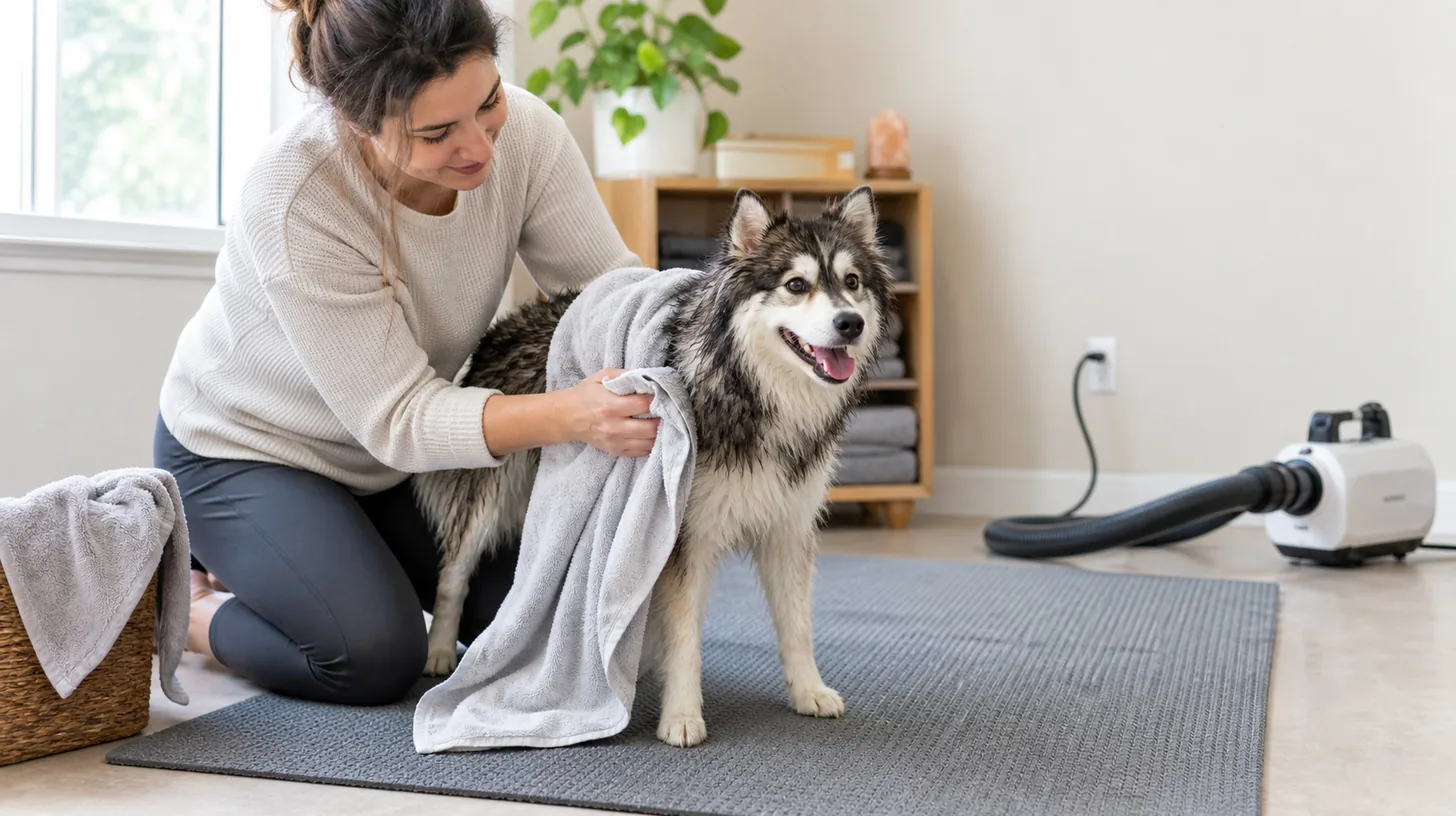
Drying a Pomsky after a bath is a coat-care and handling task, not a race. Remove excess water gently, keep the dog on secure footing, dry through coat layers with towels and cool low-intensity airflow only when the Pomsky is comfortable, and check for damp compressed areas where mats can form. Stop for skin changes, pain, overheating, or escalating distress.
Prepare the Drying Area Before Bathing
Set out absorbent towels, a nonslip mat, brush or comb already appropriate for the coat, rewards, and a safe place for wet supplies. Close exterior doors and remove electrical cords from splash zones. Keep the room comfortably warm without making it hot.
Plan where the Pomsky can shake. Wet dogs can slip or collide with hard furniture. A secure bathroom or grooming area is safer than chasing the dog through the home. The dog should still have enough space to change posture and communicate discomfort.
Finish Rinsing Thoroughly
Residual shampoo or conditioner can irritate skin and make the coat difficult to assess. Follow the product and professional instructions and rinse until the water runs clear. Avoid directing water into the ears, eyes, or nose.
Do not add extra products during drying to create shine or scent unless they are already part of an appropriate plan. More product can change coat texture, attract debris, or complicate a skin problem.
Let the Pomsky Shake Safely
After the final rinse, step back and allow a natural shake on the nonslip surface. Keep the door closed and protect nearby electrical equipment. Shaking removes substantial surface water without rubbing or heat.
Do not hold the dog's head or body still to prevent shaking. If the Pomsky attempts to flee, improve barriers and reduce handling pressure rather than tightening restraint. A helper can manage towels and doors without pinning the dog.
Blot Instead of Rough Rubbing
Press a towel gently into the coat and lift it away. Work from shoulders along the body, legs, chest, belly, and tail while avoiding force over sensitive areas. Replace saturated towels rather than continuing with a wet one.
Rapid back-and-forth rubbing can tangle long guard hair and compress damp undercoat. It may also be uncomfortable over joints or skin irritation. Blotting takes longer but preserves coat alignment and gives the caregiver opportunities to notice changes.
Introduce Airflow Separately
If using a dryer, condition the Pomsky to the sound and airflow before a full bath. Begin with the device far away, cool, and at low intensity. Reward calm observation and allow retreat. Never force a frightened dog to remain beside it.
Avoid hot airflow. Keep the nozzle moving and at a safe distance, and do not aim into the face, ears, genitals, or one spot for prolonged periods. Follow the device instructions and stop if the dog or equipment becomes warm.
Dry Through Coat Layers
Dense coat can feel dry on top while remaining damp near the skin. Use fingers to separate small sections and direct cool airflow across, not directly into, the layer. Check the chest, armpits, behind the ears, trousers, belly, tail base, and under equipment-contact areas.
Work in short intervals with breaks. The objective is even drying, not maximum force. If the Pomsky becomes unable to take a reward, repeatedly leaves, or shows escalating stress, stop and use towels or professional help.
Prevent Mats Without Pulling Wet Coat
Use only a tool suitable for the Pomsky's coat and begin when sections are mostly dry and can be handled comfortably. Support the hair near the skin, use short gentle strokes, and work from ends toward the body. Never cut a mat close to skin with scissors.
Wet or tight mats can hide irritated skin and tighten as they dry. A professional groomer or veterinarian may need to manage severe matting, especially around ears, armpits, sanitary areas, or painful skin.
Check Skin and Contact Areas
Part the coat in several locations and look for redness, swelling, sores, flakes, parasites, moisture, odor, or pain. Check where collar and harness straps sit. Leave equipment off until the coat and skin are dry unless safety requires otherwise.
Do not diagnose a rash or cover it with fragrance, powder, or oil. Photograph meaningful changes and contact a veterinarian. Sudden sensitivity can indicate pain even when no skin lesion is obvious.
Protect Ears Without Inserting Material
Blot only the visible outer ear if it became wet. Do not insert cotton, swabs, or drying agents into the canal. Repeated head shaking, odor, discharge, pain, or balance change requires veterinary guidance.
Ear handling should remain brief and voluntary. A bath is already a demanding context for many dogs; a detailed ear check can be scheduled separately when the Pomsky has recovered.
Confirm Full Dryness Before Equipment
Feel beneath the coat with dry fingers and compare multiple areas. Recheck places that trap moisture. Put the collar or harness back only after the underlying coat is dry and the fit has been reassessed.
Damp coat under straps can mat, rub, and retain odor. Grooming or washing can also change apparent fit. Use the recurring collar and harness recheck rather than returning every strap to an old mark automatically.
Record What Worked
Note towel count, room setup, dryer distance and intensity, areas that stayed damp, handling tolerance, and any skin or coat concerns. This makes the next bath more predictable and supports a professional groomer handoff.
Do not turn the record into a fixed rule if the Pomsky's coat, health, age, or behavior changes. A puppy, senior, recently groomed dog, or dog with a skin condition may need a different plan.
Know When Professional Help Is Safer
Seek professional grooming help when the coat cannot be dried or detangled without distress, when equipment is unsuitable, or when mats are close to skin. Seek veterinary help for pain, sores, odor, swelling, recurrent itching, or sudden coat and skin changes.
A safe Pomsky bath drying plan uses secure footing, gentle water removal, cool conditioned airflow, layer-by-layer checks, and early stopping. It preserves coat and trust without using heat, force, or unsupported home treatment.
Sources reviewed
Each source is used only for the claim scopes listed below. None establishes a guaranteed Pomsky outcome or replaces individual professional assessment.
- American Kennel Club: Pomeranian Dog Breed Information - Supports: Pomeranian size range; Pomeranian coat; Pomeranian temperament tendencies. Limit: Parent-breed context only; not direct Pomsky outcome evidence.
- American Kennel Club: Siberian Husky Dog Breed Information - Supports: Siberian Husky size range; Siberian Husky coat; Siberian Husky temperament tendencies. Limit: Parent-breed context only; not direct Pomsky outcome evidence.
- American Animal Hospital Association: Humane Restraint of Animals - Supports: least-stress handling; basket muzzle preparation; positive behavior modification. Limit: Does not authorize forceful restraint or replace veterinary handling decisions.