Written and reviewed by A Pomsky Editorial Team. Originally published 2026-07-26; substantively reviewed July 26, 2026.
Training boundary: Use humane, reward-based methods and protect safety with management. Pain, panic, aggression, a bite history, or serious handling risk requires a veterinarian or qualified behavior professional. Read the editorial policy.
Direct answer: Identify the exact lawn or garden product and follow its current label and professional instructions. Store, measure, and apply it with the Pomsky fully separated, close every route into the treated area, and keep the dog out until the specified reentry condition is met. Inspect the yard and access path before reopening, and contact veterinary or poison professionals after suspected exposure.
Lawn and garden work may involve fertilizers, herbicides, pesticides, seed treatments, cleaners, fuels, or contractor products. Their instructions and reentry conditions differ. A Pomsky safety plan must start with the exact product label, use full separation during storage and application, and reopen the yard only after every specified condition and access check is satisfied.
Inventory Every Product
List products stored or scheduled for use, including contractor-applied materials. Record the exact name, current label location, container condition, purpose, and responsible person. Include products in garages, sheds, spreaders, hose attachments, and unlabeled secondary containers.
Do not use an unidentified product. Keep original labels and safety information available without printing sensitive account or contractor details into the pet plan.
Read the Current Label
Review use, storage, personal protection, weather, application, cleanup, disposal, pet, and reentry directions before opening the container. Product-specific instructions control; a generic internet wait time cannot replace them.
If directions are missing, damaged, conflicting, or not understood, stop and contact the manufacturer, qualified applicator, or appropriate authority before proceeding.
Schedule Around the Pomsky
Choose a period when the Pomsky can remain securely indoors or at another safe location for the full application and specified exclusion period. Account for toileting needs, weather changes, household arrivals, and delays.
Do not begin because the dog is asleep or expected to stay in one room. Establish physical barriers and assign an adult to verify them.
Secure Storage and Mixing
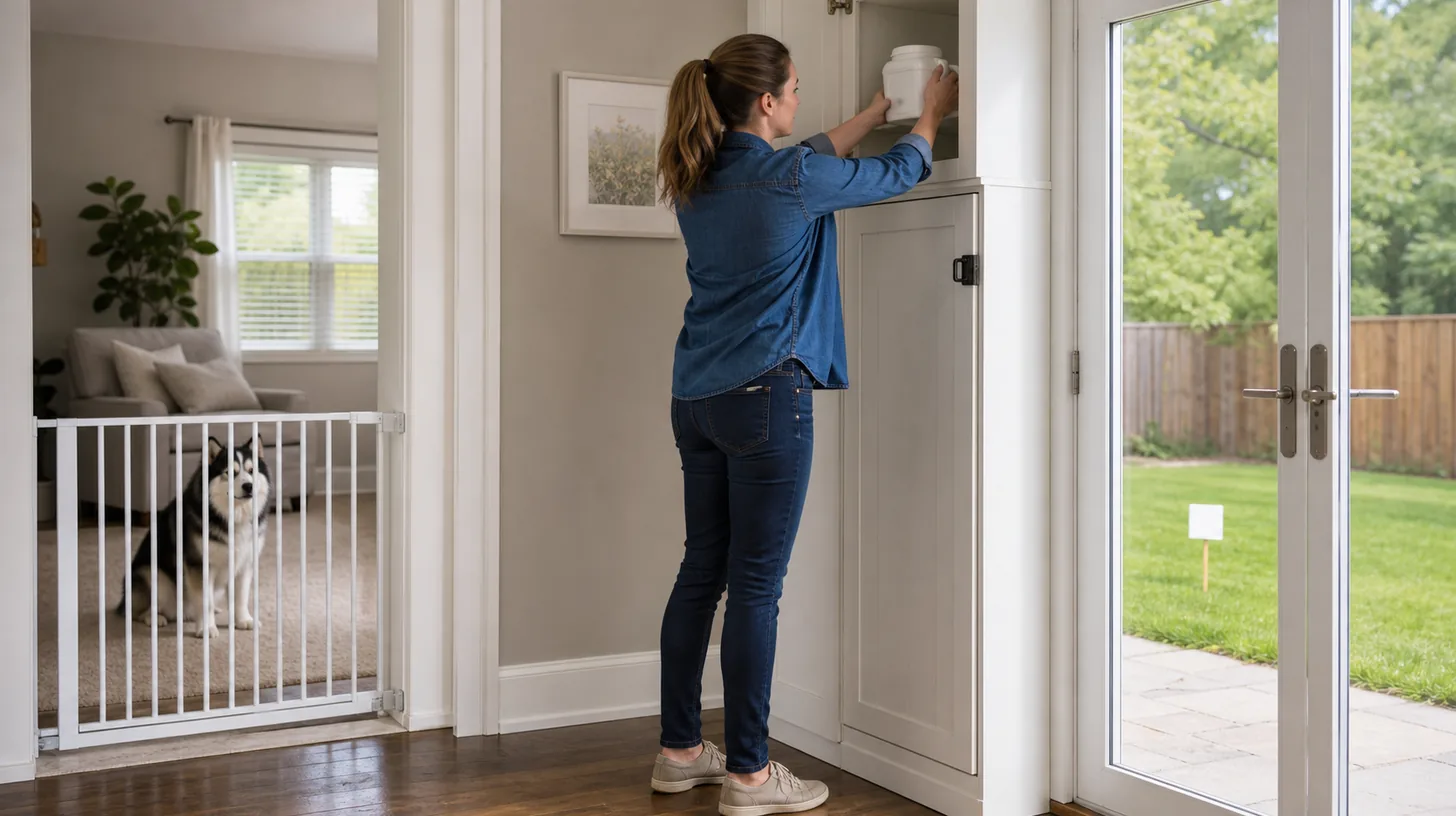
Store products closed, upright, and inaccessible according to label requirements. Keep the Pomsky away from storage, measuring, mixing, loading, and equipment cleaning. Never leave a container or applicator on the floor, patio, or open vehicle.
Do not transfer products into food, drink, or unmarked containers. Control spills using the product's instructions and professional guidance.
Close Every Yard Access Point
Lock or secure exterior doors, dog doors, gates, and service entries before application. Place a plain household reminder where caregivers will see it without relying on a sign as the only barrier.
Tell walkers, sitters, children, landscapers, and other household members that the yard is closed. Identify the alternate toileting route and who controls it.
Remove Pet Items
Move bowls, toys, beds, training equipment, waste tools, and portable shade from the application area before work begins. Follow label and professional guidance for items that cannot be moved.
Do not return items until both the product's reentry requirements and the item's cleaning or replacement needs are resolved.
Control Application
Apply only as directed, in the specified area and conditions, with the Pomsky fully separated. Prevent drift, overspray, granule spread, tracked residue, and access through open doors. Keep application equipment under the responsible adult's control.
More product is not safer or more effective. Do not improvise concentration, combination, coverage, or timing.
Manage Contractor Work
Before a service visit, ask what products and areas are planned, how the household will receive label and reentry information, and when gates will be opened. Secure the Pomsky indoors before the contractor arrives.
After work, confirm gates, product identity, treated zones, reentry instructions, spills, and equipment removal directly. Do not rely only on a generic invoice message.
Prevent Tracking Indoors
Follow product instructions for footwear, tools, clothing, and cleanup. Keep the Pomsky away from the entry where workers remove equipment. Clean tracked material using approved methods without creating a second chemical exposure.
Inspect floors and mats before reopening indoor access. Store work shoes and tools beyond the dog's reach.
Observe the Exclusion Period
Keep the yard closed for the full condition stated by the label or qualified applicator. A surface that looks dry, smells normal, or has been exposed to sun is not independent proof that reentry is allowed.
If rain, irrigation, temperature, or another event changes the conditions, obtain product-specific guidance rather than shortening the restriction.
Inspect Before Reentry
When the specified condition is met, walk the area without the Pomsky. Check gates, residue, granule piles, puddles, damaged containers, discarded packaging, tools, flags, hoses, and access to adjacent treated zones.
Confirm the alternate route did not create a new fence or gate problem. Resolve every concern before bringing the dog outside.
Use a Controlled First Return
Connect the Pomsky and enter with an adult who can observe. Stay on the inspected route, prevent licking or digging, and keep the first visit brief enough to monitor. Return indoors if an unexpected residue, odor, wet area, or access problem appears.
Do not use the dog to confirm whether the product is dry or tolerated.
Clean Paws When Appropriate
Routine cleaning does not replace exclusion. If ordinary environmental residue is present after permitted reentry, inspect paws and follow the established plain-water rinse and dry routine as appropriate.
Do not apply solvents, concentrated detergents, or home neutralizers to the dog. Seek professional advice after suspected product contact.
Respond to Suspected Exposure
Move the Pomsky away from the source without exposing people. Preserve the product container or label information. Contact a veterinarian or animal poison professional promptly and follow their instructions.
Do not induce vomiting, give food or milk, apply a chemical treatment, or wait for symptoms unless a qualified professional directs that action.
Record the Event
Document product, area, responsible person, application start and finish, weather context, label-directed reentry condition, actual reopening time, inspection result, and any incident. Keep contractor information and receipts with household records.
This record supports future planning and professional communication; it does not convert one product's instructions into a rule for another.
Review Nonchemical Alternatives
Discuss whether mowing, hand removal, barriers, planting changes, or other approaches can meet the household goal with less exposure. Evaluate any alternative for plant, tool, wildlife, property, and dog safety rather than assuming “natural” means harmless.
The appropriate method depends on the site and problem. Qualified advice may be needed.
Audit Storage Afterward
Return remaining product to compliant storage, clean equipment as instructed, and inspect the route between yard and storage. Close cabinets and gates, count containers, and remove waste through the proper process.
The yard plan is complete only when the Pomsky is separated during work, label conditions control reentry, the site passes inspection, and exposure questions route to professionals.
Sources reviewed
Each source is used only for the claim scopes listed below. None establishes a guaranteed Pomsky outcome or replaces individual professional assessment.
- ASPCA: Animal Poison Control - Supports: poison emergency routing; information to collect after exposure. Limit: Never replace urgent veterinary or poison-control instructions with article advice.
- American Animal Hospital Association: Lifestyle and Safety Assessment - Supports: appropriate confinement; leash, collar and harness planning; lifestyle-specific safety review. Limit: Equipment selection must account for the individual dog's anatomy, behavior, health, and environment.
- U.S. Centers for Disease Control and Prevention: Dogs: Healthy Pets, Healthy People - Supports: supervision around young children; bite prevention; household hygiene and routine veterinary care. Limit: General prevention guidance does not assess an individual dog's behavior or replace pediatric, veterinary, or qualified behavior advice.