Written and reviewed by A Pomsky Editorial Team. Originally published 2026-07-26; substantively reviewed July 26, 2026.
Training boundary: Use humane, reward-based methods and protect safety with management. Pain, panic, aggression, a bite history, or serious handling risk requires a veterinarian or qualified behavior professional. Read the editorial policy.
Direct answer: Walk the entire fence line from both sides where access is safe, inspect from Pomsky height, and test every gate and latch. Close gaps, remove climb aids, reinforce digging-prone edges, and recheck after storms, landscaping, deliveries, or contractor work. Keep the Pomsky leashed until defects are repaired, and continue supervision because a fence is only one layer of escape prevention.
A fenced yard can reduce exposure to roads and unfamiliar animals, but it is not a guarantee of containment. Gates settle, boards loosen, soil erodes, deliveries interrupt routines, and a Pomsky can notice a low gap before a person does. A useful inspection examines the whole perimeter from dog height and keeps the dog connected until every defect is corrected.
Start With the Dog Indoors
Inspect an unfamiliar or suspect fence without the Pomsky loose in the yard. Keep the dog indoors behind a closed door or with another capable adult. Carry a phone, notes, measuring tool, and any gate keys, but do not begin repairs near buried utilities or property boundaries without the required professional checks.
The first walk is an audit, not an escape test. A dog should never be released to show whether a gap is large enough.
Map the Entire Perimeter
Choose one gate as the starting point and walk the fence in a single direction until you return. Divide the yard into named sections such as driveway side, rear line, utility side, and house return. Mark every concern on a simple map or photo set.
Inspect both the fence material and the ground line. A sound-looking upper fence can still have an opening underneath, and dense plants can hide damaged wire or displaced boards.
View the Fence From Pomsky Height
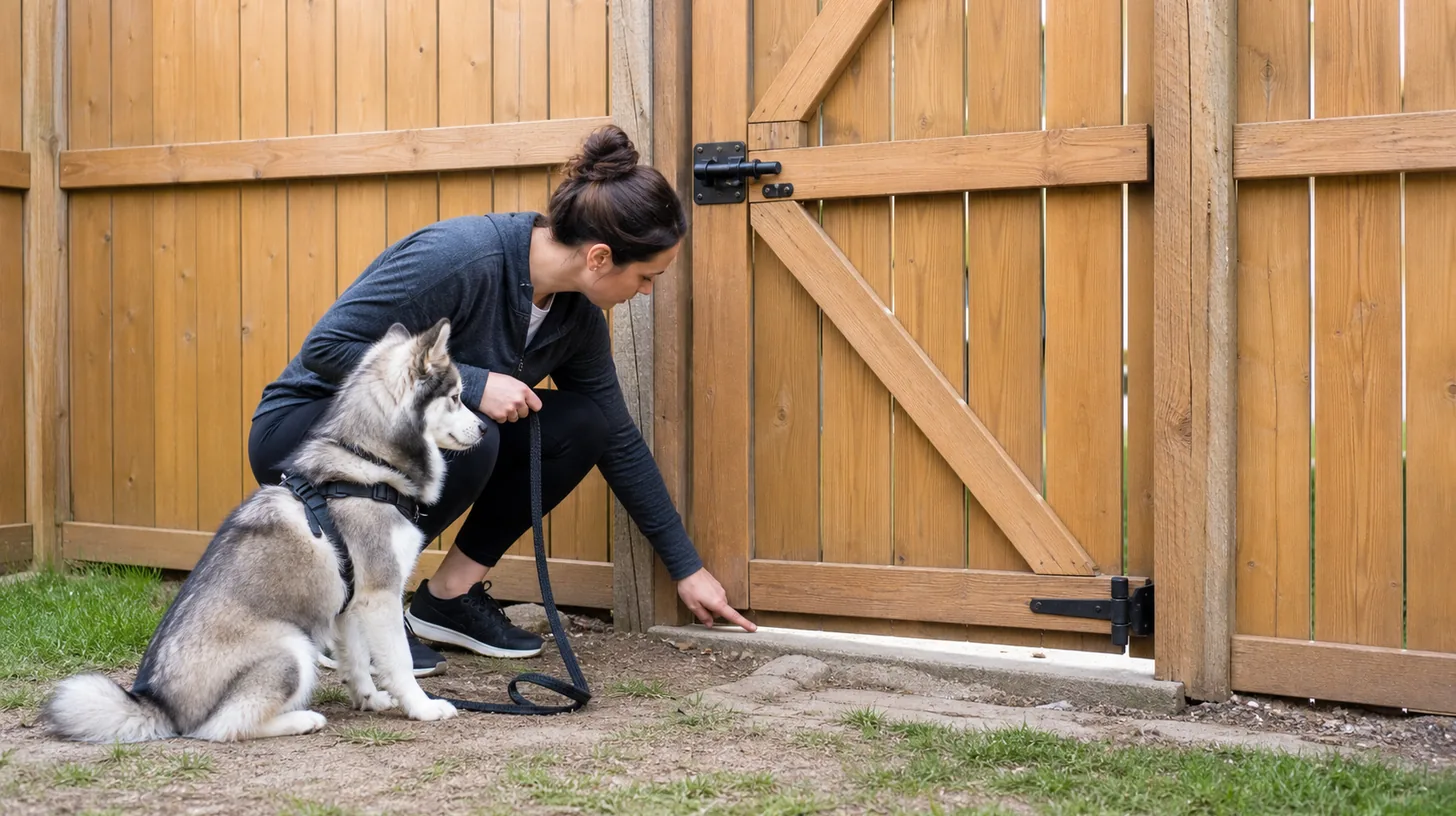
Kneel where footing is safe and look along the lower edge. Check for daylight under panels, flexible wire, splintered boards, sharp fasteners, drainage channels, animal burrows, and spaces created by roots. Examine corners closely because intersecting materials can leave triangular openings.
Use a measuring tool rather than guessing. Record the opening and location for repair planning. Do not push the dog's head, paw, or equipment into a gap.
Inspect Vertical Openings
Measure spaces between pickets, rails, panels, and decorative elements. Check whether a Pomsky could place the head through an opening and then become trapped. Look for flexible materials that spread under pressure even when the resting gap appears small.
Decorative cutouts and damaged lattice deserve the same attention as the main fence. Temporary mesh, loose ties, or projecting wire can add entanglement and injury hazards.
Test Every Gate
Close each gate from the normal approach and verify that it aligns, latches, and resists an ordinary push. Inspect hinges, posts, stops, drop rods, self-closing hardware, and gaps at the latch and hinge sides. Confirm that a person carrying bags can still complete the closing sequence.
The latch should not depend on remembering a delicate position. If it fails intermittently, treat the gate as unsecured until repaired.
Check Human Access Routines
List everyone who may open a gate: household members, landscapers, utility workers, contractors, delivery staff, neighbors, and emergency responders. Decide how each person will know a Pomsky lives there and who controls the dog before access begins.
Do not rely only on a sign. Use direct scheduling, locked gates where appropriate, and indoor separation during work. Reinspect after any person has moved equipment through the perimeter.
Remove Climb Aids
Move benches, stacked materials, wood piles, bins, planters, and play equipment away from the fence. Check horizontal rails and bracing that may create footholds. Trim or manage vegetation according to property and plant-safety requirements so it does not form a concealed route.
A taller fence can still fail when objects reduce its effective height. Do not leave repair ladders or materials beside the perimeter between work sessions.
Review Digging-Prone Areas
Look for fresh soil, worn paths, repeated sniffing locations, shade pockets, gaps beneath gates, and places where drainage softens the ground. Repair the environmental defect and manage access rather than punishing digging after the fact.
Any buried barrier or ground work must account for utilities, drainage, property rules, wildlife, and safe materials. Use qualified help when those constraints are uncertain.
Inspect for Injury Hazards
Containment is not the only goal. Search for protruding nails, broken wire, sharp panel edges, splinters, unstable masonry, chemical residue, toxic plants, and discarded hardware. Check that gate springs and closing mechanisms cannot catch a leash, paw, or tail.
Remove the Pomsky from the work zone while repairs occur. Count tools and fasteners before reopening the yard.
Recheck After Weather and Work
Inspect after strong wind, heavy rain, freeze-thaw cycles, fallen branches, soil movement, landscaping, excavation, utility visits, fence repair, and nearby construction. Look from both sides where permission and access make that safe.
Storm damage can change a gate's alignment without breaking it visibly. Work crews may also prop gates open or create temporary openings that were not part of the original yard.
Build a Gate Transition Routine
Before the Pomsky enters the yard, one adult confirms that all gates are closed and the perimeter status is current. Connect the dog on leash for the first post-repair walk. Pause at gates, scan the ground line, and watch the dog's interest without allowing contact with a suspect area.
At return, bring the dog inside before opening a gate for bins, equipment, or visitors. This separates dog movement from gate operation.
Keep Identification Current
A fence is one layer, not the complete recovery plan. Maintain a visible identification tag appropriate to the dog, keep microchip contact records current, and store a recent clear photograph. Make sure capable caregivers know what to do if a gate is found open.
Identification does not make an unsafe fence acceptable, but it can reduce delays if containment fails.
Match Supervision to Risk
Supervision means an adult can observe and intervene, not merely that someone is inside the house. Increase control when the yard borders traffic, wildlife, unfamiliar dogs, work activity, or repeated escape interest. Use a leash or long line only in a configuration that avoids entanglement and follows professional guidance.
Do not leave a Pomsky outdoors unattended because one inspection passed. Conditions and behavior can change.
Record Repairs and Reinspection Dates
For each finding, record the location, risk, temporary control, responsible person, repair date, and recheck result. Photograph completed work from the same angle. Keep unresolved items visible on the household task list.
A recurring perimeter walk can be scheduled, but event-driven checks are equally important. A calm, contained yard depends on the current fence, current ground, current gate routine, and active supervision working together.
Sources reviewed
Each source is used only for the claim scopes listed below. None establishes a guaranteed Pomsky outcome or replaces individual professional assessment.
- American Animal Hospital Association: How Can I Discourage My Dog From Running Away? - Supports: secure fencing; leash use; recall foundations; escape-route checks; appropriate activity. Limit: No recall cue or fence design guarantees that an individual dog cannot escape.
- American Animal Hospital Association: Lifestyle and Safety Assessment - Supports: appropriate confinement; leash, collar and harness planning; lifestyle-specific safety review. Limit: Equipment selection must account for the individual dog's anatomy, behavior, health, and environment.
- American Animal Hospital Association: Animal Identification and Microchipping - Supports: current microchip registration; visible ID tags; annual chip scan; lost-pet search limits. Limit: Microchips are not GPS devices and do not replace secure containment, a leash, visible ID, or active search.