Written and reviewed by A Pomsky Editorial Team. Originally published 2026-07-26; substantively reviewed July 26, 2026.
Training boundary: Use humane, reward-based methods and protect safety with management. Pain, panic, aggression, a bite history, or serious handling risk requires a veterinarian or qualified behavior professional. Read the editorial policy.
Direct answer: Teach leave it as a voluntary turn away before your Pomsky takes an object. Start with a protected low-value item, mark and reward disengagement from your other hand, add the cue only after the behavior is predictable, and increase distance and distraction gradually while retaining a leash, barriers, and secure storage.
Decide exactly what leave it means
“Leave it” should mean disengage from something before taking it, then orient back to the handler. That definition matters because a clear cue is easier to teach and easier for a dog to understand. It is not a command to spit out an object already in the mouth, and it is not permission to drag a Pomsky away by the collar. The useful behavior is voluntary: notice the item, pause, turn away, and check in.
Choose a separate release word such as “okay” for situations in which the dog may later approach an item. In safety situations, the reward should usually come from your hand or from moving away, not from the object that was left. This prevents the cue from becoming a brief delay before grabbing the same item. Begin in a quiet room with pea-sized rewards, a non-slip surface, and no children or other pets competing for food.
Build the first repetition with a closed hand
Place one low-value treat in a closed fist and hold the fist still at the dog’s nose level. Do not say the cue yet. A Pomsky may sniff, lick, paw, or nudge the hand. Keep the hand closed without jerking it away, scolding, or repeating “no.” The instant the dog moves its nose away, mark that choice with a calm “yes” or click, then deliver a better treat from the other hand.
The lesson is not that your fist is impossible to open. The lesson is that disengaging makes reinforcement appear elsewhere. Repeat only a few times, and stop while the dog is still successful. When the dog promptly backs away from the closed hand, briefly present the treat on an open palm. Close the hand if the dog dives toward it; mark and reward from the other hand when the dog withdraws. Progress depends on the response, not a fixed number of repetitions.
Move the cue to the floor
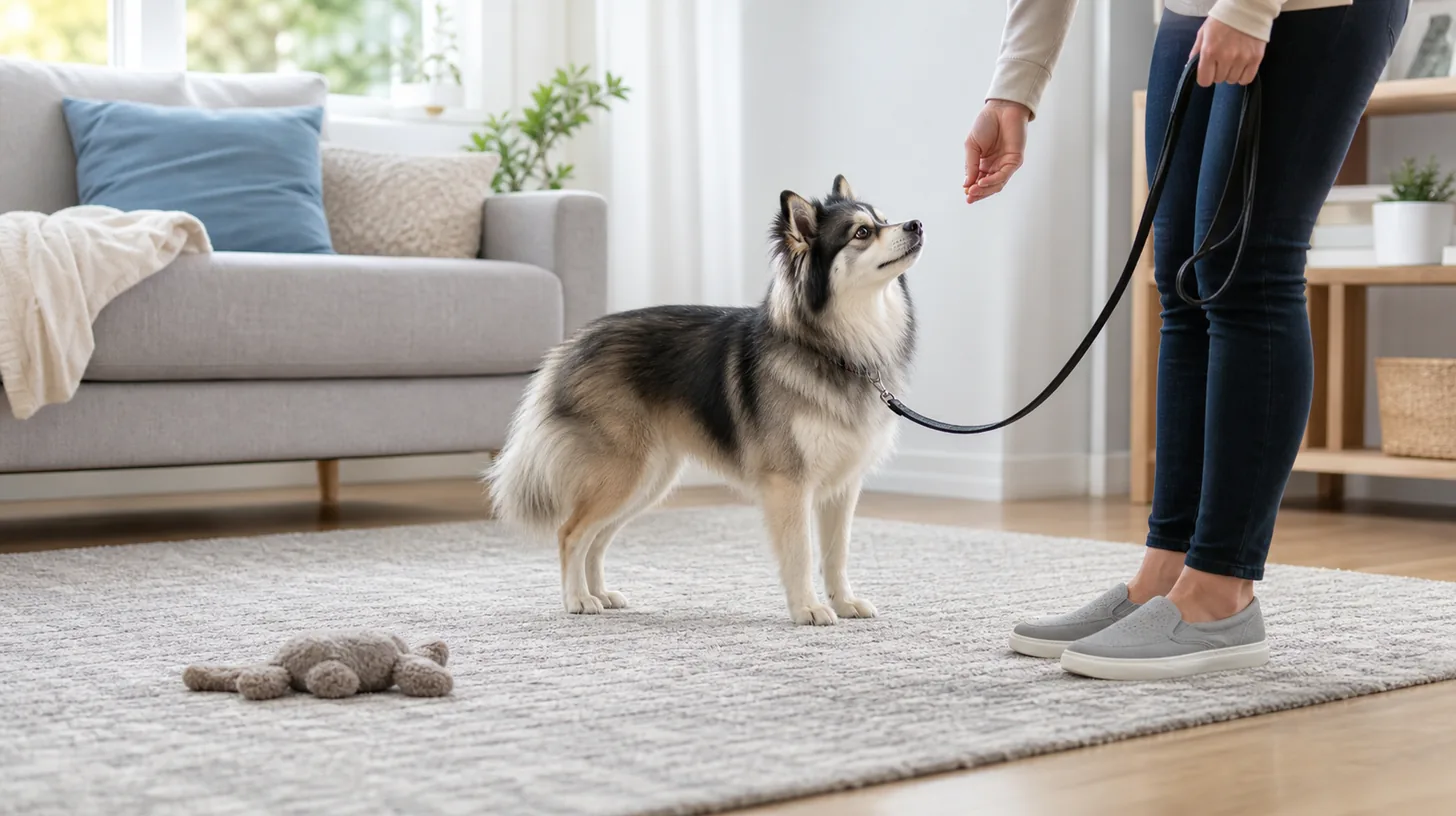
Put the practice item on the floor and cover it completely with your hand or a sturdy cup. Keep the Pomsky on leash only as a quiet safety backup; the leash should not pull the dog away. Wait for a head turn or a step away, mark it, and reward at your leg. Once that pattern is reliable, uncover part of the item. Cover it again if the dog moves toward it, then make the next repetition easier.
Add the words “leave it” immediately before presenting the covered item, not while the dog is already struggling to reach it. Say the cue once. If the dog cannot disengage, increase distance, use a less interesting object, or cover it more completely. A cue is information, not pressure. The floor stage is ready to progress when the dog can hear the cue, look away from the protected item, and return attention without leash tension.
Add distance and real-life distractions
Change one variable at a time. First increase the time the object is visible, then move it slightly, then practice from a standing position, and only later change rooms. Use neutral objects such as a clean tissue box or toy before practicing around food. Outdoors, begin far from the target and use a secure harness and leash. Distance is a training tool: a dog that can disengage at fifteen feet is learning more than a dog repeatedly pulled away at two feet.
Build a simple progression log with four columns: object, distance, environment, and response. Record whether the Pomsky turned away on the first cue, needed a reset, or could not respond. This makes training decisions concrete. Real-world items may be dangerous, contaminated, or legally protected, so do not stage practice with medication, wildlife, cooked bones, sharp trash, toxic plants, or anything the dog could swallow during an error.
Separate leave it from drop it
Use “leave it” before possession and “drop it” after possession. Mixing the two can make both less reliable because the dog cannot predict which behavior earns reinforcement. If a Pomsky already has a safe toy, practice the separate trade-and-release exercise rather than repeating “leave it.” If the dog has a hazardous object, use distance, a high-value trade when safe, and professional emergency advice as appropriate.
Do not test the leave-it cue by placing a favorite item within reach and waiting for failure. The aim is to arrange successful choices and gradually strengthen them. A dog that disengages from kibble in the kitchen is not automatically ready to turn away from roadkill, another animal, or an unknown substance outdoors. Continue using a leash, secure storage, closed bins, and physical barriers even after the cue improves.
Prevent common training mistakes
Repeated cues are a common source of noise. “Leave it, leave it, leave it” teaches that the first words are optional. Say the cue once, then change the setup if the dog cannot respond. Another mistake is showing a reward before the dog disengages; that can turn the exercise into following visible food rather than making a choice. Keep the reward hidden until after the marker.
Avoid intimidation, leash corrections, forced mouth handling, alpha rolls, spray, shock, or deliberate frustration. Reward-based training does not mean allowing access to danger. It pairs physical management with a teachable alternative. Short sessions of one to three minutes are usually more useful than a long session that ends in pawing, barking, grabbing, or loss of interest. Stop and reassess if behavior suddenly changes or if pain, panic, or guarding may be involved.
Use the cue safely in daily life
Practice during ordinary routines: pause before passing a dropped glove, turn away from food preparation, or move past a calm object on a walk. Reinforce with food, praise, movement, sniffing access somewhere else, or another safe activity. Vary the reward but keep the outcome worthwhile. Continue rewarding difficult successes rather than assuming the cue is permanently installed.
Leave it is one layer in a safety system. Store hazards out of reach, teach household members the same cue and release word, inspect walking routes, and keep identification current. If a Pomsky repeatedly steals objects, guards them, swallows non-food items, or becomes aggressive when approached, stop informal drills and consult a veterinarian and a qualified reward-based behavior professional. The goal is a reliable choice supported by management, not a claim that any cue can make risk disappear.
Sources reviewed
Each source is used only for the claim scopes listed below. None establishes a guaranteed Pomsky outcome or replaces individual professional assessment.
- American Veterinary Society of Animal Behavior: Humane Dog Training Position Statement - Supports: reward-based training; aversive-method risk; behavior change principles. Limit: Does not guarantee outcomes for an individual dog.
- American Animal Hospital Association: Lifestyle and Safety Assessment - Supports: appropriate confinement; leash, collar and harness planning; lifestyle-specific safety review. Limit: Equipment selection must account for the individual dog's anatomy, behavior, health, and environment.