Written and reviewed by A Pomsky Editorial Team. Originally published 2026-07-26; substantively reviewed July 26, 2026.
Training boundary: Use humane, reward-based methods and protect safety with management. Pain, panic, aggression, a bite history, or serious handling risk requires a veterinarian or qualified behavior professional. Read the editorial policy.
Direct answer: A Pomsky houseplant safety audit starts with a room-by-room inventory and a confirmed name for every plant. Check each identity against a veterinary toxic-plant database, move uncertain or hazardous plants behind reliable barriers, and keep dropped leaves and soil inaccessible. If exposure may have occurred, contact a veterinarian or animal poison service promptly instead of waiting for symptoms.
Houseplant safety starts with correct plant identification. A common name, a seller label, or a phone image match may be incomplete. Inventory every plant your Pomsky can reach, confirm its scientific identity where possible, check a veterinary toxic-plant database, and prevent access before an exposure occurs.
Build a Room-by-Room Plant Inventory
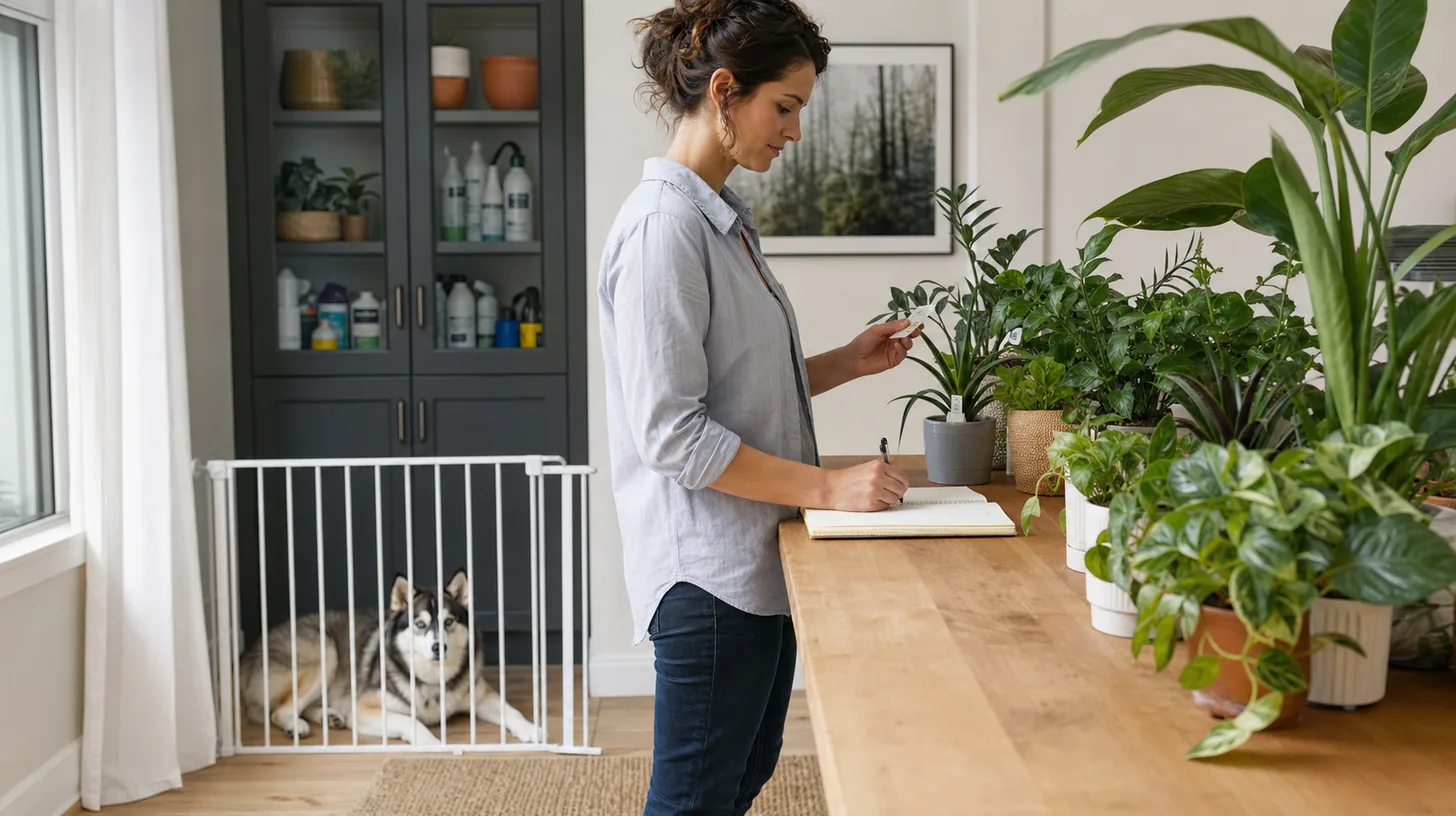
Walk through the home, balcony, garage, yard access points, and any seasonal display areas. Record each plant's location, label, source, and a clear photograph of leaves, stems, flowers, and the full plant. Include cut flowers, propagated cuttings, bulbs, potting materials, fallen leaves, and plants placed temporarily on the floor.
Do not assume a high shelf is inaccessible. A Pomsky may jump, climb furniture, pull a hanging vine, or reach debris that falls. Include rooms normally behind closed doors because doors are sometimes left open. The audit should reflect realistic access during daily life, visitors, cleaning, and moving furniture.
Confirm the Plant Identity
Use the botanical name when available. Common names can refer to different species with different risk profiles. Ask a nursery, horticulture professional, or another reliable identifier when the label is missing. Keep the original plant tag and purchase record with the inventory.
The ASPCA toxic and non-toxic plant database is a screening resource, not a diagnosis tool. Search the confirmed name and read the entry carefully. A plant absent from one database is not automatically safe, and a non-toxic designation does not mean eating large amounts of plant material or potting media cannot cause a problem.
Classify Access, Not Just Toxicity
For each plant, record whether it is within direct reach, reachable by climbing, likely to shed leaves, or handled during watering and pruning. Note whether the Pomsky has shown interest in soil, mulch, fertilizer, decorative stones, or watering trays. The safest control is often removing the hazard from the dog's environment.
Barriers should be stable and should not create a falling-pot hazard. Avoid relying only on verbal cues around a dangerous plant. Training can support management, but it cannot guarantee that a dog will ignore a plant when unsupervised, excited, hungry, or stressed.
Remove or Secure Higher-Risk Plants
Move a plant out of the dog's environment when reliable separation is not possible. Give it to a pet-free home or use a genuinely inaccessible locked room. A hanging basket is not sufficient if leaves, flowers, or water fall into reach. Check that shelves cannot tip and that vines cannot be pulled down.
Do not apply bitter sprays, pesticides, essential oils, or homemade deterrents without confirming that the product and its use are safe. A deterrent may introduce another exposure and does not solve fallen debris or soil access. Physical separation is easier to verify.
Manage Soil, Fertilizer, and Plant Debris
The plant is only one part of the setup. Fertilizers, systemic pesticides, insect treatments, moldy soil, compost, cocoa mulch, bulbs, and decorative products may have separate hazards. Store gardening products in closed original containers and follow their labels. Do not leave mixed solutions or watering cans accessible.
Clean fallen leaves and flowers promptly. Use a covered bin that the Pomsky cannot open. After pruning or repotting, count tools and products, sweep the work area, and wash hands before handling food or the dog's supplies. Keep product packaging so professionals can identify an exposure accurately.
Prepare an Exposure Information Card
Keep your veterinarian, nearest emergency clinic, and animal poison service contact details in an easy-to-find location. Record the dog's current weight as measured by the veterinary team, relevant medical conditions, and medications. Add the plant inventory location so another caregiver can find it.
Do not wait to create this information after an incident. A pet sitter should know where the card is and should be instructed not to induce vomiting or give food, milk, oils, salt, charcoal, or medication unless a veterinarian or poison professional directs it for that specific exposure.
Respond to Suspected Plant Contact
First prevent further access without putting your hands near a dog that is guarding material. Collect the plant label, a photograph, the approximate amount, the time, the part of the plant involved, and any product used on it. Contact a veterinarian or animal poison service promptly for individualized instructions.
Do not use symptoms alone to decide that the exposure is harmless. Effects can vary by species, plant part, amount, preparation, and individual dog. Breathing difficulty, collapse, seizures, severe weakness, repeated vomiting, marked swelling, or rapidly worsening signs require emergency veterinary direction.
Recheck the Home After Changes
Repeat the audit when you buy a plant, receive flowers, decorate for a holiday, move home, hire a pet sitter, or change the dog's access. Review balconies and yards seasonally because plants and landscaping products change. Remove outdated inventory entries only after confirming the plant has actually left the environment.
The goal is not a decorative list of supposedly safe plants. It is a verified system: correct identity, realistic access assessment, physical prevention, product control, and a professional response plan. That system remains useful even when the household plant collection changes.
Audit Plants Outside the Main Home
Include patios, shared hallways, office spaces, holiday destinations, pet-sitter homes, and vehicles used to transport plants. A Pomsky may encounter unfamiliar landscaping during toilet breaks or visit a room where household controls are absent. Ask hosts to move plants and gardening products before arrival.
For a rental or shared property, do not alter landscaping without authorization. Use a leash, barrier, route change, or separate exercise area to prevent access while confirming plant identity. Pick up fallen fruit, seeds, bulbs, and pruned material only when it is safe and permitted.
Add seasonal notes to the inventory. Outdoor plants may flower, fruit, shed seeds, or be treated with chemicals at different times. Snow cover and leaf fall can hide material rather than remove the risk.
Give pet sitters the relevant portion of the inventory and professional contact card. They should not rely on a generic plant-identification app during an incident. A wider-location audit keeps the prevention plan connected to the places the Pomsky actually visits.
Sources reviewed
Each source is used only for the claim scopes listed below. None establishes a guaranteed Pomsky outcome or replaces individual professional assessment.
- ASPCA: Toxic and Non-Toxic Plants - Supports: plant toxicity lookup; household plant screening. Limit: Common names can be ambiguous; confirm the plant and contact a professional after exposure.
- ASPCA: Animal Poison Control - Supports: poison emergency routing; information to collect after exposure. Limit: Never replace urgent veterinary or poison-control instructions with article advice.