Written and reviewed by A Pomsky Editorial Team. Originally published 2026-07-26; substantively reviewed July 26, 2026.
Training boundary: Use humane, reward-based methods and protect safety with management. Pain, panic, aggression, a bite history, or serious handling risk requires a veterinarian or qualified behavior professional. Read the editorial policy.
Direct answer: Verify current trail rules, weather, surface, route exits, veterinary access, water, identification, leash equipment, and the individual Pomsky's current condition before starting. Set mandatory reassessment points and turn around when gait, paws, breathing, temperature, behavior, weather, terrain, or recovery trends worsen. No mileage, duration, or destination is required.
A hike should begin with a go, modify, or do-not-start decision and continue with repeated turnaround checks. Breed labels do not determine safe distance, temperature, terrain, or duration. The individual Pomsky's current health, conditioning, behavior, equipment, weather, surface, water, wildlife, route, and recovery all matter, and the safest choice may be to return early.
Verify Rules and Access
Check whether dogs are allowed, where leashes are required, seasonal closures, wildlife restrictions, parking hours, permits, and waste rules from the current land manager. Identify the nearest available veterinary service and whether mobile coverage is unreliable.
Do not rely on an old blog or memory of a previous visit. Rules, fire conditions, water access, and trail status can change quickly.
Review the Individual Pomsky
Consider recent activity, conditioning, age, veterinary guidance, medication, gait, paws, appetite, hydration, breathing, and recovery from ordinary walks. A dog that is unwell, painful, unusually tired, or not conditioned for the route should not be tested on a trail.
No universal mileage applies. Puppies, senior dogs, and dogs with health or behavior concerns need individualized limits from appropriate professionals.
Check Weather and Surface
Review temperature, humidity, sun exposure, precipitation, wind, air quality, storm risk, and how conditions will change before the planned return. Inspect surface type, grade, shade, water crossings, snow, ice, mud, and hot rock or pavement.
Cancel or shorten when conditions cannot be managed. A cool trailhead does not guarantee a cool exposed ridge later, and a forecast does not replace observation.
Choose a Route With Exit Options
Select a route shorter than the Pomsky's demonstrated comfortable capacity, with clear turnaround landmarks and escape options. Account for the return distance before moving outward. Out-and-back routes require enough reserve to retrace every step.
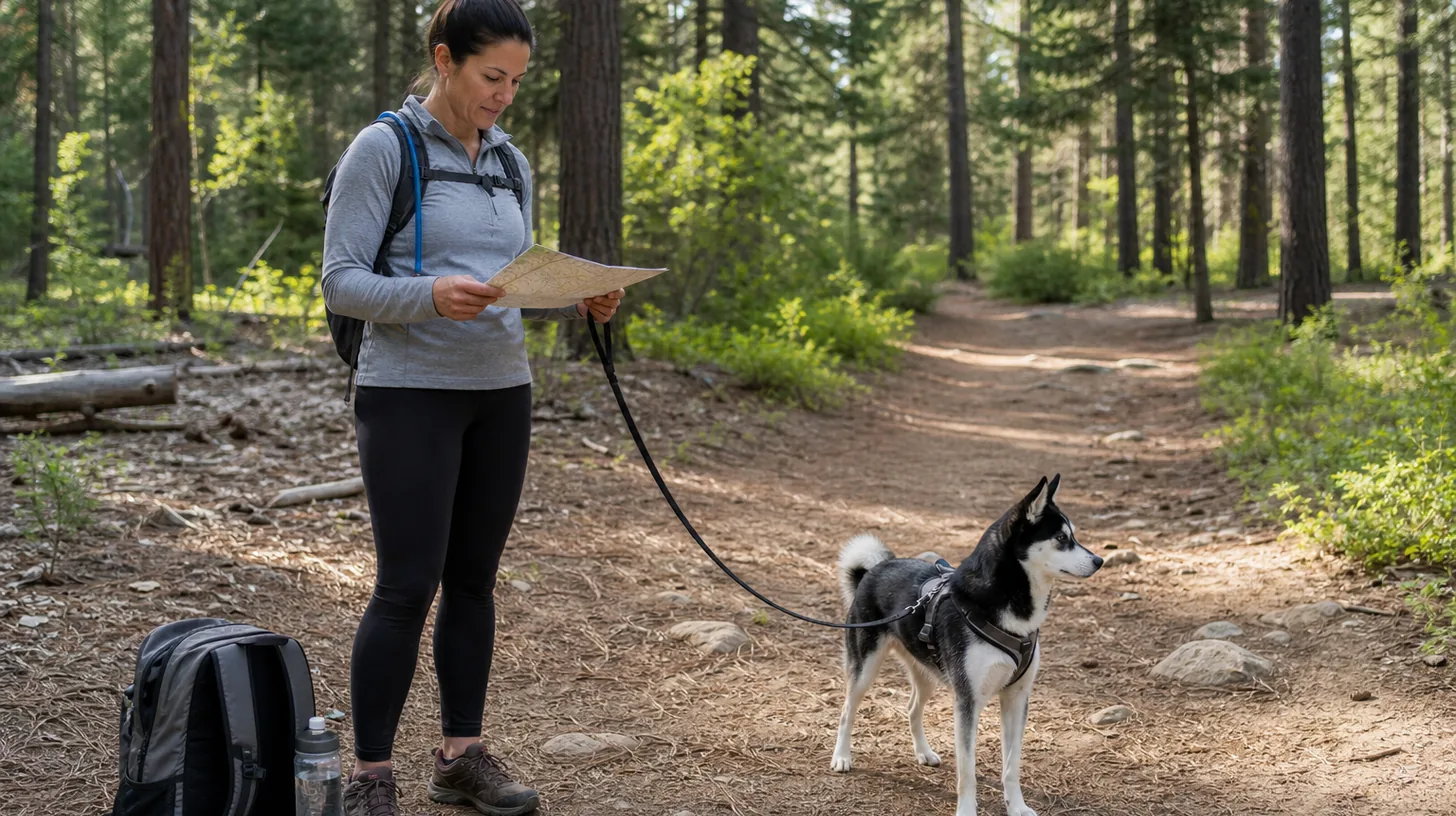
Carry a map appropriate to the area and do not depend only on a phone battery. Tell a responsible person the route and expected return when the setting warrants it.
Inspect Identification and Equipment
Check current identification, microchip record reference, harness or collar fit, leash, clip, stitching, and any backup attachment used under the established plan. Pack waste bags, water, a clean bowl, weather-appropriate supplies, and a bounded first-aid or contact kit.
Do not add untested equipment at the trailhead. Boots, packs, cooling items, and carriers require prior fit and acclimation. No product makes a dog escape-proof or heat-proof.
Manage Water and Food Conservatively
Carry sufficient known safe water for the Pomsky and caregiver. Prevent drinking from unknown standing or flowing water unless authoritative local guidance and the veterinary plan support it. Keep food and waste secured from wildlife.
Rewards should fit the daily feeding plan. A hike is not the time to introduce unfamiliar treats, supplements, or a new hydration mixture.
Start Below the Planned Pace
Allow time for toileting and calm orientation, then begin at an easy pace. Keep the leash controlled without constant tension and prevent chasing wildlife, approaching cliff edges, entering unsafe water, or greeting every dog and person.
Early excitement can hide fatigue. The caregiver sets a sustainable outing rather than following the Pomsky until the dog stops.
Use Scheduled Turnaround Checks
At predetermined landmarks or intervals, assess gait, paw condition, breathing, alertness, body temperature cues, willingness to move, behavior, water intake, weather, surface, and the distance still required to return. Compare with the individual dog's normal response.
Turn around when any variable trends in the wrong direction, even if the planned destination is close. Reaching a viewpoint is not a safety requirement.
Respond to Environmental Hazards
Create distance from wildlife, livestock, plants, bait, waste, fishing gear, cyclists, horses, and other trail users. Follow land-manager guidance. Do not allow the Pomsky to investigate carcasses, droppings, unknown food, or chemical residue.
Smoke, lightning, flood risk, falling branches, unstable surfaces, or deteriorating visibility can require immediate retreat. Avoid creating a photo or training opportunity near a hazard.
Protect Paws and Movement
Inspect paws during breaks without forcing. Look for cuts, debris, pad change, nail injury, and gait asymmetry. Adjust or stop before a small problem becomes a long return over damaging terrain.
Do not apply unverified products or continue because the Pomsky appears eager. Pain and fatigue are not always obvious from enthusiasm alone.
Know the Urgent Stop Signs
Collapse, marked breathing difficulty, severe weakness, disorientation, repeated vomiting, significant injury, uncontrolled bleeding, suspected poisoning, heat-related concern, or inability to walk requires urgent action and veterinary guidance. Move to safety without adding avoidable risk to people.
Use the emergency contacts and transport plan prepared before departure. Do not give human medication or improvise treatment outside professional direction.
Assess Recovery After the Hike
Provide a calm appropriate recovery setting and observe gait, breathing, appetite, drinking, elimination, paws, behavior, and return to normal activity. Record route, conditions, duration, turnaround point, and recovery.
Delayed or persistent change should influence the next outing and may require veterinary review. Do not increase distance merely because the Pomsky completed the route once.
Improve the Next Decision
Use evidence from the actual dog rather than a fixed breed expectation. Shorten, flatten, cool, or simplify the next route based on response. Build conditioning gradually under appropriate guidance.
A sound hiking plan treats turning around as success. The caregiver verifies the setting, begins with reserve, reassesses repeatedly, and returns before weather, terrain, behavior, or physical response exceeds the Pomsky's individual limits.
Make the Trailhead Decision Explicit
Before leaving the vehicle area, state one decision: go as planned, use the shorter route, or do not start. Record the current weather, surface, dog response, equipment result, and first mandatory turnaround point. A vague intention to see how it goes can allow small concerns to accumulate. If the first check is uncertain, choose the conservative option and use a familiar lower-risk activity instead. The decision can become more conservative during the outing but should never become more ambitious because the Pomsky appears excited at the trailhead.
Share that decision with every adult in the group so nobody quietly extends the route after departure.
Also name the person responsible for making the final return decision when observations or preferences differ.
Sources reviewed
Each source is used only for the claim scopes listed below. None establishes a guaranteed Pomsky outcome or replaces individual professional assessment.
- American Animal Hospital Association: AAHA-AVMA Canine Preventive Healthcare Guidelines - Supports: preventive exams; individual risk assessment; parasite and vaccination planning. Limit: The veterinarian sets the schedule for the individual dog and location.
- U.S. Centers for Disease Control and Prevention: Pet Emergency Preparedness - Supports: evacuation planning; pet records; emergency supplies; disaster readiness. Limit: Local emergency authority instructions take priority.
- American Animal Hospital Association: Lifestyle and Safety Assessment - Supports: appropriate confinement; leash, collar and harness planning; lifestyle-specific safety review. Limit: Equipment selection must account for the individual dog's anatomy, behavior, health, and environment.