Written and reviewed by A Pomsky Editorial Team. Originally published 2026-07-26; substantively reviewed July 26, 2026.
Training boundary: Use humane, reward-based methods and protect safety with management. Pain, panic, aggression, a bite history, or serious handling risk requires a veterinarian or qualified behavior professional. Read the editorial policy.
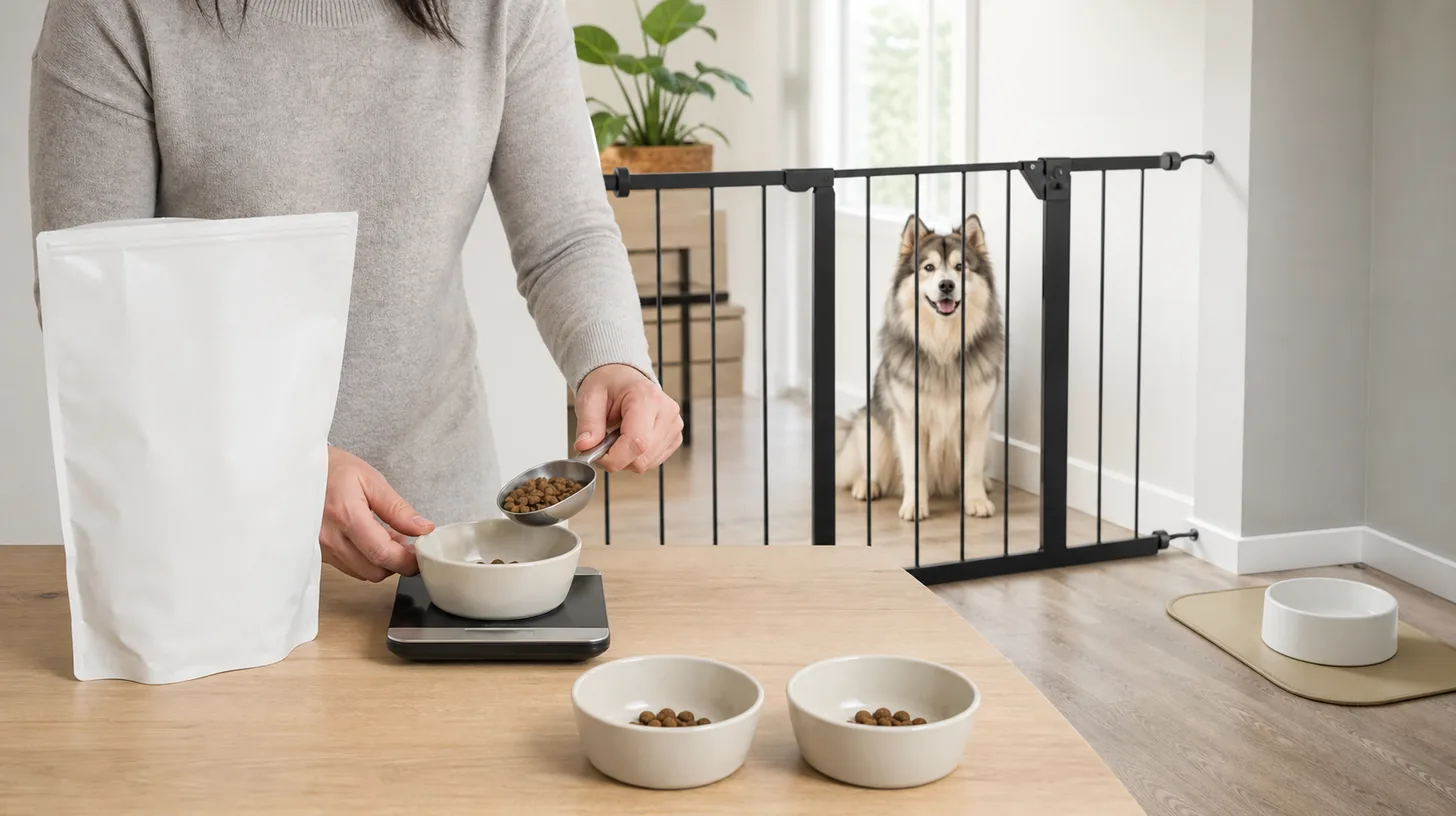
Direct answer: Start with the veterinarian-directed food, amount, and unit. Use a clean dry setup to compare several ordinary scoop portions on a suitable kitchen scale when applicable, then standardize one tool and technique across caregivers. Recheck after changing food or equipment and do not turn measurement precision into an independent calorie prescription.
Consistent food measurement helps caregivers follow an individualized feeding plan and describe intake accurately. It does not determine how much every Pomsky should eat. Start with the veterinarian-directed amount and unit, compare the repeatability of the household tool, standardize one method, and record any change rather than making an independent calorie prescription.
Confirm the Feeding Instruction
Write the exact food, formulation, daily amount, unit, meal division, treat plan, and person who provided the instruction. Clarify whether the amount refers to volume, mass, package units, cans, pouches, or another measure.
Do not convert between cups, scoops, grams, ounces, and calories by guesswork. Product density and piece size vary. Ask the veterinarian or manufacturer for the information needed to follow the plan.
Identify Every Measuring Tool
Collect the scoops, cups, spoons, bowls, automatic feeders, and kitchen scale used by all caregivers. Remove unmarked containers and note tools that look similar but have different capacities.
A line on a cup may not match the unit assumed by the user. Decorative bowls and food-storage scoops are not automatically calibrated. Use readable markings and product information where available.
Prepare a Clean Test Setup
Use the current food, a clean dry tool, a stable suitable kitchen scale when mass measurement applies, and a clean container. Keep the Pomsky behind a barrier so food is not grabbed during repeated measurements.
Follow scale and food-storage directions. Place the setup away from moisture, raw food, cleaners, medication, and human meal preparation. Return food safely after the check only when hygiene and product directions permit it.
Check the Scale Before Use
Place the scale on a hard level surface, confirm the correct unit, and use the tare function with the empty container. Follow manufacturer instructions for calibration, batteries, maximum load, cleaning, and storage.
Do not use a damaged, unstable, or unsuitable scale. A household comparison is a consistency check, not a laboratory certification. Replace equipment that gives erratic readings.
Compare Repeated Scoop Portions
Fill the scoop using the ordinary household technique, level or leave it as the plan specifies, then weigh the portion. Empty and repeat several times. Record each result without adjusting mid-test to reach a preferred number.
Variation shows how technique affects the portion. It does not prove that one mass is medically correct. Discuss a meaningful discrepancy with the veterinarian before changing the prescribed intake.
Standardize the Technique
Choose one clean tool, one fill method, one level method, and one unit. Photograph the approved setup without sensitive information and demonstrate it to every caregiver. Store the tool with the food in a clean dry location.
Avoid terms such as handful, small scoop, or heaping cup. If mass measurement is part of the care plan, pre-portion meals or provide the exact scale sequence so another person can repeat it.
Include Treats and Training Food
Identify whether rewards come from the measured regular diet or are additional foods. Use the existing treat and reward log when several caregivers train the Pomsky. Do not silently reduce a meal to compensate unless the care plan explains how.
Medication foods, chews, table food, and enrichment portions also affect the intake record. Give the veterinarian the complete pattern rather than only the bowl amount.
Coordinate Canned and Mixed Feeding
For cans, pouches, rolls, or mixed diets, ask how the instruction should be measured and stored after opening. Use package and veterinary directions. Do not assume that a fraction of a package has the same mass or energy across products.
Label opened food with the date and preserve the original package identity and lot information. Prevent cross-contamination and discard food under product directions.
Check Automatic Feeders Separately
Measure the actual output of each programmed portion several times using the food currently dispensed. Kibble shape, hopper level, battery condition, jams, and settings can affect delivery. Observe operation rather than trusting the display alone.
Keep cords and small parts inaccessible. Automatic equipment does not replace daily confirmation that the Pomsky received, ate, and tolerated the intended meal.
Record Changes in Food or Tools
Repeat the accuracy check after changing formula, kibble size, scoop, scale, feeder, caregiver, storage method, or veterinary plan. Do not keep an old gram conversion for a new product without verification.
Record date, food identity, lot when relevant, tool, method, repeated results, and final agreed routine. Preserve the original veterinarian instruction alongside the household procedure.
Review Weight and Body Condition Professionally
Follow consistent weight measurement and veterinarian-confirmed body-condition review. Appetite, weight, and shape changes have many possible causes. A precise scoop does not prove that the diet or amount is suitable.
Contact the veterinarian for unexplained weight change, appetite change, vomiting, diarrhea, increased thirst, medication effects, or other health concerns. Do not respond by independently restricting food or increasing exercise.
Create a Caregiver Handoff
Place a concise instruction near the feeding station: exact product, tool, unit, amount per meal, meal times, reward accounting, storage, and whom to contact about a discrepancy. Keep private medical detail in the secure care record.
The final system should produce repeatable portions and an honest intake history. Measurement accuracy supports the care plan; it does not create one. The veterinarian determines individual nutrition goals, while caregivers make the chosen tool and technique consistent.
Audit One Full Feeding Day
Observe one ordinary day from storage opening through the final meal. Record who measured each portion, which tool and unit were used, what remained in the bowl, every reward or enrichment portion, and any unplanned food. Check that the written total matches what was actually offered.
Use discrepancies to improve the handoff, not to blame a caregiver or retroactively alter the record. A missing snack entry, inconsistent scoop, or automatic-feeder output can be corrected prospectively. Share the complete day with the veterinarian when reviewing intake, weight, or appetite. Repeat the audit after a meaningful routine change.
Keep the scale, scoop, and feeding surface clean and dry between uses. Replace faded instructions or damaged tools before another caregiver has to guess at the intended unit or technique.
Store the written method with the current food record so an outdated instruction cannot remain beside a newly changed product.
Sources reviewed
Each source is used only for the claim scopes listed below. None establishes a guaranteed Pomsky outcome or replaces individual professional assessment.
- American Animal Hospital Association: 2021 AAHA Nutrition and Weight Management Guidelines - Supports: nutrition screening; weight and body-condition monitoring; unexplained weight change as a risk factor; extended nutritional evaluation. Limit: A general article cannot diagnose the reason for weight loss or prescribe calories, diets, tests, or treatment.
- World Small Animal Veterinary Association: Global Nutrition Guidelines - Supports: nutrition assessment; body condition; individual feeding review. Limit: Not a brand endorsement and not a fixed ration calculator.
- World Small Animal Veterinary Association: Selecting a Pet Food for Your Pet - Supports: manufacturer evaluation; food selection questions; quality-control review. Limit: Do not turn the questions into a universal approved-brand list.