Written and reviewed by A Pomsky Editorial Team. Originally published 2026-07-26; substantively reviewed July 26, 2026.
Training boundary: Use humane, reward-based methods and protect safety with management. Pain, panic, aggression, a bite history, or serious handling risk requires a veterinarian or qualified behavior professional. Read the editorial policy.
Direct answer: Record each measured food amount offered and eaten, treats, water observations, appetite, stool, vomiting, medications, activity, and relevant events at consistent times. Summarize repeated changes and share the original entries with a veterinarian. The log supports communication but cannot diagnose illness or authorize independent diet or treatment changes.
A feeding, appetite, and stool log helps a caregiver report what actually happened rather than relying on memory. Record measured food, treats, water observations, appetite, stool, medications, activity, and unusual signs consistently. The log can reveal a pattern worth discussing, but it cannot diagnose disease or justify changing medication, prescription food, or calorie intake without veterinary guidance.
Define the Purpose and Review Period
Decide why the log is being kept: routine baseline, diet transition, veterinary follow-up, appetite concern, or multi-caregiver coordination. Set a start date and a review point. A focused seven- or fourteen-day record is often easier to complete accurately than an indefinite diary.
Write the veterinarian's existing instructions at the top, including which changes require a call. Do not invent thresholds for a Pomsky based on breed averages. Age, body condition, health, activity, environment, and treatment all affect interpretation.
Identify Every Food Source
Record the exact main diet, recipe, form, lot when relevant, and measured amount offered. Include treats, dental chews, training rewards, table food, supplements, food-filled toys, and access to another pet's bowl. Small extras can be important context.
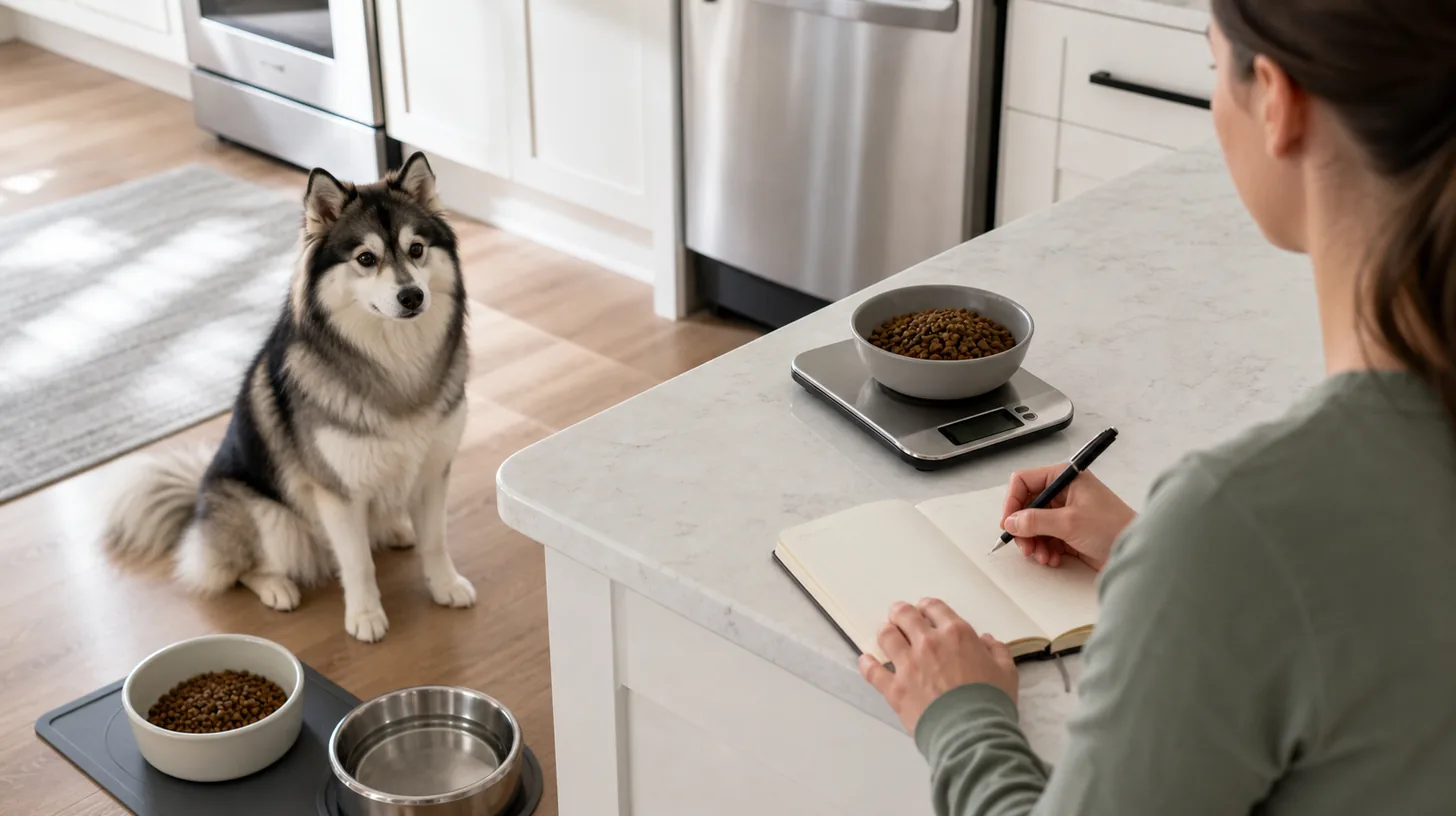
Use a gram scale or a clearly defined measuring tool when practical. “One bowl” or “a handful” cannot be compared reliably between caregivers. If food is left available, record the measured starting and remaining amounts rather than assuming the Pomsky ate all of it.
Separate Offered, Eaten, and Refused Amounts
For each meal, record the time, amount offered, amount eaten, and when leftovers were removed. Note whether the Pomsky approached immediately, ate slowly, walked away, required prompting, or refused. Describe behavior without labeling the dog as picky or stubborn.
A single incomplete meal can have many explanations, while repeated refusal or appetite change can be clinically important. Follow the veterinarian's routing instructions, especially when appetite change accompanies vomiting, pain, lethargy, breathing difficulty, abdominal enlargement, toxin risk, or medication use.
Add Water Observations Without Guessing
When accurate measurement is possible and safe, record water added and remaining, accounting for spills and multiple animals. Otherwise note observable changes such as more frequent bowl visits, emptying the bowl unusually quickly, or reduced interest. Do not restrict water to improve the record.
Shared bowls, fountains, outdoor water, wet food, weather, activity, and household schedule limit precision. Label uncertain observations instead of producing a false number. Marked changes in drinking or urination deserve veterinary discussion.
Use a Consistent Stool Description
Record the time, location, approximate volume, form, color changes, mucus, visible foreign material, straining, and whether blood is suspected. A simple veterinarian-approved stool scale can improve consistency, but do not diagnose from a photograph or score alone.
If several dogs share a yard, supervise enough toilet trips to identify the correct dog. Photograph unusual stool when useful for veterinary communication, while respecting privacy and hygiene. Repeated diarrhea, black stool, visible blood, severe straining, or associated illness signs require prompt professional guidance.
Record Vomiting and Regurgitation Carefully
Note the time relative to food or water, appearance, frequency, behavior before and after, and whether the event was witnessed. Do not assume vomiting and regurgitation are interchangeable. Preserve a photograph or sample only if the clinic requests it and it can be handled safely.
Repeated episodes, inability to keep water down, abdominal pain, unproductive retching, weakness, suspected obstruction, or toxin exposure can be urgent. The log should speed contact with a veterinarian, not become a reason to continue observing a deteriorating dog.
Include Medications and Supplements
Record each administered dose exactly as labeled, along with time, food context, missed or refused doses, and any instructed observations. List flea, tick, heartworm, dental, and other products when relevant. Do not hide flavored medication inside unmeasured extra food without recording it.
Never double a dose or stop treatment based on the log unless the prescribing veterinarian directs that change. If a medication is vomited, refused, or given late, contact the clinic for case-specific instructions rather than applying a general internet rule.
Add Activity and Environmental Context
Briefly note unusual exercise, travel, heat, stress, boarding, visitors, scavenging opportunities, access to trash, and major routine changes. Context can help explain why one day differs, but it should not be used to dismiss persistent signs.
Keep entries factual and short. “Thirty-minute leash walk at 7 a.m.; hot afternoon; no evening walk” is more useful than “normal day.” Avoid turning the log into a broad behavior journal that becomes difficult to review.
Review Trends at the Same Grain
Compare similar meals and days. Look for repeated appetite decline, increasing leftovers, stool changes, vomiting frequency, water changes, or associations with a new food or medication. One unusual entry is not automatically a trend, and a trend is not a diagnosis.
Summarize the review period in a few lines: what stayed stable, what changed, when it began, and which source data supports the summary. Keep the detailed log available so the veterinarian can check the interpretation.
Share a Clean Veterinary Summary
Bring the product labels, measured amounts, medication list, recent weight and body-condition record, photographs, and the log to the appointment. State what question you need answered. Do not present a self-selected diet change as a completed treatment plan.
Ask whether the logging fields or frequency should change and which signs require earlier contact. The veterinarian may need an examination or testing that the record cannot replace. Update the plan with explicit instructions after the visit.
Protect Accuracy in Multi-Caregiver Homes
Use one shared sheet or app and require each caregiver to initial entries. Pre-measure meals when appropriate, label treats, and close access to unrecorded food. Review the record at handoff instead of assuming someone else documented a meal or medication.
Stop logging once its purpose is complete or change to a lighter maintenance record. A useful Pomsky feeding and appetite log is consistent, bounded, and honest about uncertainty. Its value is better communication and safer trend recognition, not a home diagnosis.
Keep the original entries rather than rewriting them after a later interpretation. Corrections should be dated and explained so the clinical timeline remains trustworthy. When the veterinarian changes the diet or monitoring plan, begin a clearly labeled new phase instead of mixing the old and new instructions.
Sources reviewed
Each source is used only for the claim scopes listed below. None establishes a guaranteed Pomsky outcome or replaces individual professional assessment.
- World Small Animal Veterinary Association: Global Nutrition Guidelines - Supports: nutrition assessment; body condition; individual feeding review. Limit: Not a brand endorsement and not a fixed ration calculator.
- American Animal Hospital Association: 2021 AAHA Nutrition and Weight Management Guidelines - Supports: nutrition screening; weight and body-condition monitoring; unexplained weight change as a risk factor; extended nutritional evaluation. Limit: A general article cannot diagnose the reason for weight loss or prescribe calories, diets, tests, or treatment.