Written and reviewed by A Pomsky Editorial Team. Originally published 2026-07-26; substantively reviewed July 26, 2026.
Training boundary: Use humane, reward-based methods and protect safety with management. Pain, panic, aggression, a bite history, or serious handling risk requires a veterinarian or qualified behavior professional. Read the editorial policy.
Direct answer: Create one veterinarian-approved daily reward supply, record each product, measured amount, handler, behavior, and time, and reconcile leftovers at day's end. Include rewards taken from regular meals and foods used for medication or enrichment. Review the complete diet and body-condition record with a veterinarian rather than inventing a breed-wide treat allowance.
There is no universal number of training treats for every Pomsky. Rewards must be considered within the dog's complete daily intake, body condition, health, life stage, main diet, and veterinarian-informed plan. A treat and training reward log records source, amount, purpose, and context so caregivers can reinforce behavior without losing track of total intake.
Define What Counts as a Reward
Include commercial treats, pieces of regular food, dental chews, food toys, table food, supplements used as rewards, and food delivered by neighbors, walkers, trainers, or children. A tiny item repeated many times can become significant.
Nonfood rewards such as sniffing, toys, access, and play can also be noted, but keep them separate from intake totals. The purpose is accurate accounting, not reducing all reinforcement to calories.
Record the Exact Product or Food
Write the product name, form, package information, and serving data. For regular kibble used in training, record the amount removed from the measured meal. For homemade or fresh food, identify the actual ingredient and preparation.
Do not rely on “small treat” as a unit. Pieces vary. Weigh a representative training portion when practical or use a clearly defined container filled from the measured daily amount.
Premeasure a Session Allowance
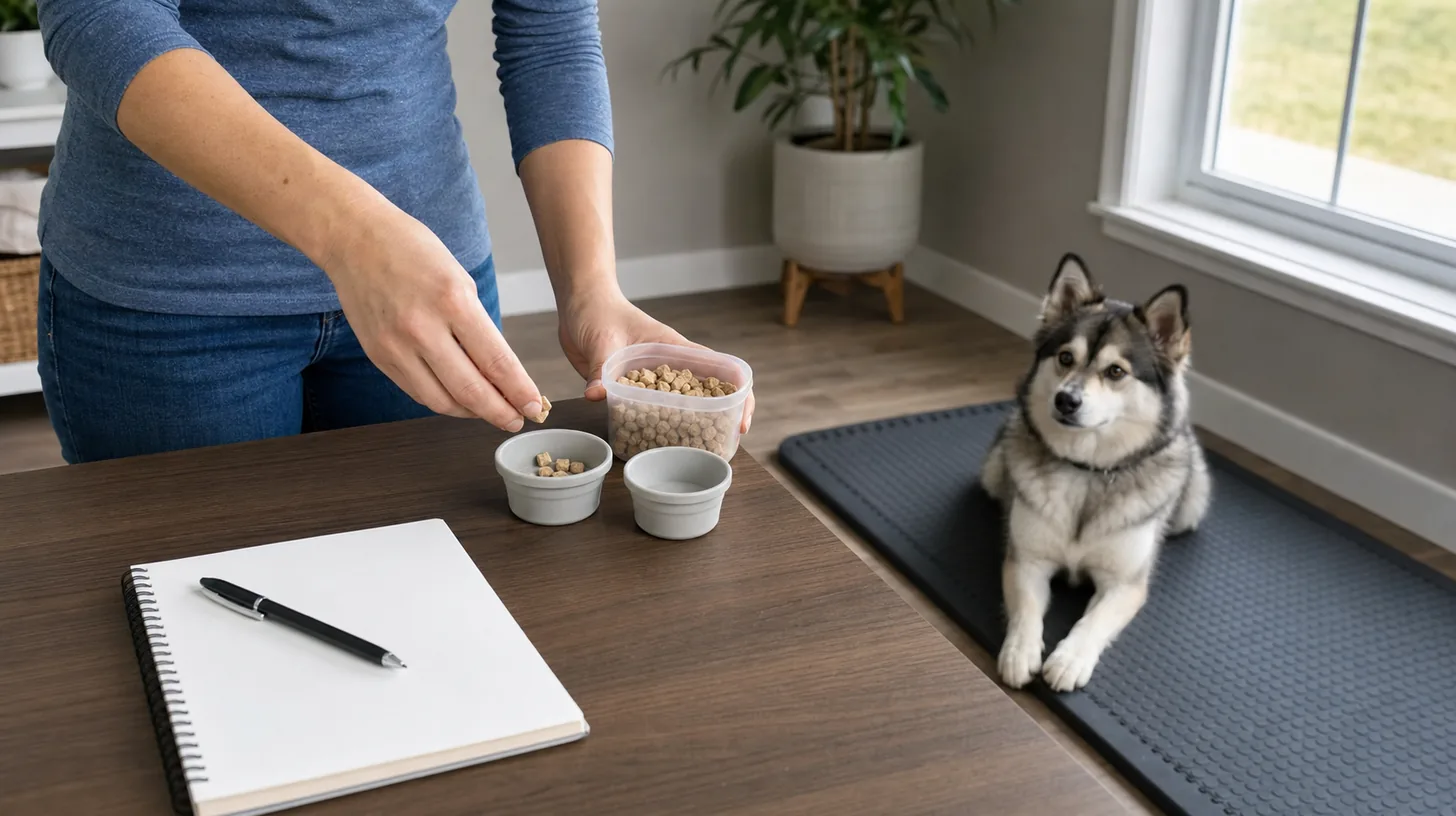
Place the planned rewards for one session in a container before training. Return unused pieces to the appropriate storage or record disposal. Do not repeatedly reach into an unlimited package.
Premeasurement improves training mechanics because the caregiver can use small pieces and stop before the planned amount is exceeded. It does not establish that the selected amount is medically appropriate.
Log Purpose and Training Context
Record the behavior or situation: hand target, door wait, grooming cooperation, reactive-walk distance, or veterinary handling. Note session length and whether reward rate was unusually high because the environment was difficult.
This helps distinguish planned reinforcement from untracked extras. It can also show that a training setup is too difficult if large amounts are used without stable learning or recovery.
Include Every Caregiver
Use one shared log. Walkers, sitters, family members, and trainers should record rewards immediately. Prelabel containers for the day when several people participate. Children should not distribute food without adult control.
Duplicate rewards often occur because each caregiver assumes no one else has given any. A shared system prevents this without requiring the Pomsky to miss reinforcement.
Integrate With the Main Diet Plan
When appropriate for the individual dog, part of the measured complete diet can be used during training. Any meal adjustment should follow the established veterinary or nutrition plan. Do not remove nutrients indiscriminately to make room for treats.
Prescription diets, food allergies, gastrointestinal disease, growth, pregnancy, and other conditions require individualized guidance. A log supports that guidance; it cannot rewrite it.
Track Nonfood Effects
Note appetite at meals, stool changes, vomiting, itching, thirst changes, or unusual behavior without assigning a cause. Timing can support veterinary discussion but does not prove that a treat caused a sign.
Stop and obtain veterinary guidance for significant or repeated changes. Suspected poison exposure or severe signs require urgent routing, not continued treat testing.
Avoid High-Risk Reward Practices
Do not use foods known to be unsafe for dogs, bones or items that create obstruction risk, very hard items that may damage teeth, or unreviewed supplements. Match reward size and texture to the Pomsky's chewing and swallowing ability.
Keep packages secured and discard spoiled food. Training excitement can increase fast swallowing, so use tiny manageable pieces and pauses. Water should remain available according to the setting.
Review the Daily Pattern
At the end of the day, total each reward source and compare it with the planned intake record. Flag unmeasured items and explain unusual days, such as a veterinary visit or intensive training class.
Do not convert uncertain pieces into false precision. Mark the estimate and improve measurement next time. Trends over several days can be more useful than one imperfect total.
Pair the Log With Weight and Body Condition
Review reward intake alongside consistent weight and veterinarian-confirmed body-condition assessment. A change in body weight or shape can have multiple causes. Do not cut food or increase exercise solely from a home impression.
Bring the log, product labels, main diet amount, medications, activity record, and health concerns to the veterinarian. This gives the care team a more complete intake picture.
Keep Training Effective
Use sufficiently valuable rewards for the difficulty and reinforce behavior promptly. Cutting pieces smaller is different from making reinforcement rare or delayed. Food can be combined with life rewards when the Pomsky enjoys them.
If the dog refuses food during a familiar task, consider stress, environment, satiety, pain, or illness. Do not force eating or assume defiance. Make the context easier and seek guidance when refusal persists or appears suddenly.
Retire the Log When Its Job Is Done
Use detailed logging during a training increase, diet review, multi-caregiver period, or veterinary investigation, then simplify when the system is stable. Keep a lighter shared daily allowance if untracked duplication is likely.
The Pomsky treat and training reward log answers what was given, how much, by whom, and why. It does not create a breed-specific allowance. That boundary preserves both reward-based training and responsible nutrition review.
Design a Shared Daily Reward Station
At the start of the day, place the veterinarian-approved reward allowance or measured portion of the regular diet in one labeled container. Every caregiver takes rewards from that supply and records any additional item immediately. Keep medication foods and enrichment portions identified so they are not counted twice or forgotten.
Store the station securely away from children and the Pomsky. Use separate containers for animals with different diets, allergies, or medical plans. Do not refill an empty daily container without checking the log; an unexpectedly empty container is a signal to review what was given.
For training classes or walks, transfer only the planned amount into a pouch and return unused pieces promptly according to food-safety requirements. Note high-value foods separately because their size and composition may differ from routine rewards. At day's end, the remaining amount and log should reconcile. This visible system reduces accidental overfeeding while allowing handlers to reinforce promptly instead of hesitating because no one knows what the dog has already received.
Sources reviewed
Each source is used only for the claim scopes listed below. None establishes a guaranteed Pomsky outcome or replaces individual professional assessment.
- World Small Animal Veterinary Association: Global Nutrition Guidelines - Supports: nutrition assessment; body condition; individual feeding review. Limit: Not a brand endorsement and not a fixed ration calculator.
- American Animal Hospital Association: 2021 AAHA Nutrition and Weight Management Guidelines - Supports: nutrition screening; weight and body-condition monitoring; unexplained weight change as a risk factor; extended nutritional evaluation. Limit: A general article cannot diagnose the reason for weight loss or prescribe calories, diets, tests, or treatment.