Written and reviewed by A Pomsky Editorial Team. Originally published 2026-07-26; substantively reviewed July 26, 2026.
Training boundary: Use humane, reward-based methods and protect safety with management. Pain, panic, aggression, a bite history, or serious handling risk requires a veterinarian or qualified behavior professional. Read the editorial policy.
Direct answer: Weigh the Pomsky under consistent conditions and record the scale, date, food, treats, appetite, activity, and symptoms. Use a validated canine body-condition framework for rib and waist observations, compare trends rather than one number, and ask the veterinarian to confirm interpretation. Unexplained change or illness signs require veterinary review instead of a home calorie adjustment.
A monthly Pomsky weight and body-condition log should track trends under consistent conditions, not chase one “ideal” number. Record weight, rib and waist observations using a validated canine body-condition framework, appetite, activity, and relevant health context. Unexplained change, poor intake, pain, or other symptoms belongs with a veterinarian rather than a home calorie adjustment.
Define What the Log Can and Cannot Show
A scale provides body weight at one moment. A body-condition assessment considers fat coverage and shape. Neither alone diagnoses disease, determines muscle condition, or establishes a universal Pomsky target. Mixed ancestry and individual build make generic breed numbers especially limited.
The log supports comparison over time and better veterinary conversations. It should not label the dog, prescribe calories, or replace examination. Growth, pregnancy, illness, medication, aging, and changes in muscle can alter interpretation.
Choose a Consistent Weighing Method
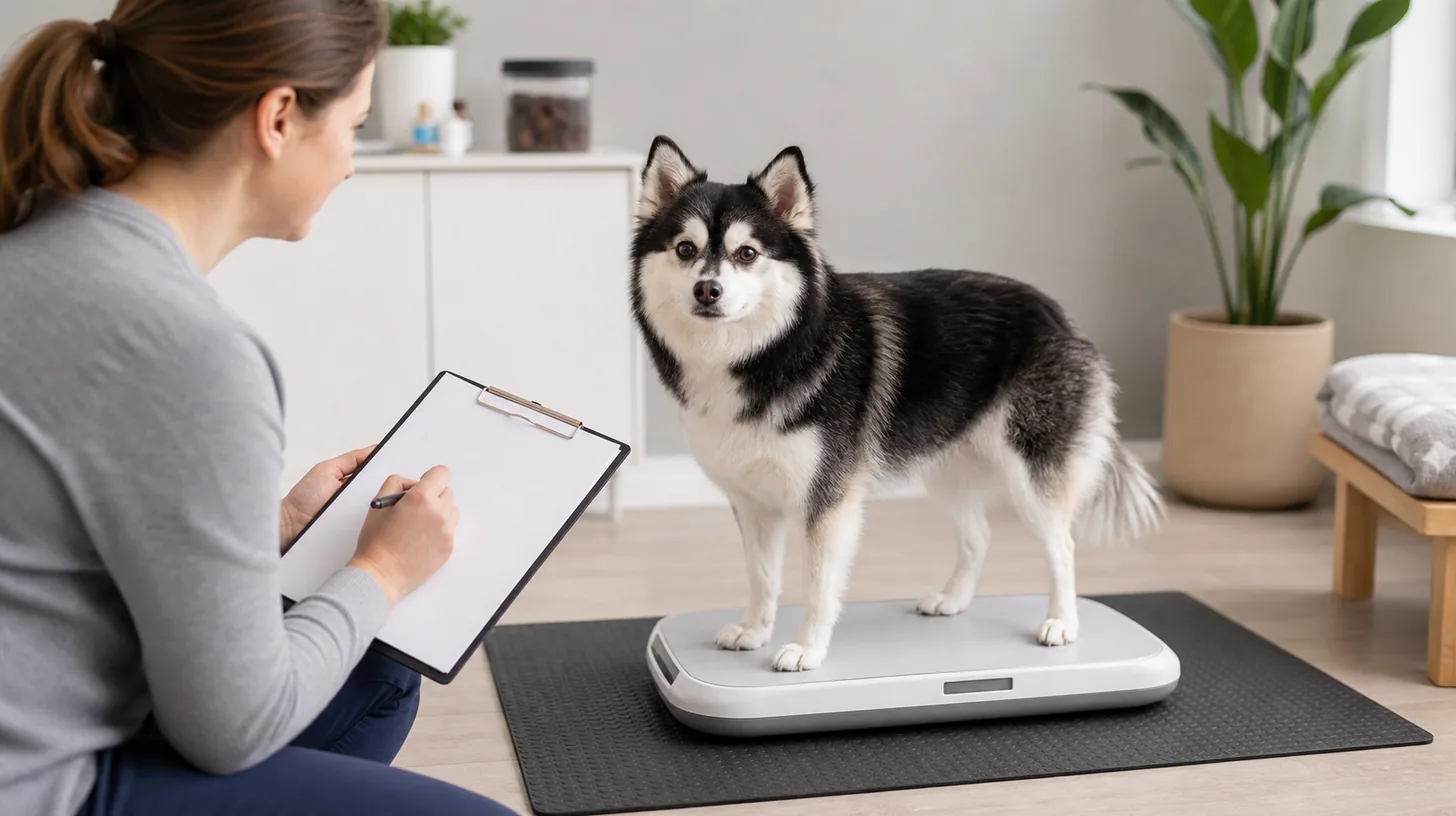
Use the same suitable scale, similar time of day, and similar relationship to meals, exercise, and elimination. Keep the floor stable and help the Pomsky stand safely. Record the date and scale rather than rounding toward an expected result.
For a small dog, a secure pet or veterinary scale is preferable. Subtracting a person’s weight while holding the dog can introduce error and may be unsafe for a struggling animal. Never force a frightened or painful dog onto equipment.
Use a Validated Body-Condition Framework
Follow a veterinary body-condition chart that describes ribs, waist, and abdominal profile. Observe and gently feel only when the Pomsky is comfortable. A thick double coat can hide shape, so visual appearance alone may mislead.
Record the selected score and the specific observations that support it. If household members disagree or cannot feel landmarks confidently, ask the veterinarian to demonstrate. Do not press hard or repeatedly handle an area that appears painful.
Add Muscle and Mobility Context
Weight can remain stable while muscle changes. Note changes in rising, stairs, jumping, gait, play, endurance, posture, and symmetry without trying to diagnose them. Older dogs and dogs recovering from illness may need a veterinary muscle-condition assessment.
Photographs can support visual comparison when taken from consistent angles on a non-slip surface, but they are optional and should remain private. Coat length, stance, and camera angle can create false differences. The examination remains more informative.
Record Food and Treat Context
Write down the food product, measured daily amount, feeding frequency, treats, chews, table food, supplements, and medication vehicles. Use the manufacturer’s stated units and a kitchen scale when the veterinarian recommends gram measurement.
Do not change several feeding variables at once based on one measurement. Feeding directions are starting information, not an individual prescription. Health status, life stage, activity, and the food’s energy density affect actual needs.
Track Appetite and Digestive Signs
Note appetite changes, food refusal, vomiting, stool changes, increased thirst, difficulty chewing, or scavenging. These observations can make a weight trend more useful. They should not be used to diagnose a cause.
Persistent or severe gastrointestinal signs, repeated vomiting, inability to keep water down, weakness, pain, or refusal to eat requires prompt veterinary advice. A food-transition plan is not appropriate when urgent signs or unexplained weight loss are present.
Compare Trends, Not Isolated Readings
Scale variation, hydration, meal timing, coat moisture, and movement can change one result. Recheck an unexpected number under safe consistent conditions, but do not delay veterinary contact when the dog is unwell. Plotting monthly values may reveal direction more clearly.
Puppies, dogs in active treatment, and dogs with known nutrition or weight concerns may need a different interval set by the veterinarian. “Monthly” is a household organization default, not a medical schedule.
Set Veterinary Review Points
Ask the veterinarian what degree or pace of change should trigger contact for this dog. Bring the log to preventive visits. Contact the clinic earlier for unexplained loss or gain, visible muscle loss, appetite change, increased drinking, reduced activity, pain, breathing change, or a rapidly changing abdomen.
Do not wait for the next monthly entry when signs are concerning. The log should shorten the time to a useful conversation, not create a rule that observation replaces care.
Avoid Unsafe Weight-Loss or Gain Plans
Do not sharply restrict food, add high-calorie supplements, or intensify exercise without individual guidance. Rapid or inappropriate change can worsen health and may conceal an underlying problem. Human diet products and medications are not dog weight-management tools.
A veterinarian may recommend a complete nutrition assessment, diagnostic work, a specific food, measured portions, treat limits, and monitoring frequency. Follow that plan rather than a generic online target.
Keep the Record Usable
Use a simple table: date, weight, scale, body-condition score and observations, food amount, treats, appetite, stool, activity, medications, and notes. Keep units consistent. Attach product labels or veterinary instructions only when they help preserve current information.
Protect personal and veterinary records. Avoid publishing identifiable documents or asking strangers to diagnose photographs. Share the concise trend with the care team that can examine the dog and interpret the full history.
Review and Reset the Baseline
After a veterinary visit, record the clinician’s assessment, agreed goal, plan, and next review date. Do not overwrite earlier values; preserving the sequence helps show change. Update food and medication details when they actually change.
A useful Pomsky log combines repeatable measurement, validated body-condition language, food and symptom context, and clear escalation. It supports decisions without promising an exact breed weight or treating a chart as a diagnosis.
Coordinate Measurements Across Caregivers
If several people feed or exercise the Pomsky, designate one person to consolidate entries. Record shared treats, training rewards, chews, and meals provided by sitters so the log reflects actual intake. Avoid correcting discrepancies by estimating a convenient total.
Tell groomers, boarding providers, and veterinary teams which measurements are relevant, but do not ask non-clinical caregivers to diagnose body condition. When different scales disagree, note the equipment and continue the veterinary trend on the clinic's scale where possible.
Review who can access the record and remove obsolete shared links. Accurate coordination is more valuable than frequent measurements collected under inconsistent conditions.
Sources reviewed
Each source is used only for the claim scopes listed below. None establishes a guaranteed Pomsky outcome or replaces individual professional assessment.
- World Small Animal Veterinary Association: Body Condition Score for Dogs - Supports: body condition scoring; rib and waist checks. Limit: A visual or at-home check is not a diagnosis.
- American Animal Hospital Association: 2021 AAHA Nutrition and Weight Management Guidelines - Supports: nutrition screening; weight and body-condition monitoring; unexplained weight change as a risk factor; extended nutritional evaluation. Limit: A general article cannot diagnose the reason for weight loss or prescribe calories, diets, tests, or treatment.