Written and reviewed by A Pomsky Editorial Team. Originally published 2026-07-26; substantively reviewed July 26, 2026.
Training boundary: Use humane, reward-based methods and protect safety with management. Pain, panic, aggression, a bite history, or serious handling risk requires a veterinarian or qualified behavior professional. Read the editorial policy.
Direct answer: Switch a Pomsky to a new food with a veterinarian-informed plan that measures the current and new diets consistently and changes one variable at a time. Record intake, appetite, stool, vomiting, energy, and treats so you can identify a pattern. Slow or stop the transition and contact a veterinarian when signs are persistent, severe, recurrent, or accompanied by dehydration, pain, weakness, or refusal to eat.
Switching food is a change-management task after a diet has been selected, not a method for choosing a brand or treating disease. Confirm the reason and target food with your veterinarian, measure both diets consistently, change one variable at a time, and monitor appetite, stool, weight, and behavior.
Confirm the Reason for the Change
Write down why the food is changing: life stage, availability, veterinary recommendation, calorie density, household logistics, or another reason. Confirm that the new food is appropriate for the individual Pomsky. A transition should not delay assessment of vomiting, diarrhea, weight loss, poor appetite, pain, or other illness.
If the change is medically directed, ask for the exact product, amount, timing, and transition instructions. Some clinical situations require a different schedule or an immediate change. The veterinarian's directions take priority over a general gradual plan.
Read Both Labels
Record the nutritional adequacy statement, intended life stage, calorie content, feeding directions, and unit size for both foods. A cup of one food may not provide the same calories as a cup of another. Do not assume an equal-volume swap preserves intake.
Keep photographs and lot details. Check whether treats, toppers, supplements, chews, or table foods will also change. Too many simultaneous changes make it difficult to interpret a reaction.
Establish a Measured Baseline
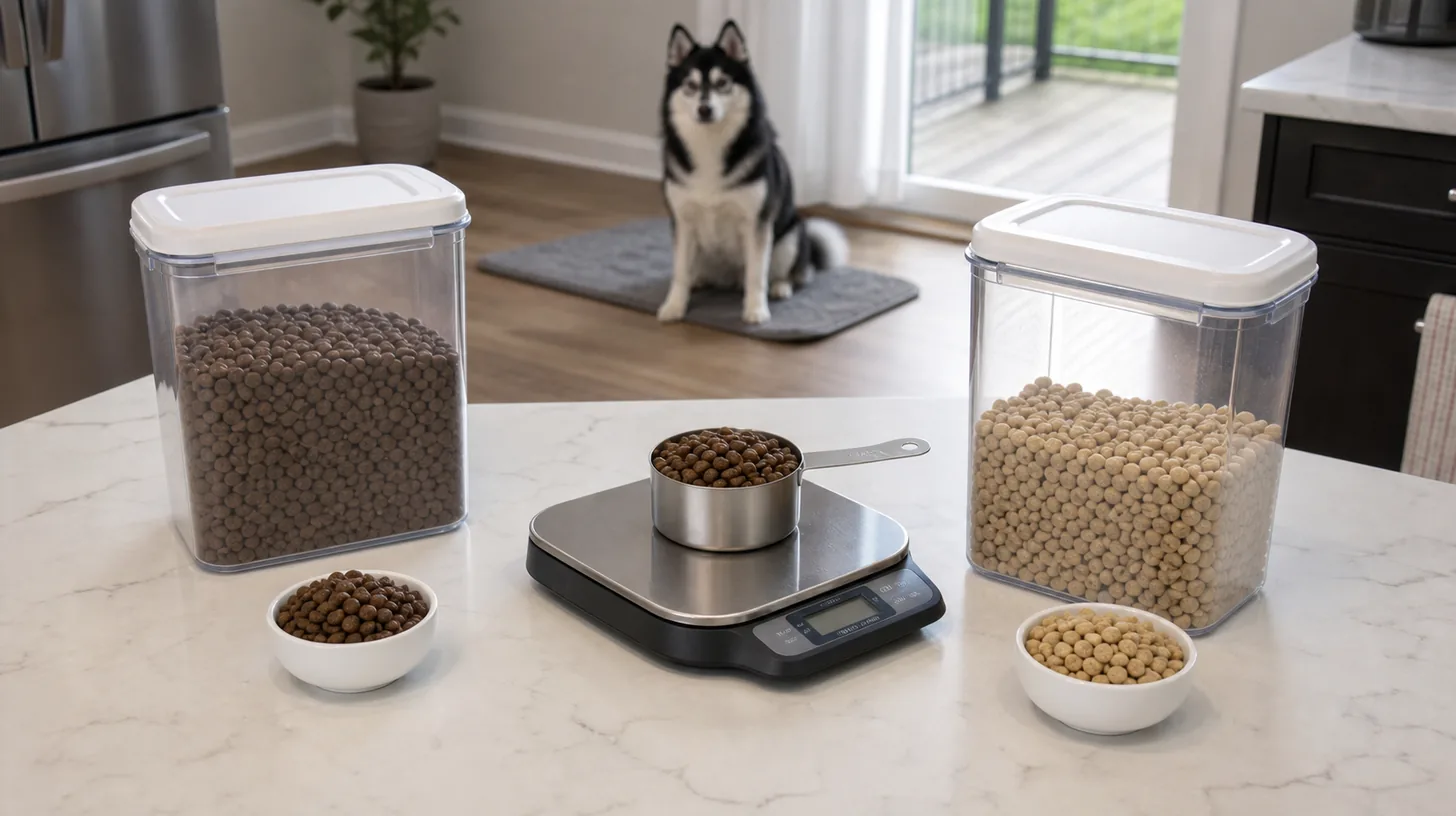
Before switching, record the current amount offered, amount eaten, meal schedule, water access, stool pattern, body weight, body condition assessment, medications, and relevant signs. Use the same measuring method each day. A kitchen scale can improve consistency when the veterinary plan uses grams.
Do not turn home monitoring into diagnosis. The baseline helps communicate change to the veterinarian. It does not explain why a dog has digestive signs or determine a safe calorie target.
Build the Transition Schedule
Ask the veterinarian for the appropriate pace. A common general approach gradually changes the proportion of old and new food across multiple steps, but there is no single schedule for every dog or every medical situation. Keep the total daily amount aligned with the individualized feeding plan.
Move to the next step only when the Pomsky is eating and tolerating the current mixture. If signs appear, pause and contact the veterinary team rather than repeatedly changing ratios, adding remedies, or switching to another product without guidance.
Keep Meals Simple and Controlled
Prepare meals away from the dog, measure each component, and label containers. Feed at consistent times in a quiet location. Store food according to the package instructions, retain the original label and lot information, and prevent access to bags and bins.
Avoid adding many enticing extras to force intake. Extras can unbalance the plan, add calories, obscure appetite changes, and complicate an elimination or therapeutic diet. Discuss palatability problems with the veterinarian.
Monitor More Than Stool
Track appetite, water intake, vomiting, stool frequency and consistency, energy, itching, ear signs, abdominal discomfort, and body weight when advised. Record dates and proportions so the timeline is clear. Photographs may help document packaging or stool changes privately for the veterinary team.
Normal variation can occur, but persistent or worsening changes need professional interpretation. Do not claim that a symptom proves an allergy, intolerance, detoxification, or ingredient sensitivity.
Know the Stop and Escalation Signs
Contact a veterinarian for persistent vomiting or diarrhea, blood, marked lethargy, pain, dehydration concern, refusal to eat, rapid weight change, or signs that worry you. Emergency signs such as collapse, severe weakness, repeated unproductive retching, breathing difficulty, or rapidly worsening condition require urgent direction.
Puppies, seniors, very small dogs, pregnant dogs, and dogs with medical conditions may have less margin for prolonged poor intake or fluid loss. Do not wait for a generic timeline when the individual risk is higher.
Complete the Change Deliberately
When the transition is complete, remove the old food only after confirming it is no longer needed and the new plan is stable. Update subscription orders, storage labels, pet-sitter instructions, and the household feeding chart. Keep the new lot information and manufacturer contact.
Continue monitoring weight and body condition. Feeding needs can change even when the product stays the same. Review the plan at preventive visits and after changes in activity, life stage, health, or treats.
Avoid Common Transition Errors
Do not select food only from marketing claims, change several foods in quick succession, guess portions from bowl appearance, mix unmeasured toppers, or assume every digestive change is caused by the new diet. Do not use leftover prescription food for another dog.
A successful transition is documented, measured, and individualized. It preserves enough consistency to detect meaningful changes and gives the veterinary team useful information. It never guarantees that a particular food will suit every Pomsky.
Coordinate Every Caregiver
Create one written feeding chart showing the exact products, amounts, mixture stage, meal times, measuring unit, approved treats, medications that must be given with food, and the person responsible for each meal. Mark a meal immediately after it is served so another caregiver does not feed it twice.
Keep the transition mixture or containers clearly labeled and inaccessible to the Pomsky. If meals are prepared in advance, follow food-storage instructions and discard portions that were stored unsafely. Do not ask a pet sitter to estimate ratios from appearance.
Give caregivers the veterinary contact, stop signs, and instructions for a missed meal. They should not advance the ratio, add toppers, or restart an old food without authorization. Record any vomiting, diarrhea, refusal, unusual thirst, or accidental access with the time and known amount.
At the end of the transition, archive the chart with the final food label and lot details. This creates a useful history if a later change is needed. Consistent handoff is especially important in multi-person homes, where an otherwise careful plan can fail through duplicate meals or unrecorded extras.
If the dog attends daycare, boarding, or training during the change, send measured labeled portions and written instructions. Confirm whether the facility can follow the plan before booking. Unexpected facility treats or substituted meals should be recorded, because they change the observation timeline even when no immediate sign appears.
Sources reviewed
Each source is used only for the claim scopes listed below. None establishes a guaranteed Pomsky outcome or replaces individual professional assessment.
- World Small Animal Veterinary Association: Global Nutrition Guidelines - Supports: nutrition assessment; body condition; individual feeding review. Limit: Not a brand endorsement and not a fixed ration calculator.
- American Animal Hospital Association: 2021 AAHA Nutrition and Weight Management Guidelines - Supports: nutrition screening; weight and body-condition monitoring; unexplained weight change as a risk factor; extended nutritional evaluation. Limit: A general article cannot diagnose the reason for weight loss or prescribe calories, diets, tests, or treatment.