Written and reviewed by A Pomsky Editorial Team. Originally published 2026-07-26; substantively reviewed July 26, 2026.
Training boundary: Use humane, reward-based methods and protect safety with management. Pain, panic, aggression, a bite history, or serious handling risk requires a veterinarian or qualified behavior professional. Read the editorial policy.
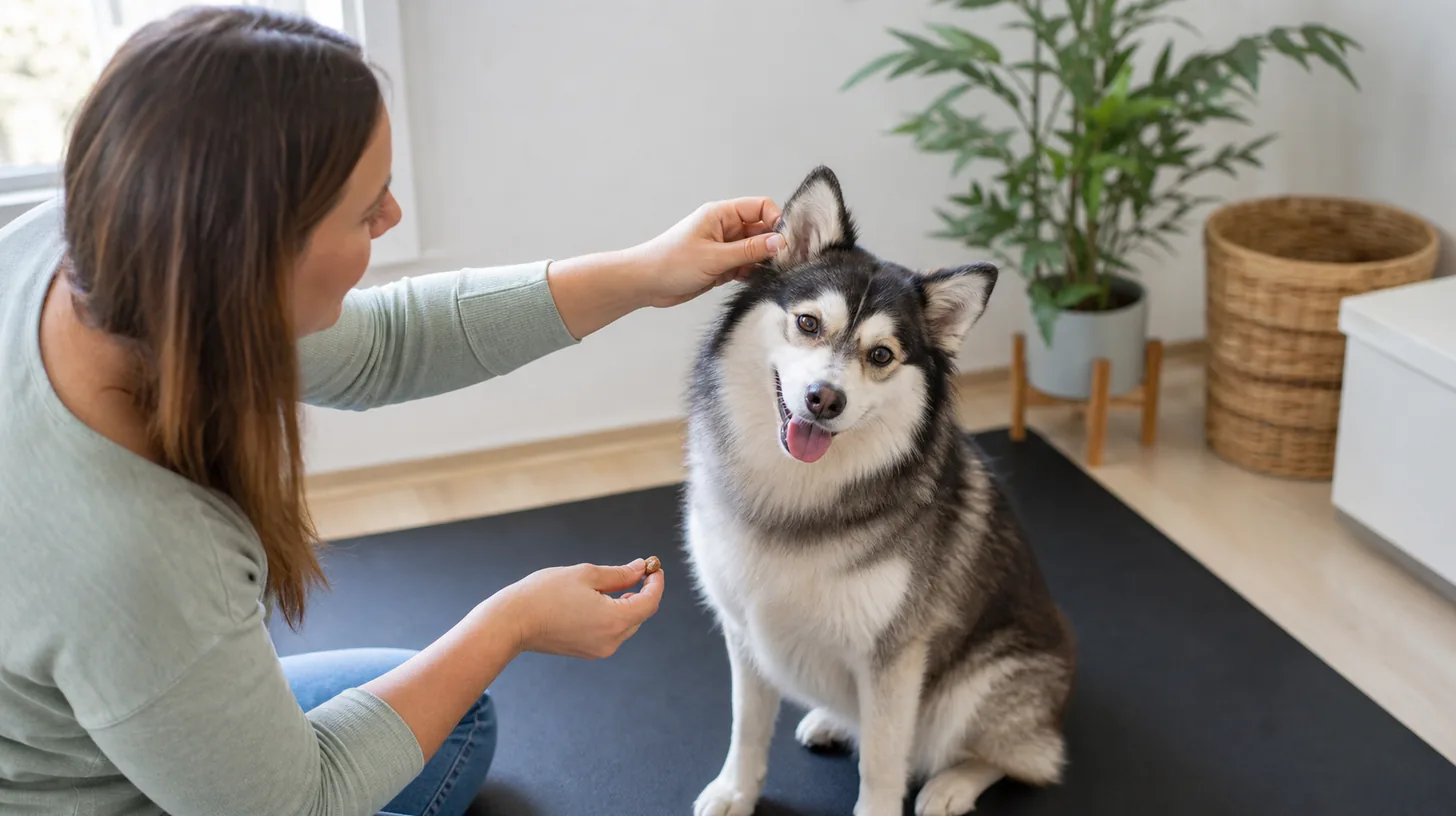
Direct answer: Teach a brief chin rest or still position, touch only the ear base and visible flap, reward voluntary participation, and stop when the Pomsky withdraws. Record odor, discharge, shaking, scratching, and side-specific changes. Do not insert tools, cleaners, or home remedies; pain or abnormal findings require veterinary guidance.
Checking a Pomsky's ears at home should mean brief, voluntary handling and observation of the visible outer ear. It does not mean inserting swabs, removing material, diagnosing infection, or applying a cleaner without veterinary direction. Build comfort first, compare ordinary appearance over time, and stop when the dog shows pain, fear, or a meaningful change.
Choose a Low-Pressure Setup
Use a quiet room, nonslip floor, good indirect light, and small familiar rewards. Let the Pomsky stand, sit, or rest in a natural position. Keep an open path away. Have a second person help only if that person understands the same cooperative approach.
Do not begin immediately after vigorous play, a stressful event, or another difficult handling task. The first sessions should contain no examination. They establish that a hand near the head predicts a brief, safe interaction and a clear release.
Establish a Voluntary Start Position
A trained chin rest, exam mat, or simple approach cue can provide a clear start. Reinforce the Pomsky for placing the head or body in position, then release before touching an ear. The dog should be able to leave without being followed.
If no cooperative-care skill exists, reward calm orientation toward the caregiver and a one-second hand movement near the shoulder. Build gradually toward the side of the neck. Do not hold the collar or corner the dog to prevent movement.
Separate Touch From Ear Movement
Begin with a brief touch on the shoulder or cheek that the Pomsky already accepts. Mark, remove the hand, and reward. Progress to touching the base of the ear for one second. Only after that is comfortable should the hand lightly support the ear flap.
Change one feature at a time: touch location, duration, movement, or lighting. Avoid rubbing, squeezing, or folding the ear repeatedly. A cooperative check should be shorter than the dog's current tolerance, not a test of endurance.
Observe Only the Visible Outer Ear
Look at the outer surface and the visible entrance without inserting fingers, swabs, cameras, or tools. Note symmetry, skin color, swelling, debris, discharge, odor, moisture, hair changes, and the dog's reaction. Compare with the Pomsky's ordinary baseline rather than an internet photograph.
The ear canal extends beyond what can be safely assessed at home. A normal-looking entrance does not rule out a problem, and visible material does not identify its cause. Record observations without assigning a diagnosis.
Use Light Without Creating Heat or Fear
Natural light or a cool room light is usually enough for a brief check. If a small flashlight is needed, keep it outside the ear and avoid shining directly for long periods. Introduce the light separately before combining it with handling.
Do not use a hot lamp, flash repeatedly, or restrain the head to get a perfect photograph. A clear image can support veterinary communication, but it is not worth escalating fear or risking injury.
Recognize Stop Signals
Stop when the Pomsky turns away, lowers the body, freezes, paws at the hand, lip licks repeatedly, vocalizes, snaps, or leaves the station. Also stop after a sudden head shake, cry, or marked sensitivity. These signals are information, not disobedience.
Release contact immediately and secure the environment calmly. Do not punish a warning or repeat the same touch to prove it can be completed. The next step may be an easier training session or veterinary assessment, depending on the context.
Know What Requires Veterinary Contact
Contact a veterinarian for pain, persistent head shaking, strong odor, discharge, blood, swelling, balance change, sudden hearing concern, foreign material, injury, or a major change from baseline. Urgency depends on the signs and the individual case; ask the clinic for routing.
Do not delay because the Pomsky still eats or plays. Ear problems can be painful even when general behavior appears ordinary. A veterinarian may need an otoscope, cytology, medication history, or other assessment that home observation cannot provide.
Avoid Unapproved Cleaning and Treatment
Do not put water, peroxide, alcohol, oil, vinegar, powder, leftover medication, or an over-the-counter cleaner into the ear unless the veterinarian has directed that product and method for this dog. A damaged eardrum, foreign body, or specific disease can change what is safe.
Cotton swabs and other objects can push material deeper or injure tissue. Removing visible debris may also erase useful diagnostic evidence. Ask the clinic whether to leave the ear untouched before an appointment.
Create a Brief Baseline Record
Record the date, which ear was observed, visible appearance, odor change, handling tolerance, head shaking, scratching, recent swimming or bathing, and any medications. Use neutral words. “Brown moist discharge at visible entrance” is more useful than “ear infection.”
Store photographs privately and label left versus right. Do not edit color or lighting in a way that changes clinical appearance. Bring the original images and timeline to the veterinarian when needed.
Maintain Cooperation Between Checks
Practice one or two easy ear-base touches when no examination is needed, followed by a release and reward. This prevents every cue from predicting a difficult check. Keep sessions short and vary with easier cooperative skills.
After grooming, bathing, illness, or a painful ear episode, reduce the difficulty. The Pomsky may need the association rebuilt. A qualified reward-based professional can help when handling fear persists, but pain and medical causes must be assessed by a veterinarian.
Keep the Purpose Narrow
The home routine exists to support familiarity, notice meaningful changes, and improve veterinary communication. It is not a cleaning schedule or diagnostic protocol. Some Pomskies need only occasional visual checks; others require a veterinarian-directed plan.
Preserve choice, stop early, and document honestly. The best cooperative ear check leaves the dog comfortable enough to return to ordinary behavior and gives the care team useful observations without introducing tools, treatment, or avoidable pressure.
Share a Clear Veterinary Handoff
Before an appointment, summarize when the change began, which side is affected, how often the Pomsky shakes or scratches, whether bathing or swimming occurred, and whether appetite, balance, sleep, or activity changed. List every current medication and ear product, including the last time it was used. Bring the original photographs rather than relying on memory.
Transport and waiting-room stress can change handling tolerance. Tell clinic staff which cooperative cue the dog knows, what contact was accepted at home, and what caused withdrawal. This information does not replace examination, but it can help the team plan a lower-pressure approach. Follow the clinic's instructions about food, medication, restraint, and whether the ear should remain untouched before the visit.
Afterward, write down the veterinarian's product, amount, frequency, duration, recheck date, and stopping instructions exactly as provided. Keep treatment separate from voluntary baseline practice unless the care plan says otherwise. Contact the clinic when administration is not possible rather than forcing the Pomsky or changing the dose independently.
Sources reviewed
Each source is used only for the claim scopes listed below. None establishes a guaranteed Pomsky outcome or replaces individual professional assessment.
- American Animal Hospital Association: Humane Restraint of Animals - Supports: least-stress handling; basket muzzle preparation; positive behavior modification. Limit: Does not authorize forceful restraint or replace veterinary handling decisions.
- American Animal Hospital Association: AAHA-AVMA Canine Preventive Healthcare Guidelines - Supports: preventive exams; individual risk assessment; parasite and vaccination planning. Limit: The veterinarian sets the schedule for the individual dog and location.