Written and reviewed by A Pomsky Editorial Team. Originally published 2026-07-26; substantively reviewed July 26, 2026.
Training boundary: Use humane, reward-based methods and protect safety with management. Pain, panic, aggression, a bite history, or serious handling risk requires a veterinarian or qualified behavior professional. Read the editorial policy.
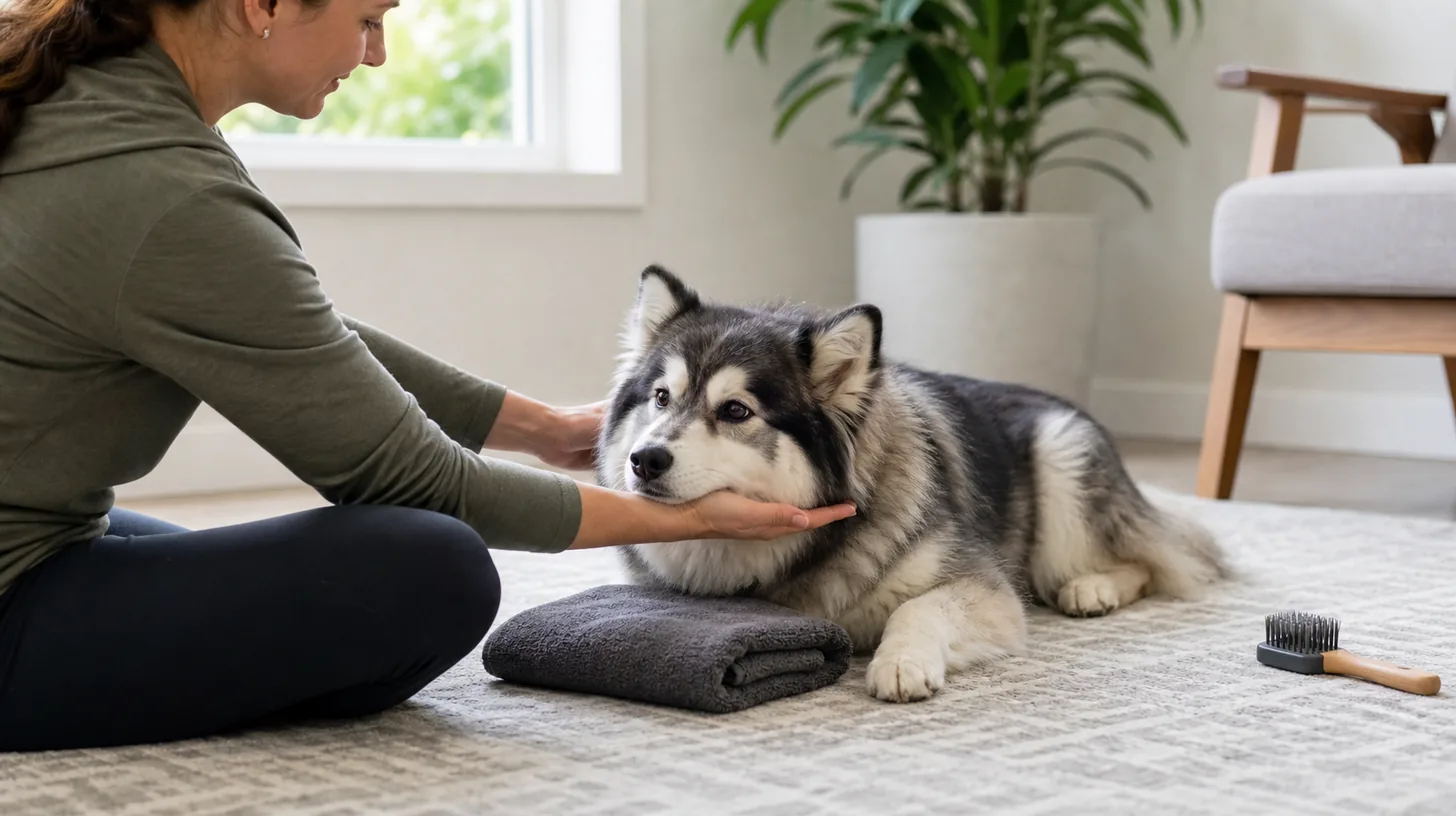
Direct answer: Teach a cooperative chin rest by rewarding your Pomsky for voluntarily placing its chin on an open hand or padded target. Build duration in very small steps, use a clear release, stop optional touch when the chin lifts, and add handling or tools only while the dog remains relaxed and chooses to return.
Define the chin rest as a consent signal
A cooperative chin rest is a voluntary behavior in which a Pomsky places its chin on a hand, towel, or padded target and remains there briefly. The position can create a stable starting point for gentle observation, brushing, collar checks, or veterinary handling practice. It is not permission to restrain the dog indefinitely. The value comes from giving the dog a predictable way to participate and a clear way to pause.
Choose the consent rule before training. Chin on the target means the planned touch may continue; lifting the chin means hands stop and the setup becomes easier. Use a separate release word to end each repetition. This rule must be honored consistently or the position loses meaning. For urgent care, safety decisions belong to veterinary professionals; a trained behavior cannot replace necessary medical restraint or treatment.
Capture the first chin touch
Sit sideways in a quiet room and present an open palm just below the dog’s muzzle. You may place a treat so the Pomsky reaches over the palm, but do not push the hand upward. Mark and reward any brief chin contact. Deliver the reward away from the target so the dog can reset and choose to return. A folded towel on a low stool can be easier for handlers who need both hands later.
Keep the target stable and the criteria small. At first, a fraction of a second is enough. Avoid gripping the jaw, cupping the muzzle, or closing fingers around the face. If the dog avoids the hand, start with nose targeting or reward looking toward the target. Training should occur when the dog is comfortable, not while a painful ear, eye, mouth, paw, or skin problem is already being examined.
Build duration and a clear release
Once the dog deliberately returns its chin to the target, wait half a second before marking. Increase duration in tiny increments and insert easy repetitions between harder ones. Say the release word, move the target away, and toss the reward so the dog stands up. The release prevents the chin rest from becoming a vague endurance task.
Watch breathing, muscles, eyes, ears, weight shift, and willingness to return. A still dog is not always a comfortable dog. Freezing, tightly closed mouth, head turn, lip licking, whale eye, trembling, or refusal to re-engage means the session should stop or become easier. Aim for relaxed repetition, not a record duration. Three comfortable seconds may be more useful than thirty seconds of suppressed avoidance.
Add touch and grooming tools gradually
Separate the chin-rest duration from the handling challenge. First establish the position. Then, while the chin is down, move one hand toward the shoulder and stop. In later repetitions, add a one-second touch, a brief brush stroke, or a collar tag check. Only one new element should change at a time. Reward after the touch and release frequently.
Introduce tools at a distance before contact. Show the brush, reward, and put it away. Move it closer in later sessions. The same approach can be used for a towel, stethoscope-shaped object, empty syringe without a needle, or nail-care tool that remains turned off. Never practice with sharp instruments or perform a procedure outside your competence. The training objective is calm familiarity and communication.
Transfer the behavior to veterinary preparation
Practice on different non-slip surfaces and with the handler standing or seated. Ask the veterinary team whether a chin rest is appropriate for the planned visit and what position they need. Bring the familiar target if the clinic allows it. Begin with low-stakes actions such as standing on the scale, looking at the ears from a distance, or briefly touching the shoulder.
The clinic environment may be much harder than home because of smells, sounds, pain, and unfamiliar people. Lower expectations and use more distance. A dog that performs at home may be unable to offer the behavior during illness. That is information, not disobedience. Veterinary teams may recommend pre-visit planning, different handling, sedation, or another safety strategy based on the individual case.
Read withdrawal and stress accurately
The handler must distinguish a deliberate chin lift from accidental movement. If the dog lifts, all optional touch stops. Wait, reset, and offer an easier repetition. Do not immediately lure the head back while continuing the same difficult touch. Repeated withdrawal suggests the step is too hard, the environment is wrong, or discomfort needs assessment.
Keep a simple record of target type, duration, touch location, tool, and response. This makes progress measurable and exposes patterns, such as comfort with shoulder brushing but concern about paws. Do not label resistance as stubbornness. Pain, sensory sensitivity, fear history, poor footing, or unclear training can all affect participation. Sudden handling sensitivity warrants veterinary attention.
Avoid turning cooperation into restraint
Do not hold the chin down, trap the neck, corner the dog, or have several people add touch at once. Do not use the behavior to force nail trims, ear cleaning, injections, or wound care after the dog withdraws. A reward does not make an unsafe or overwhelming procedure cooperative. Humane handling uses the least force compatible with safety and recognizes when a different plan is needed.
Children should not direct handling sessions. Dogs with bite history, severe fear, guarding around body areas, or escalating reactions need individualized support. A basket muzzle conditioned positively may be one separate safety layer, but it does not authorize stressful handling or replace a behavior and veterinary plan.
Know when professional help is needed
Ask a veterinarian about pain, sudden sensitivity, skin or ear problems, limping, dental signs, or any change in tolerance. Seek a qualified reward-based trainer or veterinary behavior professional when progress repeatedly stalls, fear escalates, or handler safety is uncertain. Share videos only when recording does not add pressure.
Maintain the chin rest with occasional easy repetitions that do not always lead to care. Let it predict food, a brief calm interaction, and release. A cooperative behavior is most useful when the dog continues to choose it. The goal is clearer communication and lower-stress preparation, not a guarantee that every Pomsky will accept every procedure.
Sources reviewed
Each source is used only for the claim scopes listed below. None establishes a guaranteed Pomsky outcome or replaces individual professional assessment.
- American Veterinary Society of Animal Behavior: Humane Dog Training Position Statement - Supports: reward-based training; aversive-method risk; behavior change principles. Limit: Does not guarantee outcomes for an individual dog.
- American Animal Hospital Association: Humane Restraint of Animals - Supports: least-stress handling; basket muzzle preparation; positive behavior modification. Limit: Does not authorize forceful restraint or replace veterinary handling decisions.