Written and reviewed by A Pomsky Editorial Team. Originally published 2026-07-26; substantively reviewed July 26, 2026.
Training boundary: Use humane, reward-based methods and protect safety with management. Pain, panic, aggression, a bite history, or serious handling risk requires a veterinarian or qualified behavior professional. Read the editorial policy.
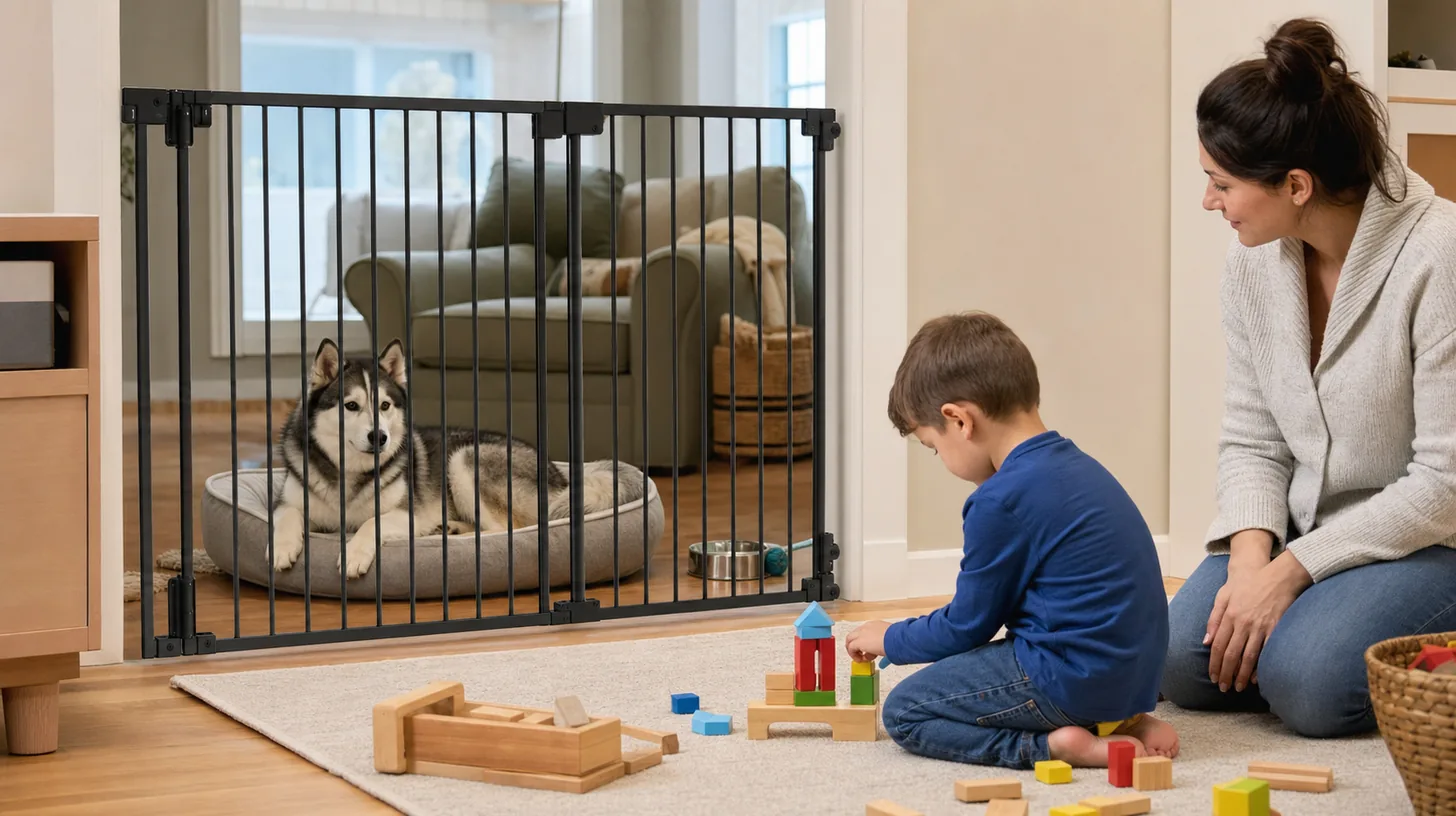
Direct answer: Define three physical zones: shared space only during active adult supervision, a protected dog-only rest area, and a child-only activity area. Use reliable gates or closed doors, keep food and chews separated, and have adults control every transition. Separate immediately after concerning behavior or whenever supervision cannot remain active.
Active supervision means an adult is close enough to see the Pomsky and child, understand what is happening, and intervene before contact becomes unsafe. If the adult is cooking, working, sleeping, using a phone, or leaving the room, use physical separation. A child and dog should never be expected to resolve fear, guarding, chasing, or rough interaction themselves.
Map the Shared Rooms
Walk through each room where the Pomsky and child may be together. Identify entrances, narrow passages, food areas, dog beds, toy storage, furniture corners, and routes to a closed gate or separate room. The dog and child each need an exit that the other cannot block.
Do not rely on verbal rules alone near stairs, exterior doors, kitchens, or crowded hallways. Use gates, doors, pens, and adult positioning to prevent predictable conflicts. Recheck the map as the child becomes more mobile.
Define Active Supervision
Assign one adult who is not performing another task. That person watches posture, movement, distance, hands, food, toys, and exits. They stay within immediate reach and know where to guide each participant if arousal rises.
Saying “the dog is good with kids” is not a supervision plan. Familiar dogs can react to pain, surprise, sleep disturbance, resource pressure, or handling. Supervision manages the current interaction, not a breed or personality label.
Create a Dog-Only Rest Zone
Give the Pomsky a comfortable resting area behind a barrier where children cannot enter, climb, throw objects, or reach through. Water and appropriate bedding should remain accessible. The dog should be able to choose rest without being followed.
Teach children that the barrier means no contact. Adults enforce the rule rather than asking the dog to warn repeatedly. A bed in the middle of a play area is not a protected rest zone.
Create a Child-Only Activity Zone
Use a separate area for floor play, crafts, snacks, running games, and small toys. Keep the Pomsky outside during high-energy or food-focused activities. This protects the dog from dropped objects and prevents competition or accidental ingestion.
Physical separation is useful even when the dog appears calm. It allows the child and Pomsky to participate in ordinary household life without constant correction. Reintroduce shared space only after the environment is reset.
Set Contact Rules Adults Can Enforce
Allow brief calm interaction when the Pomsky approaches voluntarily and the adult is ready. Guide the child to touch the shoulder or side gently rather than hugging, climbing, grabbing fur, touching the face, or taking objects.
Do not force the dog to remain for petting or photographs. End contact when the Pomsky turns away, moves to the rest zone, stiffens, freezes, lip licks repeatedly, or shows concern. Warnings should never be punished.
Separate All Food and High-Value Items
Feed the Pomsky behind a closed barrier. Keep children away from bowls, chews, food toys, medication, and found objects. Clear dropped food before shared access resumes. Children should not remove an item from the dog's mouth.
Resource guarding requires adult management and qualified guidance. Do not ask a child to trade, test tolerance, or participate in treatment. Prevention is the first safety layer.
Manage Movement and Noise
Running, squealing, wheeled toys, blankets, and sudden falls can trigger chasing or startle. Use separate zones during active play. If calm movement practice is appropriate, keep it short, adult-led, and easy for the Pomsky to leave.
Do not encourage the dog to chase a child for entertainment. Rehearsed chasing can become harder to interrupt and may lead to collisions or bites. Use dog-appropriate play separately.
Plan Doorways and Transitions
Before opening a gate, identify where the child, Pomsky, and supervising adult will stand. Move one participant at a time. Secure exterior doors and prevent crowding around arrivals, departures, and meal preparation.
Transitions create many preventable incidents because attention shifts. A written household order helps caregivers, relatives, and sitters follow the same process.
Teach Children How to Respond
Age-appropriate guidance can include standing still, keeping hands close, calling an adult, and never approaching an eating, sleeping, injured, or confined dog. Adults must still provide the environment and supervision; child education is not a substitute.
Teach children not to stare into the dog's face, run from an unfamiliar dog, or reach through barriers. Review rules calmly without using frightening stories or making the child responsible for the dog's behavior.
Recognize When Separation Must Continue
Use full physical separation after a bite, snap, chase, collision, repeated freezing, guarding, or an interaction adults cannot manage safely. Seek medical care for any human injury and veterinary care for animal injury or sudden behavior change.
Qualified behavior help may be needed before shared access resumes. Some households require long-term separation. A successful plan prioritizes safety over the appearance of family togetherness.
Coordinate Every Caregiver
Write the zones, barriers, food rules, dog rest rule, child play rule, and emergency contacts. Demonstrate gate operation and ensure caregivers can physically manage transitions. Do not leave supervision to an older child.
Visitors may not understand the plan. Keep the Pomsky separated until the responsible adult has explained and can enforce it. Special events often need stricter management because noise and movement increase.
Review as the Household Changes
Update the plan when a child begins crawling, walking, hosting friends, carrying food, or using new toys. Reassess after the Pomsky experiences pain, illness, aging, sensory change, or a stressful event.
The goal is not constant contact. It is predictable, low-pressure coexistence with immediate adult control and reliable separation. Active supervision, dog-only rest, child-only activity, and safe transitions reduce risk without making unsupported guarantees about any individual Pomsky.
Rehearse Transitions Without Pressure
Practice the adult sequence when the child and Pomsky are calm and occupied in separate secure areas. One adult confirms the destination is clear, closes the first barrier, moves the dog, and then verifies the second barrier before the child's area changes. Use the same words and order so another caregiver can follow the routine without guessing.
Do not rehearse by encouraging a child to approach, hug, take food, or test the dog's tolerance. The exercise is for adults and barriers. If the Pomsky rushes a gate, vocalizes intensely, freezes, or cannot disengage, increase distance and obtain qualified guidance rather than repeating the trigger.
Include predictable high-risk moments: meals, dropped food, arrivals, noisy play, dog chews, visitors, bedtime, and outdoor doors. Decide in advance which zone is used and which adult controls the transition. Keep spare barriers or a closed-room option available if equipment fails. A written plan becomes reliable only after caregivers can perform it while carrying groceries, answering a door, or managing an unexpected interruption without leaving child and dog together.
Sources reviewed
Each source is used only for the claim scopes listed below. None establishes a guaranteed Pomsky outcome or replaces individual professional assessment.
- U.S. Centers for Disease Control and Prevention: Dogs: Healthy Pets, Healthy People - Supports: supervision around young children; bite prevention; household hygiene and routine veterinary care. Limit: General prevention guidance does not assess an individual dog's behavior or replace pediatric, veterinary, or qualified behavior advice.
- American Veterinary Medical Association: Dog Bite Prevention - Supports: bite-risk awareness; leash and secure-gate prevention; avoiding escalation; professional behavior help. Limit: Breed alone does not predict bite risk, and general prevention guidance cannot control an active loose-dog encounter.