Written and reviewed by A Pomsky Editorial Team. Originally published 2026-07-26; substantively reviewed July 26, 2026.
Training boundary: Use humane, reward-based methods and protect safety with management. Pain, panic, aggression, a bite history, or serious handling risk requires a veterinarian or qualified behavior professional. Read the editorial policy.
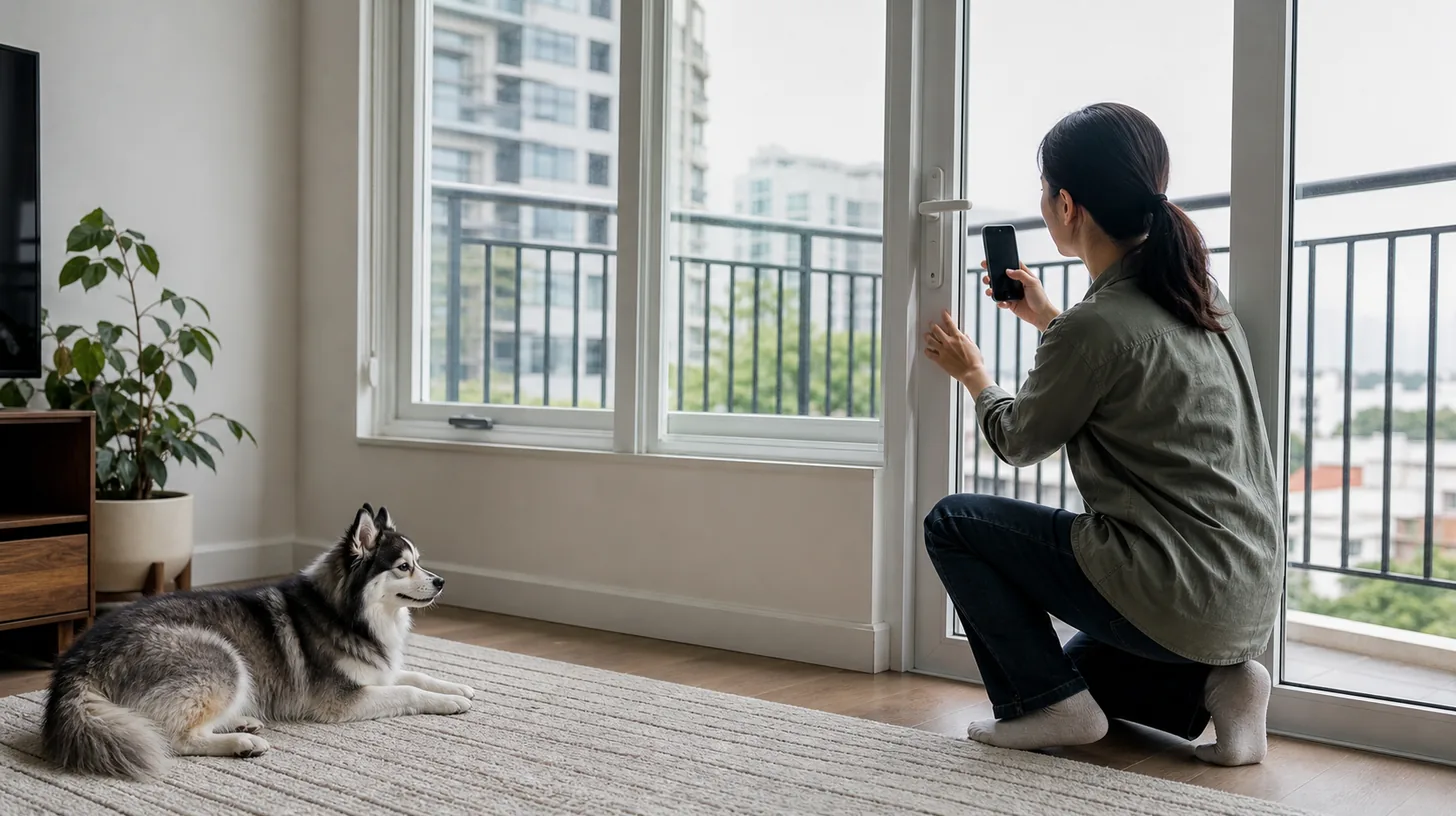
Direct answer: Keep the Pomsky in a separate secure room while checking balcony rails, gaps, screens, window openings, latches, furniture, climbing routes, and weather exposure. Close access whenever a defect or rule is uncertain. Use qualified building guidance for modifications and never rely on supervision, a screen, or a tether as fall protection.
A balcony rail, window screen, or training cue should never be treated as fall protection for a Pomsky. Audit every opening, gap, climbing route, door, surface, plant, heat exposure, and dropped-object risk. Prevent access with secure physical barriers and supervision, and keep the dog indoors when the elevated area cannot be made reliably safe.
List Every Elevated Opening
Record balconies, roof decks, fire escapes, open stairs, floor-to-ceiling windows, low windows, sliding doors, and upper-story screens. Include shared hallways or landings the Pomsky can reach when a door opens.
Inspect from the dog's height. Furniture, planters, storage boxes, and rail supports can create routes an adult overlooks. Repeat the audit after moving furniture or accepting a delivery.
Measure Gaps and Squeeze Routes
Look for spaces between rails, below barriers, beside walls, and around gates. Consider the Pomsky's head, shoulders, coat compression, and ability to turn. Do not rely on a visual guess or assume dense fur makes the body wider.
Use a building-compliant barrier designed for the location. Improvised mesh, loose cable ties, or decorative panels can fail, trap limbs, or violate fire and building rules. A qualified professional may be needed.
Treat Screens as Insect Control
Standard window screens are usually not designed to restrain a dog. Check frames, latches, tears, and how far the window opens, then add appropriate guards or opening limits that meet local safety and emergency requirements.
Do not place a bed or furniture beneath an open window. A Pomsky reacting to a bird, dog, noise, or person can push with more force than expected. Keep access closed until the protective system is verified.
Audit Doors and Human Routines
Check balcony and window-door locks, self-closing behavior, handle height, and whether guests or children can open them. Create a rule that the Pomsky is secured before an elevated exterior door opens.
Sliding doors may appear closed when not latched. Use a visual check and test the lock. Do not rely on telling the dog to wait while people carry furniture, food, or plants through the opening.
Remove Climbing and Launch Points
Move chairs, tables, storage, planters, grills, and boxes away from rails and windows. Consider whether the Pomsky can climb, jump from furniture, or use a low ledge to gain height. Secure necessary objects against movement.
Outdoor rugs can slide and create unexpected footing. Inspect surfaces for drainage gaps, loose boards, hot materials, ice, and sharp edges. The safest layout keeps the dog far from the perimeter.
Control Heat and Weather Exposure
Balconies can become much hotter, colder, windier, or smokier than indoor spaces. Shade can move quickly. A water bowl and awning do not make unsupervised access safe.
Keep the Pomsky indoors during heat, severe cold, storms, wildfire smoke, high wind, or any condition that cannot be escaped freely. Do not tether a dog on a balcony or leave the door closed behind it.
Screen Plants and Stored Materials
Identify every plant with a reliable source and remove toxic or unknown species. Secure fertilizer, pesticides, cleaners, charcoal, nicotine, cannabis, food, trash, and standing water. Wind can blow hazards into reach.
Do not assume a high shelf is safe if furniture permits climbing. Keep original product labels and emergency contacts accessible. Suspected exposure follows a professional poison-routing plan, not a balcony-specific home remedy.
Prevent Dropped-Object and Neighbor Risk
Secure toys, bowls, tools, decorations, and grooming items so they cannot fall. Do not allow the Pomsky to push objects through rails or bark at people and animals below. Falling items can injure others even when the dog remains inside.
Manage visual triggers with indoor distance, opaque barriers appropriate to the building, or closed access. Never lean over a rail to retrieve an item while holding the dog.
Plan for Fire and Evacuation Requirements
Do not block fire exits, rescue access, sprinklers, or required ventilation with a permanent barrier. Check lease, condominium, fire, and building rules before installation. Safety modifications must preserve human evacuation.
Include the balcony and window doors in the home evacuation drill. The primary plan should move the Pomsky through a safe exit, not onto an elevated area unless emergency authorities specifically direct it.
Supervise Any Allowed Access
If the area has been professionally secured and access is permitted, an adult should remain present and attentive. Use a well-fitted harness and leash when an additional safety layer is appropriate, but never tether the leash to the structure.
End access before the dog becomes aroused, climbs, paws barriers, chews material, or seeks shade. Training can support calm behavior but cannot make a structural hazard acceptable.
Record Defects and Corrections
Photograph each opening and list the defect, temporary closure, responsible person, correction date, and verification. Keep the Pomsky away until the correction is complete. A note to “watch closely” is not a completed fix.
Recheck after storms, construction, repairs, tenancy changes, or seasonal furniture moves. Screens and fasteners degrade over time. Include the audit in move-in and pet-sitter instructions.
Use the Conservative Default
When a gap, screen, rail, door, or rule is uncertain, close access and seek qualified building guidance. The consequence of a mistaken assumption can be severe. No view, fresh air, or convenience justifies testing a Pomsky near a fall route.
A complete balcony and window safety audit converts visible hazards into physical prevention: secure openings, no climbing routes, no unsupervised access, safe weather decisions, controlled doors, and documented rechecks.
Audit From the Dog's Height
Repeat the inspection at the Pomsky's shoulder and nose height. Look beneath railings, behind furniture, around portable air-conditioner panels, and beside window hardware. A gap that appears minor to a standing adult may align directly with a dog's head, paw, or line of sight. Note whether wildlife, people, traffic, or neighboring dogs could trigger jumping, scratching, or pushing.
Test human-operated latches with the door closed while the dog remains in another secure room. Confirm that children and guests cannot accidentally defeat the control. Sliding doors may need a properly fitted secondary stop, but any device must comply with building and fire requirements. Never improvise a lock that traps occupants during an emergency.
Add the audit to seasonal home maintenance. Heat can weaken adhesives, cold can make plastics brittle, and repeated opening can loosen screens and fittings. Reinspect after a contractor, cleaner, guest, or furniture delivery has used the area. A dated photograph of the corrected setup helps caregivers recognize later drift. The practical standard is not whether the Pomsky has avoided a fall before; it is whether the current physical system prevents access to every plausible fall route today.
Sources reviewed
Each source is used only for the claim scopes listed below. None establishes a guaranteed Pomsky outcome or replaces individual professional assessment.
- American Animal Hospital Association: Lifestyle and Safety Assessment - Supports: appropriate confinement; leash, collar and harness planning; lifestyle-specific safety review. Limit: Equipment selection must account for the individual dog's anatomy, behavior, health, and environment.
- U.S. Centers for Disease Control and Prevention: Pet Emergency Preparedness - Supports: evacuation planning; pet records; emergency supplies; disaster readiness. Limit: Local emergency authority instructions take priority.