Written and reviewed by A Pomsky Editorial Team. Originally published 2026-07-26; substantively reviewed July 26, 2026.
Training boundary: Use humane, reward-based methods and protect safety with management. Pain, panic, aggression, a bite history, or serious handling risk requires a veterinarian or qualified behavior professional. Read the editorial policy.
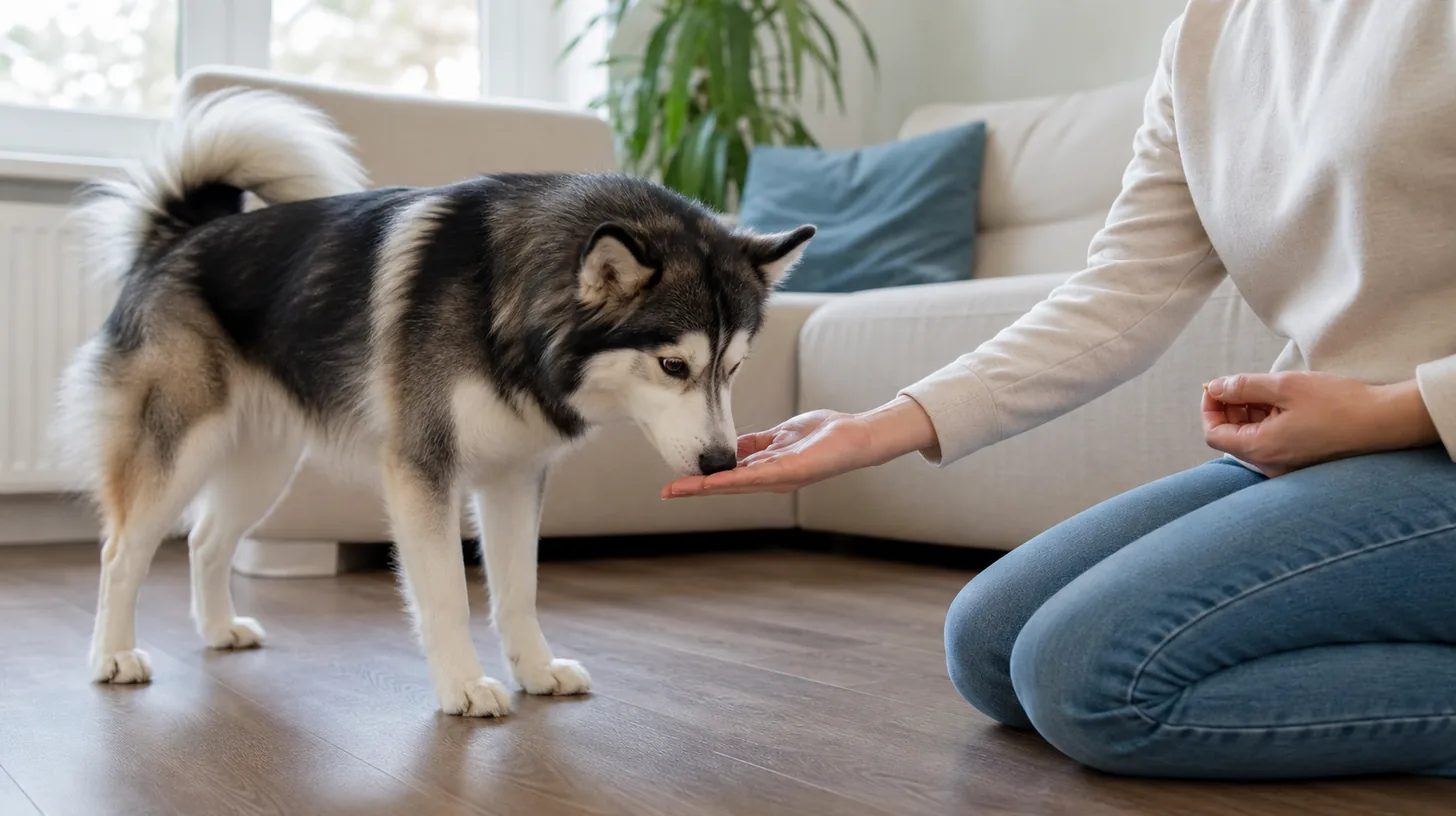
Direct answer: Present an empty open palm close to the Pomsky, mark the first voluntary nose touch, and reward from the other hand. Build a predictable touch before adding a cue, then increase distance and distractions one variable at a time. Never push the hand into the dog's face or use the target to force movement.
A hand target teaches a Pomsky to move toward an open palm and touch it with the nose. The skill is simple, but it becomes genuinely useful when the dog understands the behavior, the marker, the cue, and the release separately. It can guide position without pulling the collar, support cooperative care, and create an easy way to reconnect during everyday distractions.
Prepare a Clear Training Setup
Choose a quiet room with enough space for the Pomsky to take one or two steps. Use small, familiar rewards that the dog can eat comfortably, and keep the session short. The open hand should be empty, clean, and held where the dog can reach it without jumping or twisting.
Decide on a marker before beginning. A clicker or a brief word can identify the exact instant the nose reaches the palm. The marker should always be followed by a reward during training. Do not wave food inside the target hand, push the hand into the dog's face, or restrain the dog to create contact. The first goal is voluntary investigation.
Capture the First Nose Touch
Present an open palm a few inches from the Pomsky's nose, with fingers together and the palm facing sideways or slightly toward the dog. Many dogs will lean forward to investigate. Mark the instant the nose touches the skin, withdraw the hand, and deliver the reward with the other hand.
If the dog does not investigate, move the hand away and present it again rather than tapping the nose. A tiny movement toward the hand can be marked for the first repetition, followed by a closer approach. Avoid repeating a verbal cue that the dog has not learned. Five clear attempts are more informative than dozens of confusing presentations.
Build a Predictable Behavior Before Naming It
Repeat the same hand presentation until the Pomsky promptly moves to touch it from a short distance. Reset fully between repetitions by lowering the target hand, waiting a moment, and then presenting it again. This helps the hand movement become a clean visual signal instead of a permanent object in front of the dog.
Look for purposeful movement rather than accidental contact. The dog should orient, approach, touch, and remain comfortable enough to take the reward. If the Pomsky paws at the hand, grabs sleeves, or becomes frustrated, reduce excitement and reward only nose contact. End the session while the pattern is still easy.
Add the Verbal Cue at the Right Time
Add a cue such as “touch” only after the Pomsky is reliably responding to the hand presentation. Say the cue once, pause briefly, then present the palm. Mark and reward the nose touch. After several successful pairings, test the cue by saying it before moving the hand into the familiar position.
The cue should predict an opportunity, not pressure the dog into contact. If the dog does not respond, reset and make the next repetition easier. Do not repeat “touch” rapidly or move the hand closer after every failed attempt. Repeated cues teach the dog that the first word has no consequence.
Increase Distance One Variable at a Time
Begin with the palm close to the dog's nose, then gradually present it a few inches to the left, right, higher, or lower. Next, ask for one step, then two. Change only one feature at a time so the Pomsky can identify what remains constant: move to the open palm and touch it.
Keep the hand at a comfortable height and avoid positions that require a neck strain or awkward footing. Practice on nonslip surfaces. A dog that stops, licks the lips repeatedly, turns away, or moves more slowly may be confused or uncomfortable. Return to the last easy distance rather than pulling the dog toward the target.
Generalize the Skill Without Losing Clarity
Once the behavior is fluent indoors, practice in another room, near a different doorway, and then in a quiet outdoor area on leash. New locations add difficulty, so shorten the distance and increase reinforcement again. A familiar skill often looks less reliable when the environment changes.
Use the same palm shape, cue, and marker while generalizing. Other household members can practice after observing the established mechanics. They should not surround the dog or present several hands at once. A single target and a clear reset protect the meaning of the exercise.
Use Hand Targeting for Practical Movement
A hand target can invite the Pomsky onto a scale, away from a doorway, beside a grooming station, or around a piece of furniture. Present the target where the dog's path is safe and reward the completed movement. For longer repositioning, use several short touches rather than dragging the dog behind one moving hand.
The skill does not replace a leash, barrier, or trained recall. Do not use it to lure a dog into a frightening situation, toward an unfamiliar dog, or across unsafe footing. Practical use should preserve the dog's ability to move comfortably and should end with a clear reward or release.
Fade Food Without Removing Reinforcement
Food should come after the marker, not remain visible in the target hand. When the behavior is reliable, vary the type and timing of reinforcement while still rewarding enough responses to maintain value. Some touches can lead to access to a sniffing area, a toy, or another enjoyable activity.
Do not eliminate reinforcement simply because the dog has learned the cue. A useful behavior stays strong when it continues to produce worthwhile outcomes. If response speed or accuracy declines, restore easier repetitions and a higher reinforcement rate before assuming stubbornness.
Troubleshoot Common Hand-Target Problems
If the Pomsky bites or mouths the hand, keep the palm still, withdraw it calmly, and reward only soft nose contact. If the dog paws, present the hand slightly higher and mark before the paw lifts. If the dog follows food rather than the target, keep all food out of sight until after the marker.
A dog that avoids hands may have a history of forced handling, pain, or current sensitivity. Do not pursue the dog with the palm. Work at greater distance and consider veterinary or qualified reward-based behavior guidance when touch avoidance is sudden, intense, or associated with defensive behavior.
Keep the Skill Voluntary and Useful
End sessions after a small number of successful repetitions and record the location, distance, distractions, and response. Progress means the Pomsky recognizes the cue and chooses a confident nose touch across gradually varied settings. It does not mean the dog must follow a hand into every situation.
Reward-based training avoids intimidation, physical correction, and aversive tools. A hand target is most valuable as a cooperative communication skill: it tells the dog exactly what movement can earn reinforcement while allowing the caregiver to guide routine positioning with less physical pressure.
Sources reviewed
Each source is used only for the claim scopes listed below. None establishes a guaranteed Pomsky outcome or replaces individual professional assessment.
- American Veterinary Society of Animal Behavior: Humane Dog Training Position Statement - Supports: reward-based training; aversive-method risk; behavior change principles. Limit: Does not guarantee outcomes for an individual dog.
- American Animal Hospital Association: Humane Restraint of Animals - Supports: least-stress handling; basket muzzle preparation; positive behavior modification. Limit: Does not authorize forceful restraint or replace veterinary handling decisions.