Written and reviewed by A Pomsky Editorial Team. Originally published 2026-07-26; substantively reviewed July 26, 2026.
Training boundary: Use humane, reward-based methods and protect safety with management. Pain, panic, aggression, a bite history, or serious handling risk requires a veterinarian or qualified behavior professional. Read the editorial policy.
Direct answer: Keep fresh water accessible, empty and clean the bowl on a consistent household schedule, rinse it thoroughly, and let it dry or rotate in a clean replacement. Inspect for cracks, residue, pests, spills, and unstable placement. Observe meaningful changes in drinking without imposing a generic target, and contact a veterinarian about persistent increases, decreases, vomiting, weakness, or other concerning signs.
Water access depends on more than filling a bowl. Placement, stability, cleaning, drying, household traffic, outdoor contamination, and the Pomsky's current behavior all affect whether the station works. A repeatable routine keeps water available while helping caregivers notice meaningful changes without inventing a universal drinking target.
Choose an Accessible Location
Place the water station where the Pomsky can reach it without stairs, crowding, hot surfaces, direct sun, or conflict with another animal. Keep it away from cleaning-product storage, litter areas, and doors that may close unexpectedly.
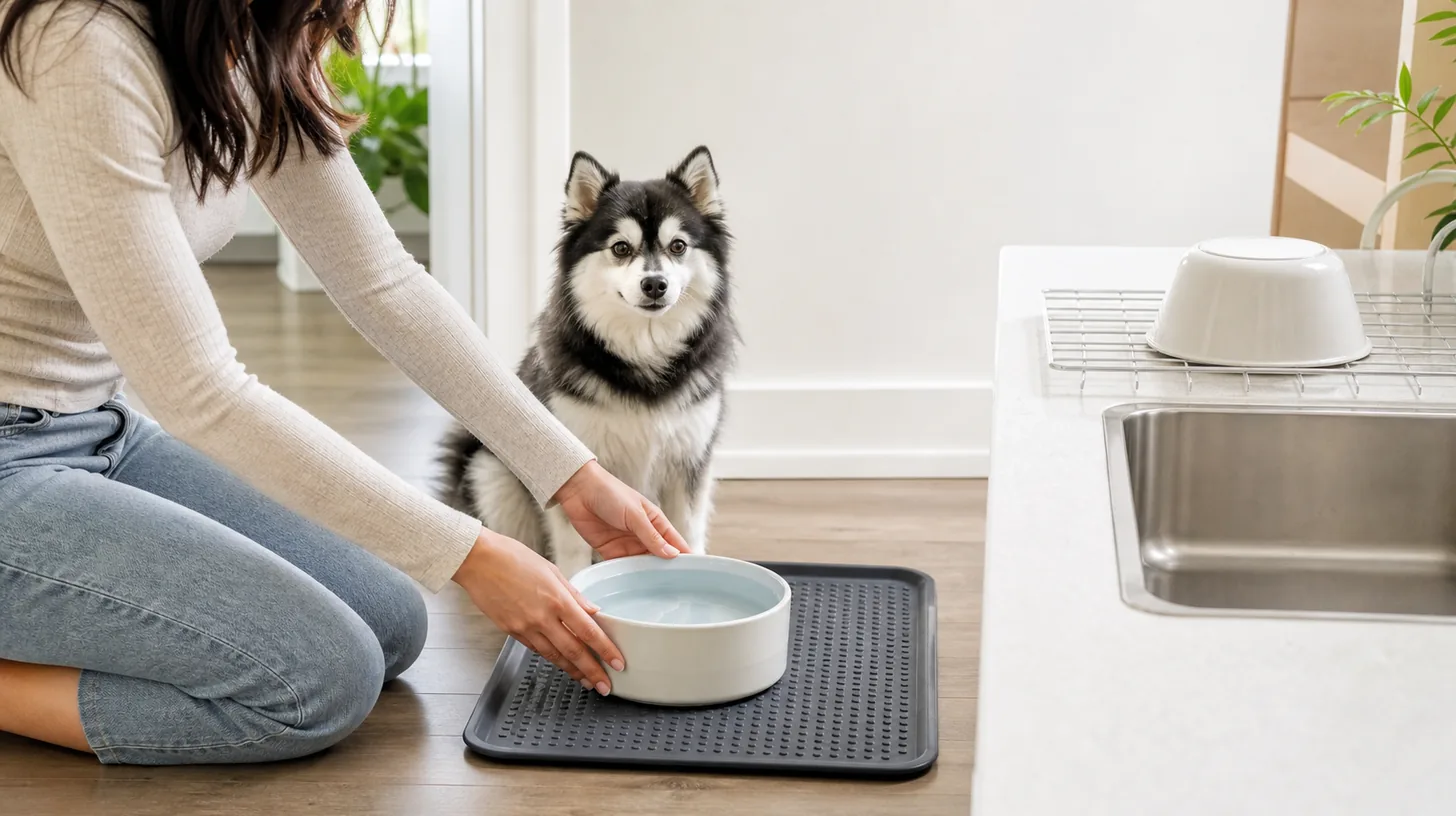
Use stable nonslip footing. A sliding bowl or wet polished floor can make drinking difficult, especially for puppies, seniors, or dogs with mobility concerns.
Select an Inspectable Bowl
Choose a bowl that can be thoroughly cleaned according to its instructions and checked for cracks, chips, rough edges, corrosion, odor, or damaged coatings. Size and shape should allow comfortable access without forcing an awkward posture.
No single material is universally best for every dog and household. Retire a damaged bowl rather than continuing to scrub a surface that can no longer be inspected reliably.
Establish a Refresh Sequence
At each scheduled refresh, observe the remaining water before discarding it. Look for food debris, hair, insects, slime, dirt, or an unusual spill. Empty the bowl, clean and rinse it, dry it as appropriate, and replace it with fresh water.
Use a second clean bowl when practical so water remains available while the first is washed and fully dried.
Separate Cleaning Equipment
Use household cleaning methods suitable for food-contact items and follow product and appliance directions. Store sponges, brushes, and drying racks so they do not contact chemical containers, raw food areas, or floor-cleaning tools.
Rinse completely. Never leave concentrated cleaner, fragrance, disinfectant, or an unapproved additive in the drinking bowl.
Keep the Station Dry and Stable
Wipe spills promptly and wash the mat on a consistent schedule. Check underneath for trapped moisture, pests, damaged flooring, or odor. Return the bowl to the same stable location after cleaning.
Do not place towels with loose loops or curling edges in the walking path. The station should remain predictable even during busy household periods.
Protect Water During Meals
Food can be carried into water by the Pomsky's mouth. Inspect after meals and replace contaminated water rather than simply topping it up. Keep scoops, food bags, supplements, and medications away from the water station.
If a veterinary plan changes meal or water management, record the exact professional instructions rather than relying on household memory.
Manage Multiple Animals
Provide enough safe access points to avoid crowding and guarding. Observe whether one animal blocks another, empties a shared bowl, or contaminates it during play. Separate stations when the household cannot verify individual access.
Do not infer one Pomsky's intake from a shared bowl. Individual change can be hidden when several animals drink from the same source.
Handle Outdoor Bowls Separately
Outdoor water can collect soil, insects, wildlife contamination, plant material, treatment residue, and heat. Inspect it before every use, place it in a controlled shaded area, and bring it in for cleaning rather than treating it as a permanent fixture.
Discard standing water after yard work or lawn treatment according to the household safety plan. Prevent drinking from puddles and unknown containers.
Prepare for Travel and Outings
Carry clean water from a known source and a clean portable bowl. Store the bowl dry between uses and keep it separate from waste bags, shoes, fuel, chemicals, and raw food. Offer water in a controlled location away from traffic.
Do not assume natural water, public bowls, or shared containers are appropriate. Trip planning should include enough water for the individual and conditions without promising a universal volume.
Observe Normal Patterns
Learn when the Pomsky usually visits the bowl, how behavior changes after meals or exercise, and whether access differs by room or time. Use ordinary observation rather than hovering or repeatedly moving the bowl.
A household log can note meaningful changes, but it should not become a reason to restrict or pressure drinking.
Record Changes With Context
If intake appears different, note date, duration, weather, activity, meals, medication changes, vomiting, stool, urination, energy, and whether the bowl was shared or spilled. Measure only when the veterinary team requests it or the household can do so without limiting access.
Bring the record to the veterinarian. Avoid diagnosing hydration or disease from a single bowl level.
Do Not Use Water Restriction as Training
Water should not be withheld to reduce house-training accidents, prevent nighttime waking, simplify travel, or control bowl play without veterinary direction. Address access, schedule, supervision, and behavior through appropriate management.
If a puppy splashes or tips the bowl, use a stable setup and supervised redirection while preserving adequate access.
Avoid Unreviewed Additives
Do not add flavors, supplements, dental products, electrolytes, medication, or home mixtures unless the veterinary team has reviewed the specific product and individual need. Added substances can change intake and complicate monitoring.
Keep the plain-water option available as directed. Follow prescription instructions exactly when medication administration involves water.
Recognize Professional Routing Signs
Contact a veterinarian about persistent increased or decreased drinking, repeated emptying of a verified stable bowl, refusal to drink, vomiting, diarrhea, weakness, marked urination change, pain, or unusual behavior. Urgent signs should not wait for a detailed home log.
Do not respond by moving the bowl farther away or limiting refills. Preserve access while obtaining professional guidance unless instructed otherwise.
Use a Household Checklist
Assign who inspects, refreshes, cleans, dries, and refills each station. Mark completion without duplicating the task or assuming another caregiver handled it. Include outdoor and travel bowls in the same inventory.
Recheck after guests, pet sitters, power outages, plumbing work, moving furniture, or introducing another animal.
Review the Routine
A useful water routine produces clean accessible stations, dry safe floors, and reliable observations. It does not promise a precise daily intake or diagnose a change. Update the setup as the Pomsky ages, the household changes, or the veterinary team provides new guidance.
The simple standard is consistent: known water, clean bowl, stable location, continuous access, and prompt attention to meaningful change.
Sources reviewed
Each source is used only for the claim scopes listed below. None establishes a guaranteed Pomsky outcome or replaces individual professional assessment.
- U.S. Centers for Disease Control and Prevention: Dogs: Healthy Pets, Healthy People - Supports: supervision around young children; bite prevention; household hygiene and routine veterinary care. Limit: General prevention guidance does not assess an individual dog's behavior or replace pediatric, veterinary, or qualified behavior advice.
- American Animal Hospital Association: AAHA-AVMA Canine Preventive Healthcare Guidelines - Supports: preventive exams; individual risk assessment; parasite and vaccination planning. Limit: The veterinarian sets the schedule for the individual dog and location.
- World Small Animal Veterinary Association: Global Nutrition Guidelines - Supports: nutrition assessment; body condition; individual feeding review. Limit: Not a brand endorsement and not a fixed ration calculator.