Written and reviewed by A Pomsky Editorial Team. Originally published 2026-07-26; substantively reviewed July 26, 2026.
Training boundary: Use humane, reward-based methods and protect safety with management. Pain, panic, aggression, a bite history, or serious handling risk requires a veterinarian or qualified behavior professional. Read the editorial policy.
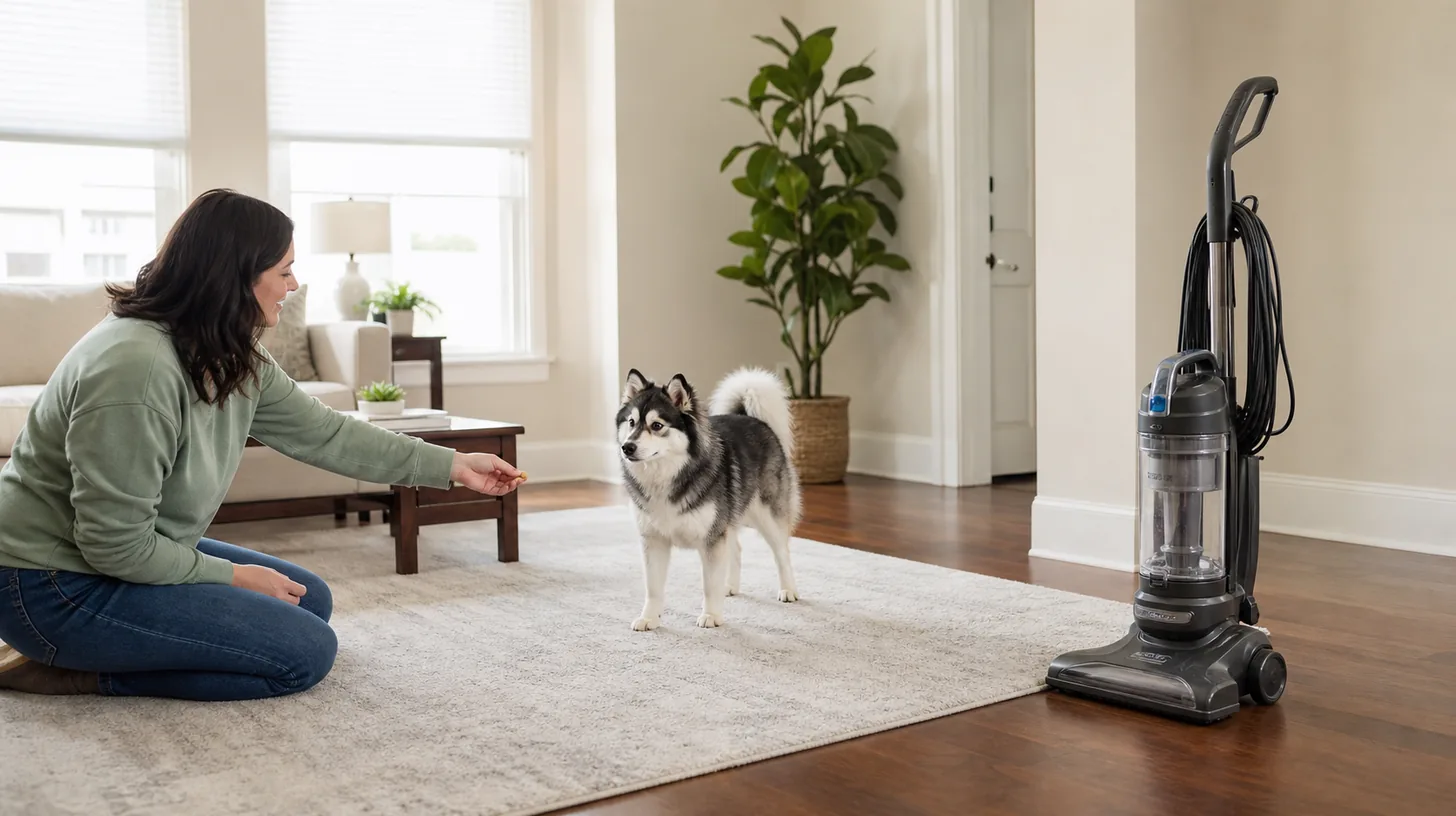
Direct answer: Start with the vacuum switched off and far enough away that the Pomsky can notice it, eat, explore, and leave voluntarily. Reward calm observation, then practice sound and movement as separate variables at low intensity. Increase only one variable at a time, keep the cord controlled, preserve a retreat route, and stop when the dog cannot disengage or recover.
A vacuum cleaner combines an unfamiliar shape, electrical cord, motor noise, air movement, rolling motion, and a person changing direction quickly. Treating all of those features as one lesson can overwhelm a Pomsky. A safer introduction separates the machine's appearance, sound, and movement, begins at a distance the dog can handle, and preserves a clear way to leave.
Define Success Before Starting
The first goal is not for the Pomsky to approach or touch the vacuum. Success means the dog can notice a stationary machine and still perform ordinary behaviors such as looking away, taking a familiar reward, sniffing, or resting. Later goals may include hearing the motor from another room and watching a small movement without losing that flexibility.
Write down the starting condition and the response you observed. This prevents a quiet first exposure from becoming a rushed cleaning session.
Create a Safe Practice Area
Choose a room with nonslip footing, enough distance, and at least one open retreat route. Remove food bowls, chew items, children, and other pets from the practice area. Keep the vacuum unplugged, stable, and positioned so it cannot fall or roll toward the dog.
Coil or secure the cord. A Pomsky should not have to step over it, investigate a live plug, or navigate between the machine and furniture. Place rewards where the caregiver can reach them without leaning over the dog.
Find the Starting Distance
Bring the Pomsky into the area on the normal household routine rather than carrying or pulling the dog toward the machine. Begin farther away than seems necessary. Watch whether the dog can breathe normally, move freely, orient to the caregiver, and choose to disengage.
If the Pomsky freezes, refuses familiar food, scans continuously, hides, vocalizes, or tries to escape, increase distance immediately. The correct starting point is defined by the individual dog's behavior, not by a fixed number of feet.
Reward Voluntary Observation
When the Pomsky looks at the unplugged vacuum and remains able to turn away, calmly deliver a small familiar reward away from the machine. Rewarding away from the vacuum preserves space and avoids luring the dog closer than intended.
Do not require eye contact with the caregiver or a prolonged sit. Ordinary information gathering is allowed. A brief look, soft body, and voluntary return to another activity can be enough for one repetition.
Keep the First Session Uneventful
Complete only a few observation-and-reward repetitions, then remove the dog before moving or storing the machine. The Pomsky should not suddenly see the quiet object become active at the end of the session.
Short sessions make it easier to identify the exact variable the dog handled. They also leave room for normal recovery rather than waiting until stress behavior forces the session to end.
Introduce Sound Separately
Practice motor sound only after the stationary unplugged vacuum has become ordinary at the starting distance. Put the Pomsky in a separate comfortable area with a caregiver, closed barrier, retreat space, and normal background activity. Another adult can briefly switch on the vacuum in a distant room.
The first sound exposure should be shorter and farther away than a cleaning task. Reward calm behavior if the dog remains comfortable, then stop the motor. Do not move the machine during this stage.
Adjust Sound With Distance, Not Pressure
If the dog startles and quickly recovers, the next exposure should still remain easy. If the Pomsky cannot eat, rest, explore, or disengage after the motor stops, the exposure was too intense. Increase distance, add a closed door, reduce duration, or return to silent practice.
Do not repeatedly switch the motor on to see whether the reaction improves. Repetition at an excessive intensity can make the machine more predictive of distress.
Add Movement Without the Motor
Once stationary appearance and distant sound are manageable separately, unplug the vacuum and move it a few inches while the Pomsky watches from the established safe distance. Move parallel to the dog rather than directly toward the dog. Stop, reward calm observation, and return the machine to rest.
Practice one small direction at a time. Handle changes, hose movement, rolling wheels, and turning can each alter the picture. Avoid swinging attachments or letting a cord drag near the dog.
Combine Variables Gradually
Only combine sound and movement after each has been handled independently. Begin with the motor on at a familiar distant location while the machine remains still. In a later session, add one short predictable movement. Keep an adult responsible for the Pomsky and another responsible for the machine when that makes control easier.
Increase one variable per session: proximity, sound duration, movement distance, room location, or caregiver motion. Changing several at once makes setbacks difficult to interpret.
Separate Training From Cleaning
Real cleaning adds furniture movement, repeated passes, debris, doors opening, and a caregiver focused on the floor. During ordinary vacuuming, place the Pomsky in a prepared quiet area behind a closed barrier with water, resting space, and an appropriate activity if the dog can use it safely.
Training does not require the Pomsky to remain in the cleaning room. Long-term management may be the most comfortable and practical outcome.
Watch Body Language and Recovery
Record the distance, vacuum state, movement, duration, and the Pomsky's response. Useful observations include whether the dog took food, chose distance, shook off, paced, hid, barked, recovered after the motor stopped, or returned to rest.
Judge progress by flexibility and recovery rather than silence alone. A motionless dog may still be overwhelmed. A dog that briefly notices the sound and resumes an ordinary activity may be showing a more useful response.
Use Clear Stop Rules
Stop the exposure if the Pomsky cannot move away, refuses normally valued food, repeatedly attempts escape, trembles, pants without heat or exercise, displays escalating barking or lunging, or remains unable to recover. Turn the machine off before changing the setup.
Never chase the dog with the vacuum, block a retreat, use the machine as a correction, or restrain the dog beside it. Children should not operate the vacuum during training.
Maintain the Skill Across Contexts
A canister vacuum, upright vacuum, robotic cleaner, shop vacuum, and grooming dryer are different stimuli. Do not assume comfort with one transfers to another. Reintroduce major changes at an easier distance with appearance, sound, and movement separated again.
After storage changes or a long break, begin below the previous difficulty. Check cords, wheels, attachments, and the practice route before each session.
Know When to Get Help
Sudden sensitivity to ordinary household sound, a marked behavior change, pain signs, or difficulty recovering deserves veterinary attention. Severe fear, escape attempts, or aggression risk should be addressed with a qualified reward-based behavior professional working within the dog's current limits.
The practical endpoint is not a performance beside a running vacuum. It is a predictable household plan in which the Pomsky can remain comfortable at an appropriate distance and is safely separated during real cleaning when needed.
Sources reviewed
Each source is used only for the claim scopes listed below. None establishes a guaranteed Pomsky outcome or replaces individual professional assessment.
- Cornell University College of Veterinary Medicine: Anxious Behavior: How to Help Your Dog Cope With Unsettling Situations - Supports: anxiety signs; separation-related vocalization; gradual desensitization; reward-based professional help. Limit: Howling alone does not diagnose separation anxiety; sudden or severe distress needs veterinary assessment.
- American Veterinary Society of Animal Behavior: Humane Dog Training Position Statement - Supports: reward-based training; aversive-method risk; behavior change principles. Limit: Does not guarantee outcomes for an individual dog.